Canadian Fishing Techniques

Hands-on methods, gear setups, and species-specific tactics for fishing across Canada. Ideal for anglers seeking pike, trout, and other freshwater techniques tailored by region and season.

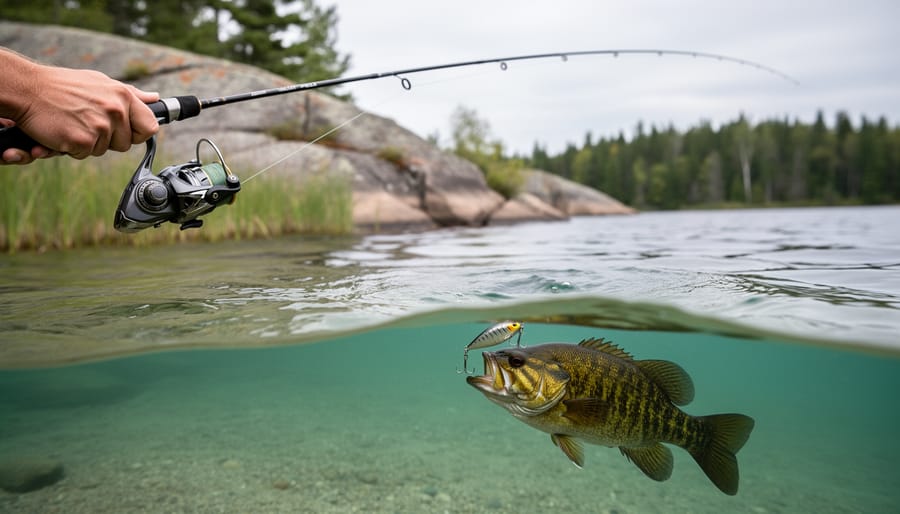
Fishing rod casting into clear shield-lake water with a smallmouth bass near the surface near a rocky shoreline.

8 Weeks That Define Smallmouth Bass Fishing Season in Ontario and Quebec

The smallmouth bass season in Ontario and Quebec runs roughly from late June through October, but that four-month window divides into eight distinct fishing phases, each demanding different tactics, locations, and lure choices. Most anglers show up in July when the season is already half-evolved, missing the aggressive post-spawn bite and the predictable summer patterns that produce trophy fish. Understanding these phases lets you match your approach to water temperature, forage activity, and spawning cycles instead of casting the same crankbait from opener to freeze-up and wondering why results vary so wildly.
I’ve spent …
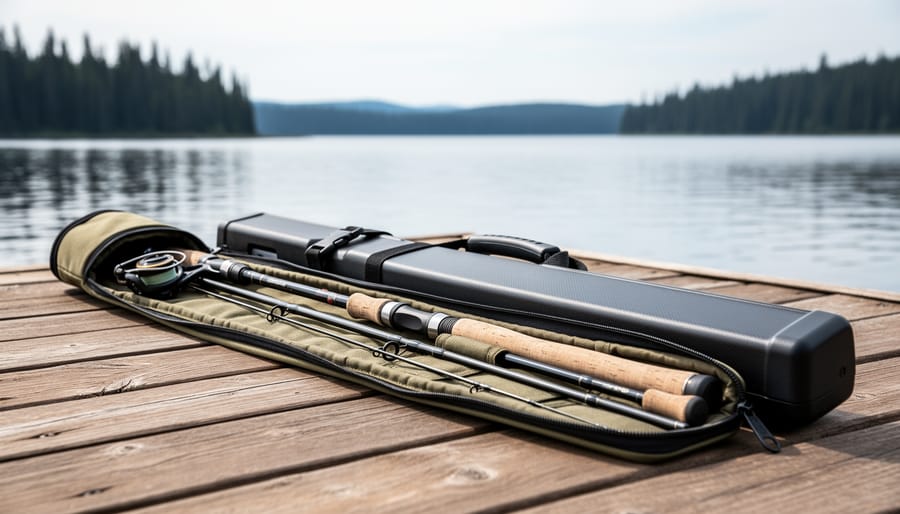
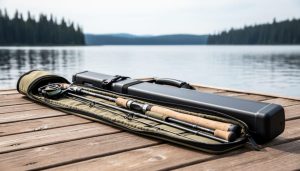
Fishing rod case on a wooden dock with a soft padded case and a hard-shell case near partially visible fishing rods, with a Canadian lake background.

How to Choose a Fishing Rod Case: A Buying Guide for Canadian Anglers

Choosing a fishing rod with case means protecting a significant investment and avoiding the heartbreak of a snapped tip on the drive to your favorite lake. Based on current market research, quality fishing rod cases range from around $35 for basic soft models to $229 for premium hard-shell protection, and that spread reflects real differences in durability, capacity, and features that matter for Canadian fishing conditions.
The right case depends on how you fish. If you’re hauling gear across Algonquin portages or checking rods for a fly-in trip to northern Ontario, you need different protection than someone storing a couple …

“Gloved hands holding a smallmouth bass on a rocky shoreline near fishing gear during September in Ontario or Quebec.”

6 Essential Access Permits and Seasonal Rules for September Smallmouth Bass Fishing in Ontario and Quebec

September bass fishing in Canada comes with a specific set of rules you need to follow, and knowing which waters are open, what permits you require, and how many fish you can keep will make or break your trip. Right now, Ontario anglers face a two-fish limit with only one over 56 cm allowed through September 30, and you’ll need a valid fishing licence unless you’re a resident under 18 or over 65. The compliance landscape shifts lake by lake, with some waters requiring special permits and proposed regulation changes on the horizon for certain zones.
I learned this the hard way three Septembers ago on Red Lake, watching a …

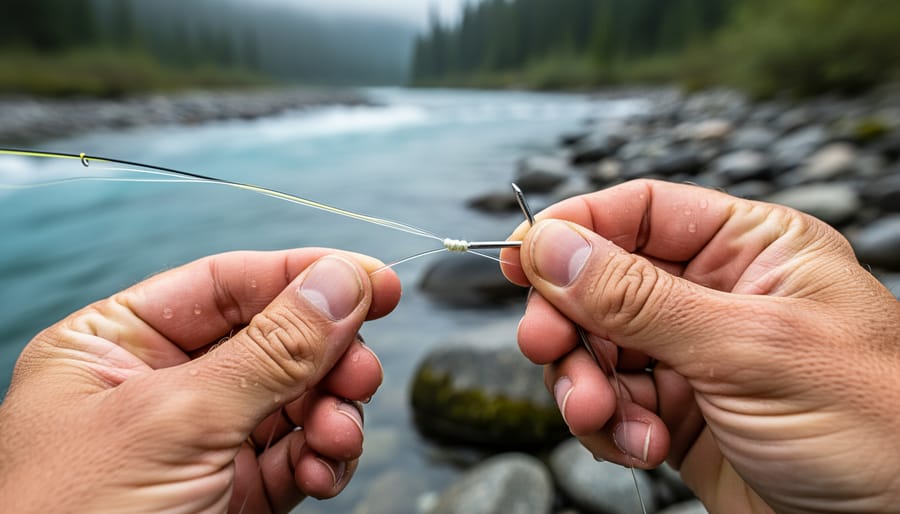
Close-up of hands tying a nail knot to connect a fly line to a leader on a Canadian riverbank with blurred water in the background.

How to Tie a Nail Knot for Fly Fishing: A Canadian Beginner’s Step-by-Step Guide

The nail knot is your go-to connection for attaching a leader or backing to your fly line when there’s no loop at the end, and it’s widely considered the strongest, sleekest option available. This small, streamlined knot passes through your rod guides without catching, which matters when you’re bringing in that Lake Ontario salmon or fighting a feisty brook trout in a northern stream. You can tie a secure nail knot in about five minutes once you’ve practiced the technique a few times, though your first attempt might take a bit longer.
Key Takeaway: Most anglers consider…

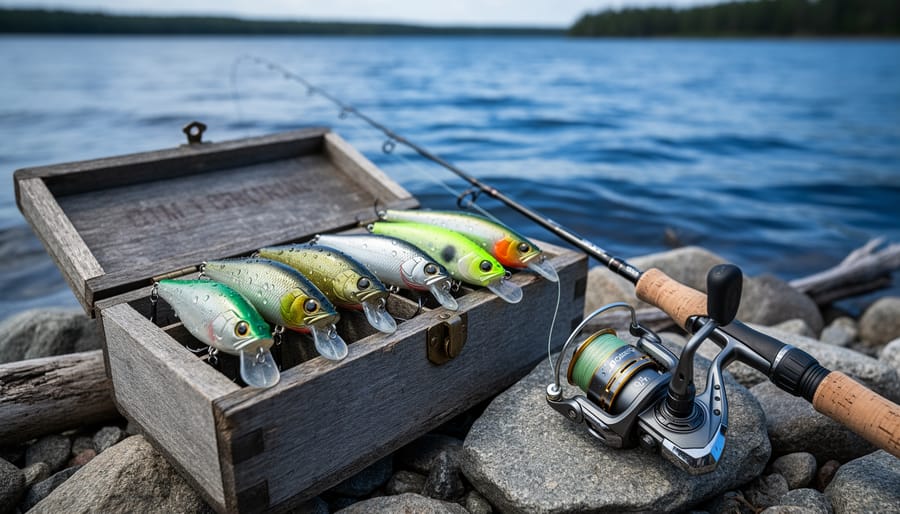
Crankbaits laid out on a tackle box beside a fishing rod on a Canadian lake shore, with blue water softly blurred in the background.

How to Choose the Right Crankbait: A Buying Guide for Canadian Anglers

Crankbaits are hard-bodied lures designed to dive to specific depths and mimic baitfish through wobbling action, and choosing the right one comes down to matching three critical factors: the depth your target fish are holding, the species you’re after, and the diving action that triggers strikes in your water conditions. I learned this the hard way after burning through half my tackle budget on crankbaits that looked perfect in the store but sat at the wrong depth for the walleye holding fifteen feet down on Lake of the Woods.
Key Takeaway: Match your crankbait to water depth first, then…

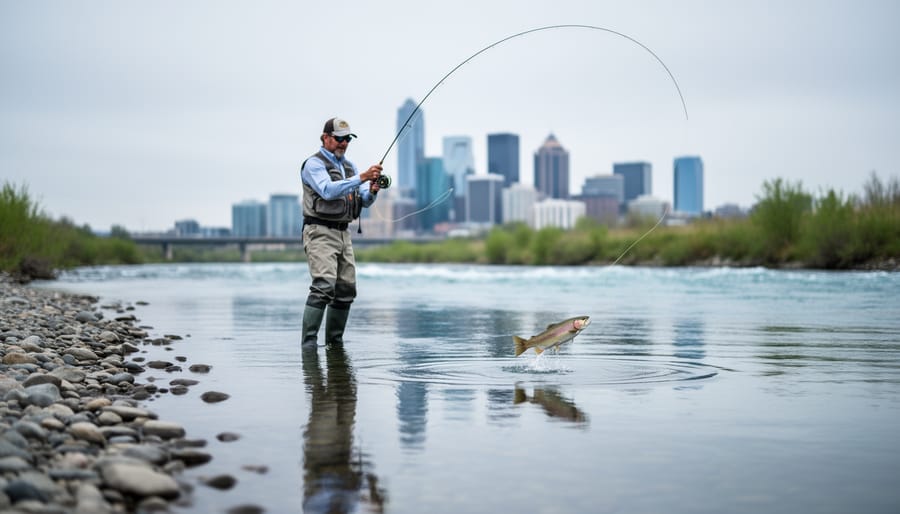
A fly fisherman casting on the Bow River near Calgary with a trout rising beneath the water surface and the downtown skyline blurred in the background.

Bow River Fly Fishing: What I Learned Chasing Trout in Alberta’s Most Famous Water

The Bow River through Calgary offers some of the most productive year-round trout fishing on the continent, with wild rainbows and browns averaging 16 to 18 inches and fish over 20 inches a regular possibility. What sets this Alberta tailwater apart is the combination of trophy-size fish, walk-and-wade accessibility right from the city, and a nearly 12-month season that keeps productive when other rivers freeze solid.
I’ll never forget my first morning on the Bow in late October, watching a 22-inch brown sip midges in the slick water below the weir while downtown office towers gleamed in the background. That strange …

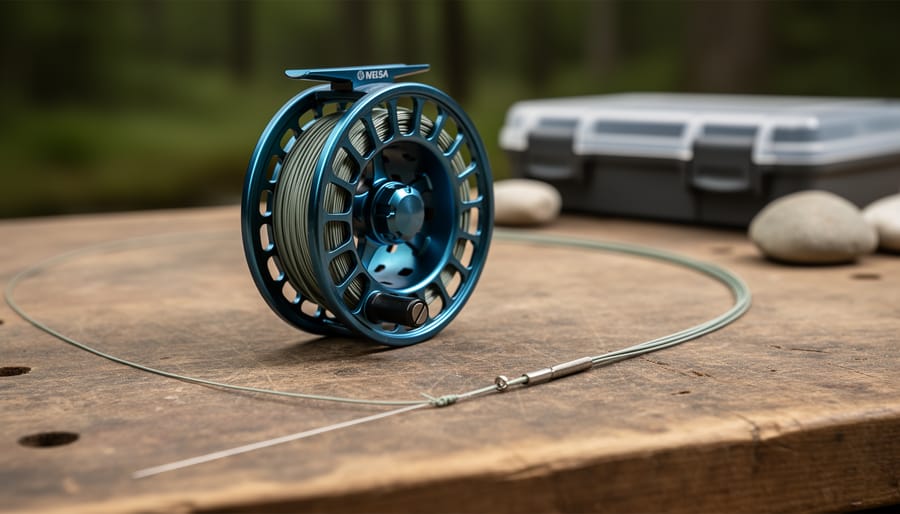
Close-up of a fly fishing reel with the fly line laid out neatly through the leader and tippet connections on a wooden bench.

How to Set Up Your Fly Fishing Line from Reel to Leader

Setting up a fly fishing line correctly means connecting four distinct components in the proper sequence: backing attached to your reel, fly line joined to the backing, leader tied to the fly line, and tippet connected to the leader. This complete system takes about 15 minutes to assemble once you understand the order, and getting it right the first time means smooth casts, proper line performance, and fewer tangles on the water.
I still remember the first time I tried assembling my own line system at a buddy’s cabin north of Kenora. I had all the pieces spread across his kitchen table, backing tangled around a chair leg, and …

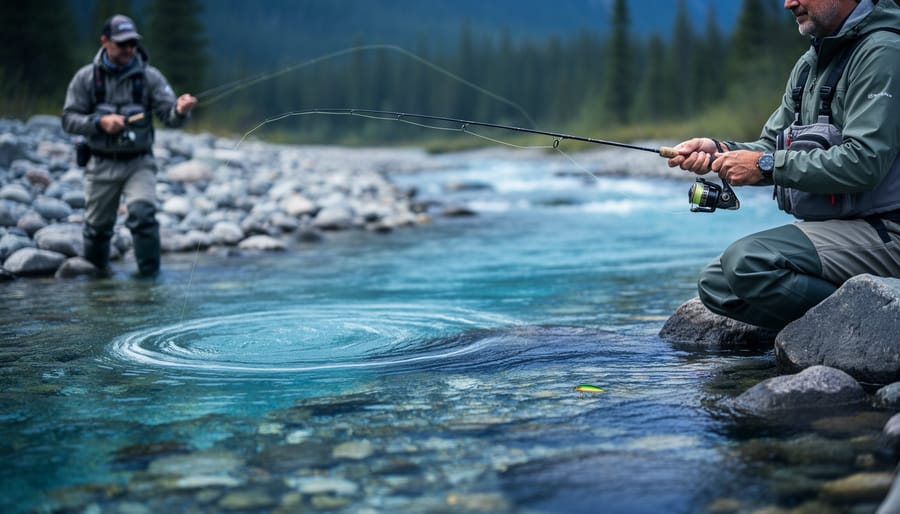
Two anglers casting in a clear Canadian trout stream—one using a fly rod and one using a spinning rod near rocky riverbank currents.

Fly Fishing vs Regular Fishing: Which Fits Your Canadian Waters?

For most Canadian anglers, fly fishing wins on elegance and finesse when chasing trout in rivers and streams, while conventional spinning or baitcasting remains unbeatable for versatility across species, water types, and sheer beginner-friendliness. The choice hinges on what you’re targeting and where you fish: if you dream of presenting dry flies to rising brook trout in a BC mountain creek or brown trout on Alberta’s Bow River, fly fishing is your path. If you want one setup that handles walleye on Saskatchewan lakes, pike in Ontario’s Kawartha region, and salmon off the Pacific coast, conventional gear does it all …

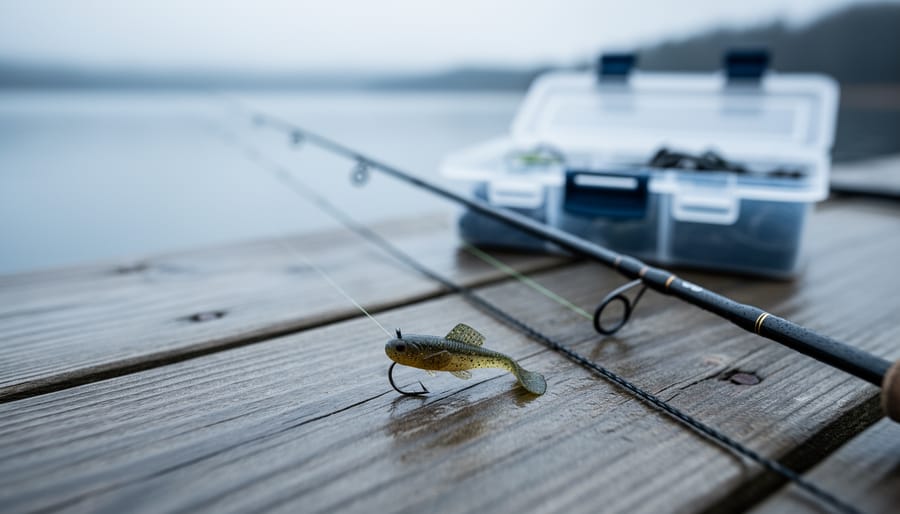
Close-up of a Ned rig—small soft plastic on a mushroom-head jig—on a fishing dock with light spinning tackle in the background.

How to Fish a Ned Rig: Simple Steps for More Bites in Canadian Waters

The Ned rig is a miniature finesse presentation that pairs a tiny soft plastic (typically 2 to 4 inches) on a mushroom or ball head jig, fished slowly on light line and spinning tackle to catch bass when they ignore everything else. Born from tournament desperation, this rig works because it looks like an easy meal: a small crawfish, goby, or baitfish barely moving across the bottom. You’ll fish it on 6- to 10-pound line with a medium-light spinning rod, dragging it across structure, hopping it in short bursts, or letting it glide back to the bottom after gentle lifts.
Key Takeaway: The …

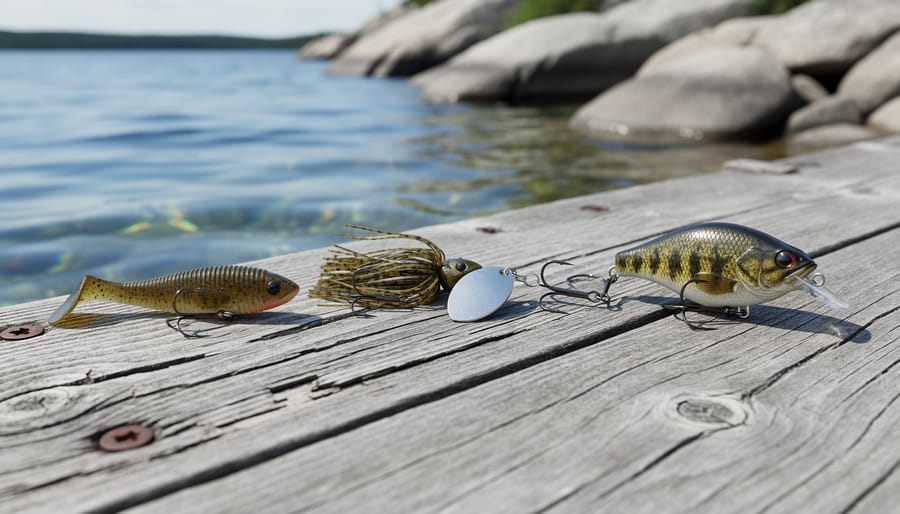
Three smallmouth bass lures arranged on a wooden dock beside rocky Canadian shoreline water.

8 Proven Smallmouth Bass Lures That’ll Fill Your Livewell in 2026

Smallmouth bass demand a different approach than their largemouth cousins, and the lures that consistently trigger strikes share a few common threads: compact profiles, natural movement, and the ability to work around rock and gravel structure where bronzebacks thrive. The best smallmouth lures for 2026 include proven performers like the Z-Man Finesse TRD for Ned rigging, the Booyah Blade spinnerbait for covering water fast, and the Berkley Dime 4 crankbait for diving into rocky zones. Each excels in specific conditions, from clear Canadian Shield lakes to current-heavy rivers.
I’ve spent enough mornings on Ontario’s …