Lac du Bonnet Ice Fishing Derby: What to Expect at Manitoba’s Premier Winter Fishing Event
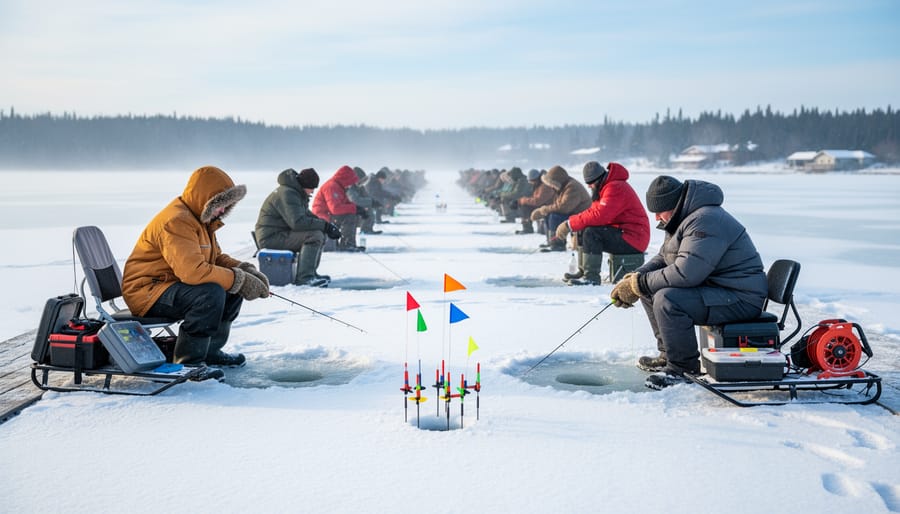
The Lac du Bonnet Ice Fishing Derby returns Saturday, February 28, 2026 at the Town Dock with over $45,000 in cash and prizes up for grabs. Early bird tickets go on sale November 1 and run through February 8 at midnight, though day-of registration opens at 8am if you’re the spontaneous type. This competition strips away the tech advantage with its strict no-electronics rule, putting old-school ice fishing skills and local knowledge front and center.
I’ve fished enough Manitoba winters to know that February on the ice brings its own brand of magic and misery. The Lac du Bonnet derby draws everyone from tournament veterans hauling custom shelters to first-timers testing hand-me-down tip-ups, all chasing that prize-winning walleye or northern pike. What makes this event stand out isn’t just the prize pool. It’s the level playing field created when you pull the batteries from your fish finder and rely purely on reading structure, understanding winter feeding patterns, and trusting your instincts.
The disco registration buzz at 8am sets the tone for a day that blends serious competition with the kind of camaraderie that only happens when a few hundred anglers gather on frozen water. Whether you’re plotting your GPS waypoints ahead of time or planning to follow the crowd and gamble on community holes, success here demands preparation. The right gear, a flexible strategy, and realistic expectations about February weather will determine whether you’re celebrating at the weigh-in or learning hard lessons for next year’s derby.
What Makes the Lac du Bonnet Derby Stand Out
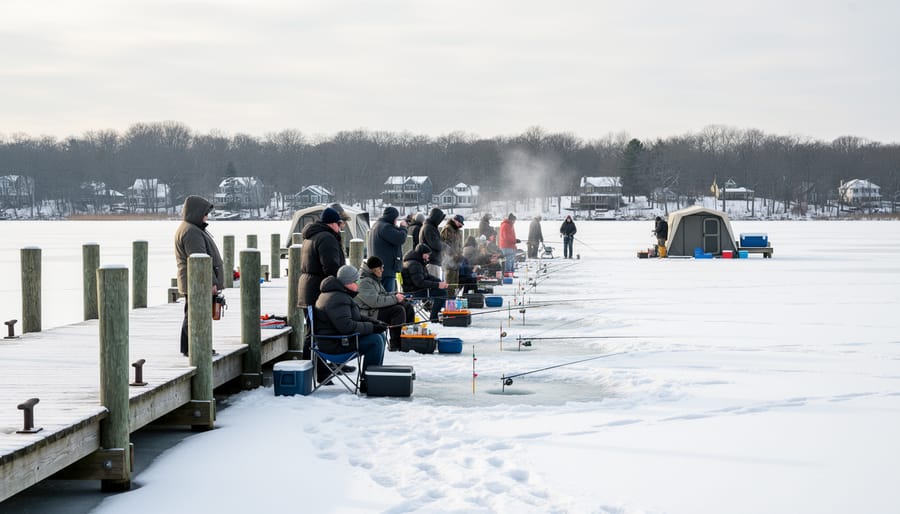
I’ve fished enough derbies across Canada to know when one is special, and Lac du Bonnet has something most others don’t. It’s not just the $45,000-plus prize pool, though that certainly gets your attention, it’s the whole package that makes this event worth circling on your calendar.
The no-electronics rule changes everything. While most modern derbies let anglers deploy their latest fish finders and underwater cameras, Lac du Bonnet strips that away. You’re fishing the way your grandfather did, relying on instinct, local knowledge, and a bit of luck. I’ll admit it felt unsettling my first time, like showing up without half my gear, but that’s exactly the point. It levels the playing field and puts the emphasis squarely on angling skill rather than technology. The guy with the newest sonar unit doesn’t automatically win.
What struck me most was the atmosphere at the Town Dock. You’re fishing right on the edge of the Canadian Shield, where the geography itself feels different. The rock, the treeline, the way the wind hits the ice, it all contributes to a setting that feels authentically northern. This isn’t a parking lot derby on a suburban pond. You can feel the wilderness pressing in around you.
The community aspect surprises first-timers. Despite the competition, there’s genuine camaraderie out there. People share tips between holes, help newcomers with setup, and celebrate each other’s catches. I’ve watched seasoned anglers walk over to help someone struggling with an auger, no hesitation. That warmth makes the cold more bearable.
If you’re deciding whether to make the trip, understand that this derby rewards traditional skills and connects you to ice fishing’s roots. The prizes are great, but you’ll leave with something more valuable, a renewed appreciation for reading water, understanding fish behaviour, and trusting your own judgment on the ice.
Event Details for 2026
Mark your calendar for February 28, 2026, that’s when the Lac du Bonnet Ice Fishing Derby returns to Manitoba’s winter event calendar. I’ll break down everything you need to know to make sure you’re registered and ready when derby day arrives.
The event takes place at the Town Dock in Lac du Bonnet (postal code R0E 1A0), right where the frozen expanse of the lake meets the edge of town. This location puts you on prime Canadian Shield waters without requiring a long trek across the ice, which I appreciate when I’m hauling gear in the pre-dawn cold.
| Detail | Information |
|---|---|
| Derby Date | Saturday, February 28, 2026 |
| Location | Town Dock, Lac du Bonnet, R0E 1A0 |
| Day-of Registration | 8:00 AM, 10:00 AM |
| Early Bird Sales | November 1, February 8 (midnight) |
| Prize Pool | Over $45,000 in cash and prizes |
Registration happens in two phases. Smart anglers take advantage of early bird ticket sales, which open on November 1 and run through midnight on February 8. These tickets typically sell out, so I don’t wait around if I’m planning to compete. If you miss that window or decide last minute, day-of registration runs from 8:00 AM to 10:00 AM right at the derby location.
The prize pool exceeds $45,000 in cash and prizes, which makes this one of Manitoba’s richest ice fishing competitions. That substantial reward attracts serious anglers, but the spread of prizes means you don’t need to land the biggest fish of the day to walk away with something.
One critical rule shapes everything about this derby: absolutely no electronics allowed. That means your fish finder stays in the truck. This pure-skill format levels the playing field and brings ice fishing back to traditional techniques, which I’ll cover in detail in the next section.
Getting Ready: Gear and Strategy Without Electronics
Core Ice Fishing Kit for Derby Day
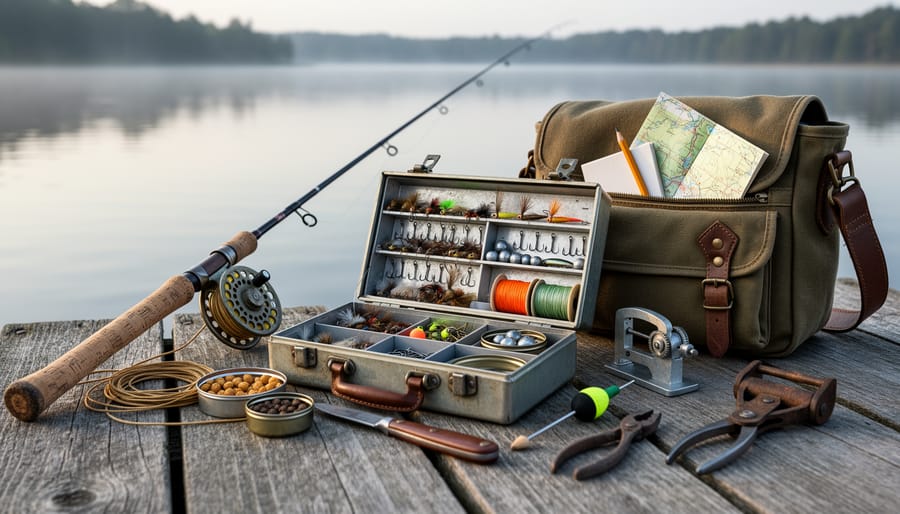
I learned pretty quickly during my first Manitoba derby that the gear I’d packed for casual weekend ice fishing wasn’t going to cut it. Late February on the Canadian Shield means you’re dealing with thick ice, wind chill that bites hard, and fish that have seen every trick in the book all winter long. Here’s what actually matters when you’re spending a full competition day on the ice.
Rods and Reels That Won’t Let You Down
I run two setups: a medium-light 28-inch rod for walleye and a slightly heavier 32-incher for pike. The shorter rod gives you better feel in a shelter, while the longer one handles bigger fish in open holes. Look for something with a sensitive tip but enough backbone to set hooks through cold-numbed hands. A decent spinning reel in the 1000-2500 size range spooled with four to six-pound test works beautifully. The best fishing line for these conditions is fluorocarbon, it stays supple in the cold and practically disappears underwater.
Shelter and Auger Essentials
A flip-over shelter changed my derby experience completely. You can move quickly, stay warm between bites, and fish comfortably all day. Budget options around $150 work fine; spending more gets you better insulation and wind resistance. For your auger, an eight-inch diameter is the sweet spot, big enough for anything you’ll catch, light enough to drill dozens of holes without exhausting yourself before noon.
Tackle Box Basics
Keep it simple. I carry jigging spoons in gold and silver, a selection of tungsten jigs (they drop fast in deep water), and live bait, minnows are the universal language walleye understand. Bring backups of everything, especially hooks and leaders, because February ice loves claiming your best lure right when fish start biting.
Fishing Without the Fish Finder
Without a fish finder, you’re forced to become a detective, and honestly, that’s where I’ve learned the most about ice fishing. At Lac du Bonnet, I’ve had to relearn the fundamentals I’d gotten lazy about when I relied too heavily on technology.
Start by studying the lake before you even drill. Look for visible structure: points jutting into the main basin, weed beds poking through the ice, areas where snow patterns suggest depth changes underneath. Other anglers are your best sonar, cluster near successful groups but give them space, then fan out systematically from productive zones. I’ve watched veterans work a grid pattern, drilling holes every fifteen feet until they locate the edge of a drop-off or find the sweet spot where forage concentrates.
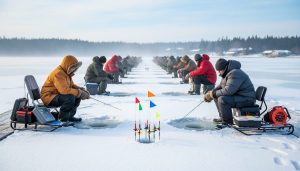
Tip-ups become crucial intelligence gatherers when you can’t scan below. Set them at varying depths and distances, then watch which ones produce. That first flag tells you where fish are holding that day. I remember my third derby, stubbornly fishing one spot for two hours with nothing, then finally setting tip-ups in a wider pattern. Within twenty minutes, a flag went up forty yards away in shallower water than I’d expected, the fish were staging near weed edges, not in the basin where my research suggested.
The same principles that help catch more trout in open water apply through the ice: understand what they’re eating, where they feel safe, and match your presentation to their mood. Move frequently, observe constantly, and trust your instincts over any preconceived plan.
What to Expect on Derby Day
Arrival and Setup
The morning energy at Town Dock is electric, you’ll feel it the moment you arrive. Gates open at 8am, and I’ve learned the hard way that showing up at 7:45am puts you in the thick of the crowd. Park in the designated lot and make your way to the registration disco with your gear. While you’re waiting in line, scan the ice. The early arrivals will already be drilling, and you can learn a lot from watching where experienced locals set up.
Once registered, your spot choice matters more than you’d think in a no-electronics derby. I look for areas near known structure, points, drop-offs, or where the shoreline changes, since I can’t rely on a fish finder to confirm what’s below. Don’t be afraid to set up near other anglers; ice fishing culture here is collaborative, not cutthroat. I’ve picked up more useful Canadian pike technique from ten minutes chatting with the guy in the next shelter than from hours alone.
Set up efficiently but not frantically. Drill your holes, arrange your gear within arm’s reach, and take a breath. The competition runs until 2pm, so there’s time to fish smart rather than rushed.
The Competition Unfolds
Once the derby officially starts, the competition settles into a rhythm that’s equal parts focused intensity and shared camaraderie. You’ll find yourself falling into a pattern: drill a hole, drop a line, watch for movement, then shift to the next spot when intuition tells you to move. Without a fish finder to confirm what’s below, you rely on feel, observation, and a healthy dose of optimism with each new hole.
Managing multiple holes becomes an art form. I typically keep three or four active at once, spaced far enough apart to cover different depths or structures but close enough that I can monitor them all. Tip-ups become your extra sets of eyes, when that flag pops, the adrenaline spike cuts through any cold you’ve been feeling. You’ll see anglers sprinting across the ice when their flags go up, and that urgency is infectious.
The cold is real in late February, but staying busy keeps it manageable. I’ve learned to embrace constant movement: checking lines, drilling fresh holes, occasionally ducking into the shelter to rewarm hands around a thermos. Layered clothing and hand warmers aren’t luxuries, they’re essentials for staying effective through the full competition window.
What surprises first-timers is how quickly four hours disappear. Between the hunt for fish, conversations with neighbouring anglers comparing notes, and the shared tension as weigh-in time approaches, the day flies past. The collective energy of hundreds of anglers working the same challenge creates a unique atmosphere that makes even fishless stretches feel worthwhile.
Planning Your Trip to Lac du Bonnet
Getting to the Town Dock at R0E 1A0 is straightforward whether you’re coming from Winnipeg an hour south or making a longer journey from elsewhere in Manitoba. Highway 11 runs right through town, and once you arrive, locals know exactly where the derby happens. I’ve made the drive enough times now that certain landmarks, the big curve past Powerview, the hardware store on the main drag, feel like familiar checkpoints on the way to another weekend adventure.
Accommodation fills up quickly once early bird tickets go on sale November 1, so book early if you want options. Lac du Bonnet has a handful of motels and the nearby Pine Falls area adds a few more choices within twenty minutes. I’ve stayed at places ranging from basic roadside rooms to slightly nicer spots with continental breakfast, and honestly, you’re spending so little time indoors that comfort matters less than proximity. Some anglers make it a day trip from Winnipeg, but turning it into a weekend lets you explore without rushing and gives you time to recover if the fishing is slow or the fish when they won’t bite.
Beyond the derby itself, Lac du Bonnet sits at the edge of the Canadian Shield where granite meets boreal forest, which makes it worth exploring even when you’re not on the ice. The same waters that host the derby offer year-round fishing opportunities, and the area has trails, local diners with excellent breakfast, and that quiet, authentic small-town Manitoba feel that reminds you why you chase fish across this country in the first place.
- Book accommodation by early January for best availability
- Pack extra layers, hand warmers, and backup dry clothes beyond your fishing kit
- Gas up in town; stations are readily available but plan ahead for early morning starts
- Bring cash for day-of registration and local purchases
- Check local restaurants and shops that support the derby community
Making a full weekend of the trip transforms the derby from a single-day competition into a proper winter fishing adventure. Arrive Friday evening, get a good meal and early sleep, fish the derby Saturday, then spend Sunday morning exploring the area or trying your luck on different parts of the lake before heading home. That rhythm has turned several of my derby trips into some of my favourite Canadian fishing memories, where the event itself becomes part of a larger story about winter, community, and the pursuit of fish in places that feel genuinely remote even when they’re close to home.
Common Questions About the Derby
Over the years of attending derbies across Manitoba, I’ve fielded dozens of questions from friends planning their first trip to Lac du Bonnet. Here’s what first-timers typically want to know.
Do I need to be an experienced ice angler to compete?
Not at all. The derby welcomes everyone from complete beginners to seasoned pros, and the no-electronics rule actually levels the playing field considerably since everyone relies on the same traditional techniques.
Can I rent equipment if I don’t own ice fishing gear?
While the derby itself doesn’t provide rentals, several outfitters in the Lac du Bonnet area offer ice fishing equipment rentals. Contact local shops well ahead of February 28 to reserve what you need.
What happens if the weather is dangerous on derby day?
Safety always comes first. Organizers monitor conditions closely and will postpone or cancel if ice isn’t safe, though late February typically provides excellent ice thickness in this region.
How are the $45,000+ in prizes distributed?
Prizes are awarded across multiple categories and species, giving anglers various ways to win beyond just the biggest fish. Check the official rules when you register for the complete prize breakdown.
Families absolutely fit into the derby scene. I’ve watched kids land their first walleye while parents work nearby holes, and the Town Dock location makes it easy to take breaks. Just remember that Manitoba fishing regulations require appropriate access permits and licenses for anyone fishing, regardless of the derby context.
The day-of registration window from 8am-10am gives you flexibility if you’re driving in that morning, though arriving early lets you claim a good spot before the crowd thickens. And yes, spectators are welcome, I’ve brought non-fishing friends who enjoyed the atmosphere and community vibe even without dropping a line.
The Lac du Bonnet Ice Fishing Derby isn’t just another tournament marked on the calendar. It’s become a pivotal point in my own understanding of what makes Canadian ice fishing culture so compelling. Standing on that frozen expanse at Town Dock each February, surrounded by hundreds of anglers who’ve embraced the no-electronics challenge, I’m reminded that the best fishing experiences aren’t always about the latest technology or the biggest prize pool.
Sure, the $45,000 in prizes catches attention, but what keeps me coming back is everything else. The skills you develop when you can’t rely on a fish finder carry over to every other fishing trip. The friendships formed over shared holes and thermos coffee last well beyond derby day. The raw winter challenge of late February on the ice reminds you why this sport gets in your blood.
If you’ve been considering whether to register when those early bird tickets go on sale November 1, I’d say take the plunge. First-timers and veterans alike find something meaningful at this event. It’s accessible enough that you won’t feel lost, yet challenging enough that you’ll grow as an angler.
Beyond this single February day, Canada offers endless opportunities to explore ice fishing across different provinces, different lakes, and different conditions. The Lac du Bonnet Derby serves as an excellent gateway into that broader world. Once you’ve experienced the camaraderie and challenge here, you’ll find yourself scanning the map for your next frozen adventure.