How to Choose an Inline Ice Fishing Reel: A Buying Guide for Canadian Anglers
An inline ice fishing reel is a flat, spool-forward reel that sits parallel to your rod, so line comes off straight instead of in loops, and it’s the…
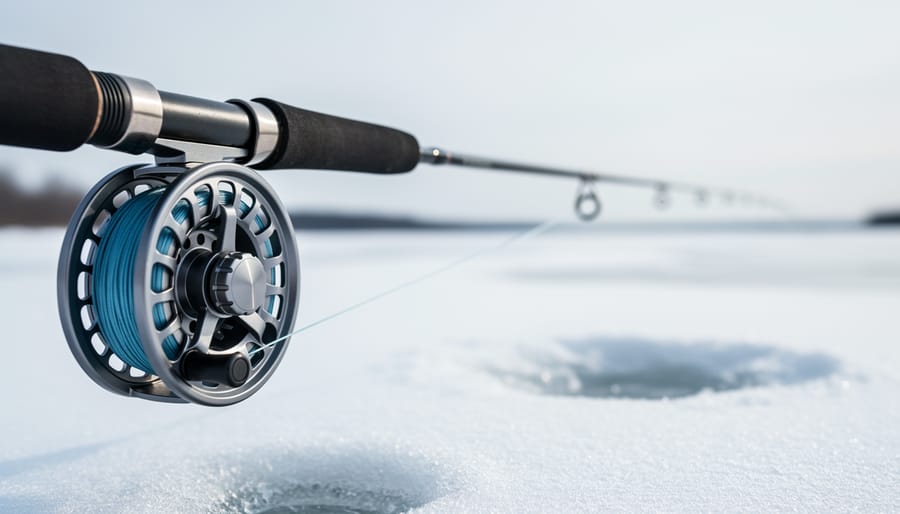
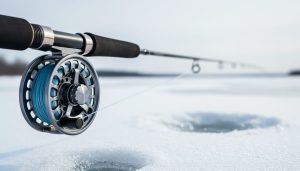
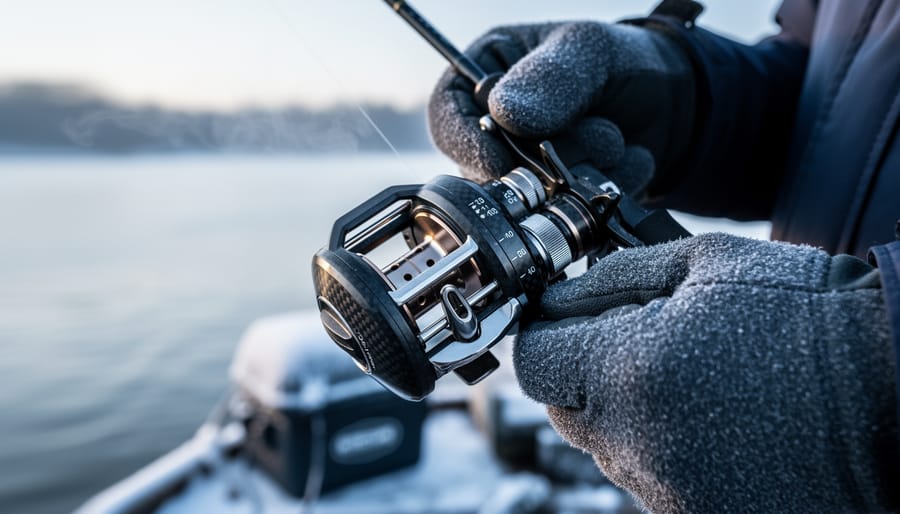
An inline ice fishing reel is a flat, spool-forward reel that sits parallel to your rod, so line comes off straight instead of in loops, and it’s the tool most ice anglers reach for when line twist ruins a day on the hardwater. If you’re shopping for one in Canada, you need to know three things: what separates one inline reel from another, which features actually matter on the ice, and where to look.
I learned the line-twist lesson the hard way, jigging a tiny spoon through a hole while my spinning reel coiled the line like a phone cord. Cold fingers and tangles don’t mix. Inline reels fix that, and they let you feel a light bite and drop your bait on a controlled fall.
Features vary more than you’d expect. The 13Fishing Descent Inline Ice Reel, listed at $49.99, comes in left and right options, which matters if you want your reel hand to match your rod setup. The DYNWAVECA Inline Ice Reel listing points to an instant anti feature and a drop speed adjustment system. Both are worth understanding before you buy.
If you’ve used a matched fly fishing rod and reel, the idea will feel familiar: the reel and rod work as a pair, and fit counts more than a spec sheet.
Below, I break down what to check, compare reel types, and flag the mistakes I see most often.
What an Inline Ice Reel Is and Why It Is Getting Attention
Inline vs. Spinning on the Ice: Types Compared
Spinning reels have earned their spot on a lot of ice, so this isn’t about dumping what you own. It’s about knowing where each type shines.
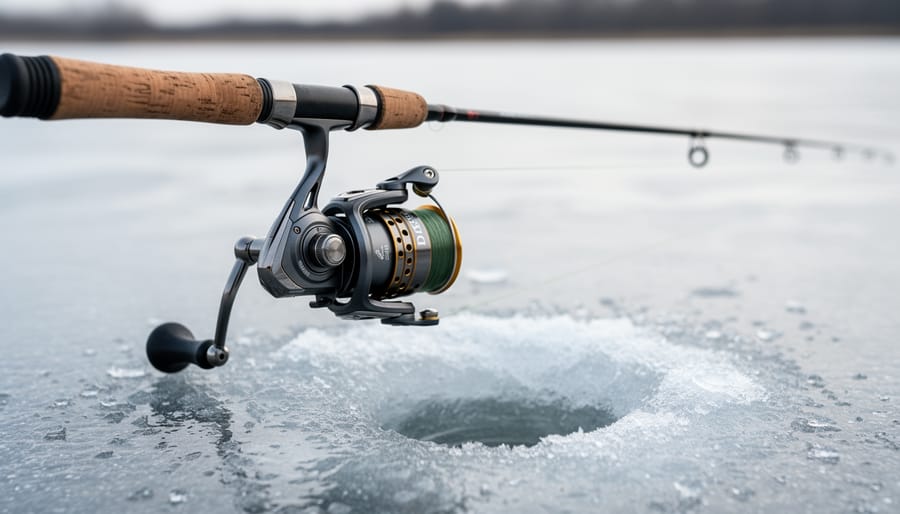
On a spinning reel, line peels off the front of a fixed spool and the bail wire flips over to wind it back on. Anglers do sometimes run into line twisting when re-spooling and a bail can be fussy when it’s stiff with cold. An inline reel turns its spool in line with the rod, so line leaves straight, and there’s no bail to flip. That tends to suit finesse jigging, where you want a clean, controlled drop.
| Reel type | How line comes off | Simplicity in the cold | Best suited for | Things to watch |
|---|---|---|---|---|
| Inline | Straight off a spool that turns in line with the rod | No bail to flip or freeze | Finesse jigging on small-water setups | Confirm left or right retrieve before buying |
| Spinning | Off the front of a fixed spool | Bail and rotor add moving parts | All-round, general-purpose use | Line twist if you’re not careful when spooling |
If you already own a spinning outfit and it’s treating you well, there’s no rush to switch. Plenty of anglers fish one all winter without a complaint. If you jig a lot and want fewer parts to babysit in mitts, an inline reel is worth a look. Some listings add features like drop speed adjustment or an instant anti-reverse feature, which we’ll get to in the buying factors.
What to Check Before You Buy: Key Buying Factors
Matching the Reel to Your Rod and Your Style
Think of the rod and reel as one tool, not two parts you bolt together. Anyone who’s balanced a Fly Fishing Rod And Reel knows the feeling: when the outfit sits right in your hand, you stop thinking about the gear and start paying attention to the line. A short ice rod works the same way.
Start with how the reel sits on the rod. Hold the setup by the handle and see whether the tip droops or the butt end drags. A reel that’s too heavy for a light rod will tip the whole thing forward, and you’ll feel it after an hour of jigging. A reel that’s far too small can leave the rod feeling tail-light and twitchy.
Before you buy, run through these pieces:
– Reel seat: Confirm the reel’s foot or mounting hardware actually fits your rod’s seat. If a listing mentions an adapter kit, check what comes in the box rather than assuming.
– Spool capacity: Shallow-water jigging doesn’t need much line, but make sure the spool holds enough for the depths you fish.
– Line type: Check the product description for what line it suits, and spool up with something that works with the reel’s size.
– Retrieve side: Pick left or right to match how you hold the rod. The 13Fishing Descent, for example, is offered in both.
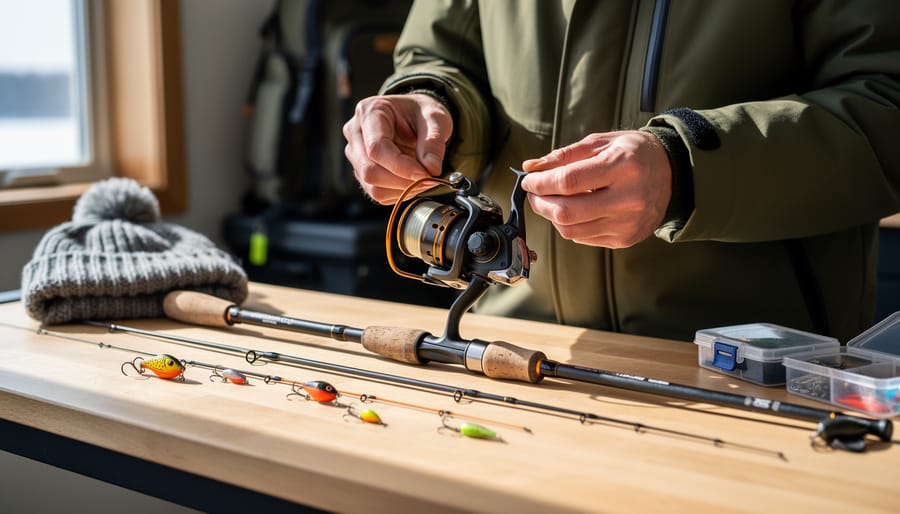
If you can, hold the reel on your rod in a shop before paying. A quick check of balance and fit takes two minutes and saves a frustrating morning on the ice.
Real Examples to Compare: Specs, Pricing and Features
Which Type of Angler Each Option Suits
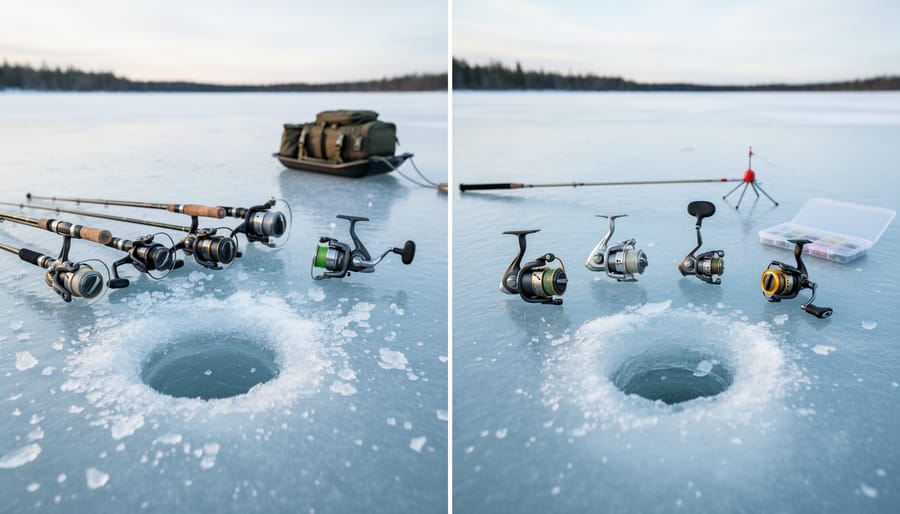
If you’re a budget-minded first-timer, the 13Fishing Descent Inline Ice Reel is listed at $49.99, which is a reasonable place to start looking. Just remember that price tells you what you’ll pay, not how it performs, so read the full description before you commit. And don’t blow your whole budget on the reel. Putting some of it toward the best ice fishing line you can find makes a real difference on a small spool.
If you’re left-handed, or you simply reel with a particular hand, the same 13Fishing listing is offered in Left and Right sizes. That’s the clearest handedness choice among the examples here, since the other listings don’t mention it. Check the retrieve side before you buy, because fixing the wrong pick in mitts is no fun.
If you want a controlled jig fall, the DYNWAVECA listing mentions a drop speed adjustment system, along with an instant anti feature. The listing doesn’t spell out how either one works in practice, so look for more detail on the product page.
If you like a built-in rattle, the Emory reel (model 3068) lists one, plus adjustable drag and an adapter kit with screws and pins. It’s a 2 1/4 in. diameter reel, so make sure that size suits your rod.
None of these listings promise a winner for every angler, so go with the features that fit how you actually fish.
Where Canadian Anglers Can Look for Inline Reels
Shopping for an inline reel in Canada is easier once you know where to start looking. Two retailers are good places to begin browsing. Cabin Creek Supply lists an “Inline Reels” category, and it describes itself as a Quebec retailer since 1967 that offers Canada-wide shipping. Tackle Depot lists “Ice Fishing Reels (7)” among its product categories, and its listing mentions free shipping over $149. Terms like that can change, so read the current policy on the shop’s own pages.
Start with the category page rather than a general search. A dedicated inline category saves you from scrolling past spinning reels, while a broader ice reel category is handy when you want to compare the two types side by side. If the site has filters, use them to narrow by reel type and price.
On each product card, look for the retrieve side (left or right), the product description, and any mention of drop speed adjustment, drag, or included mounting hardware. One source on ice reels notes that it browses inline and spinning reels for cold use, so read the description for cold-use wording too. When you’re building out the rest of your kit, our ice fishing gear checklist helps you cover everything else you’ll need on the ice.
Availability changes, so I’d rather you check directly than trust a snapshot from me. And don’t forget your local tackle shop. Standing at the counter with a reel in your hand, asking about fit and feel, is advice no product page can match, and it keeps a good shop in your community.
Common Buying Mistakes to Avoid
Everyone makes a few rookie moves with ice gear, and I certainly did. One trip, I grabbed a reel that looked perfect on the shelf, then discovered at the hole that it wouldn’t sit snug on my rod’s reel seat. I spent the morning wrapping tape around it and swearing at my mitts. A two-minute check at home would have saved the whole outing.
Here are the slip-ups worth dodging, with a quick fix for each:
- Picking the wrong retrieve side: decide which hand you crank with, then choose Left or Right to match (the 13Fishing Descent, for example, is offered in both).
- Ignoring reel seat and rod fit: confirm the reel will mount on your rod before you pay.
- Assuming mounting hardware is included: read the listing, since some mention an adapter kit and others don’t say.
- Buying on price alone: weigh features like drop speed adjustment or an anti-reverse feature against the number on the tag.
- Skipping a test spin at home: crank it, adjust the drag, and mount it on your rod in the kitchen first.
- Overlooking cold-use wording: check the product description to see how the reel is described for winter conditions.
None of these are dumb mistakes, just easy ones when you’re excited to get out there. A little homework turns the first morning on the ice into a good one instead of a frustrating one. If the description leaves you guessing about fit or what’s in the box, ask the retailer before you buy. A local tackle shop will happily tell you.
Inline Ice Reel Questions Anglers Ask
What is an inline ice fishing reel?
It’s a reel whose spool sits in line with the rod, so line comes off straight instead of looping off a spinning spool. That makes it a simple, direct option for short ice rods, much like the feel of a fly reel.
Are inline reels better than spinning reels for ice fishing?
Neither wins every time. Inline reels suit anglers who like straighter line handling and a simple setup, while spinning reels stay popular for general use, so pick based on your style and rod.
How do I know whether I need a left or right retrieve?
Think about which hand you use to hold the rod and which hand cranks the handle. Some reels, like the 13Fishing Descent, are offered in Left and Right versions, so you can match the reel to how you naturally fish.
What does a drop speed adjustment do?
It lets you control how quickly the spool releases line, so your jig falls at the pace you want. The DYNWAVECA listing mentions a drop speed adjustment system, so check that feature if controlled jig fall matters to you.
Can I find them in Canadian shops, and are they shipped?
Yes, Canadian retailers carry inline reel categories. Cabin Creek Supply lists “Inline Reels” and says it offers Canada-wide shipping, but confirm current stock and shipping terms on the retailer’s page before ordering.
If you’re still building your kit, it helps to pair your reel with the right electronics, so take a look at how to choose a fish finder before your next trip.
Picking the right inline ice reel comes down to a short checklist: choose the retrieve side that matches your dominant hand, look for drop speed control so your jig falls at the pace you want, check how the anti-reverse behaves, make sure the reel actually fits your rod, and then let price settle the tie. Don’t skip that last step in your head, because a fair price only matters once the fit and handedness are right.
If you’ve spent time with a Fly Fishing Rod And Reel pairing, you’ll find the logic familiar. It’s all about a simple, direct feel and an outfit that balances nicely in your hand. Give your setup a test spin at home before the cold hits, and you’ll walk onto the ice with confidence instead of fumbling in mitts.
Want more practical gear breakdowns and Canadian fishing tips? Subscribe to our newsletter and we’ll send them straight to you. Now bundle up, grab your rod, and get out on the ice. The fish are waiting.