Month: August 2026

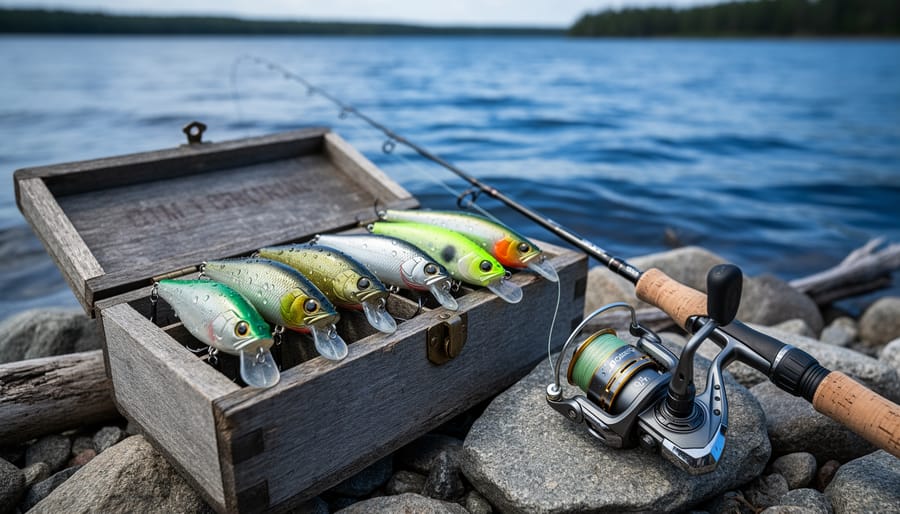
Crankbaits laid out on a tackle box beside a fishing rod on a Canadian lake shore, with blue water softly blurred in the background.

How to Choose the Right Crankbait: A Buying Guide for Canadian Anglers

Crankbaits are hard-bodied lures designed to dive to specific depths and mimic baitfish through wobbling action, and choosing the right one comes down to matching three critical factors: the depth your target fish are holding, the species you’re after, and the diving action that triggers strikes in your water conditions. I learned this the hard way after burning through half my tackle budget on crankbaits that looked perfect in the store but sat at the wrong depth for the walleye holding fifteen feet down on Lake of the Woods.
Key Takeaway: Match your crankbait to water depth first, then…

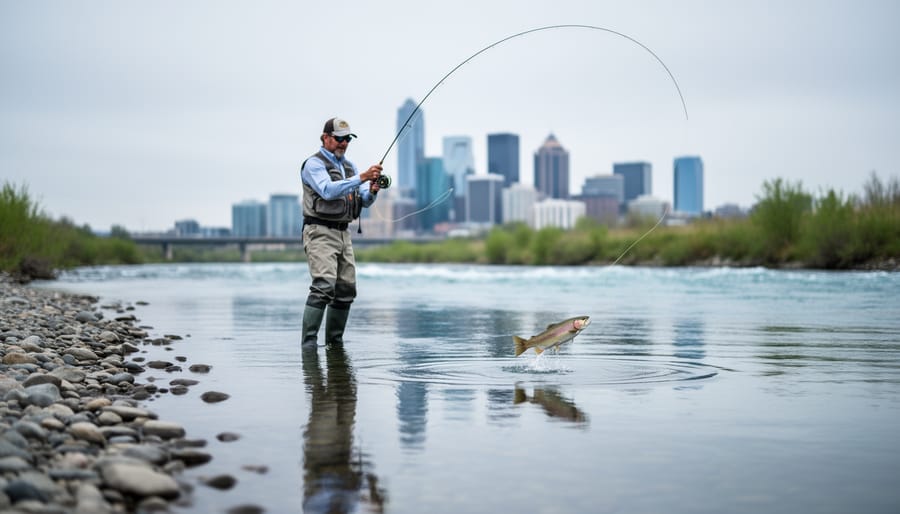
A fly fisherman casting on the Bow River near Calgary with a trout rising beneath the water surface and the downtown skyline blurred in the background.

Bow River Fly Fishing: What I Learned Chasing Trout in Alberta’s Most Famous Water

The Bow River through Calgary offers some of the most productive year-round trout fishing on the continent, with wild rainbows and browns averaging 16 to 18 inches and fish over 20 inches a regular possibility. What sets this Alberta tailwater apart is the combination of trophy-size fish, walk-and-wade accessibility right from the city, and a nearly 12-month season that keeps productive when other rivers freeze solid.
I’ll never forget my first morning on the Bow in late October, watching a 22-inch brown sip midges in the slick water below the weir while downtown office towers gleamed in the background. That strange …

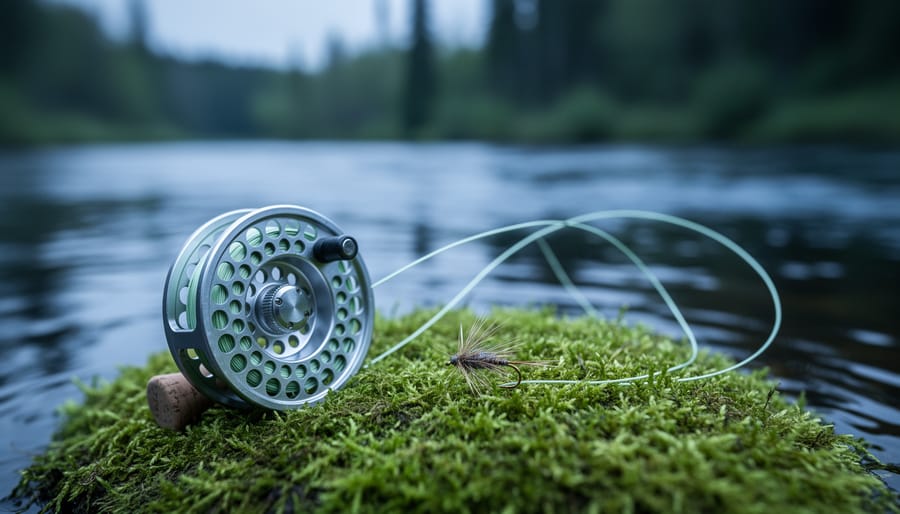
Close-up of a fly fishing reel with fly line and extended leader and tippet beside a dry fly on streamside grass in a northern Ontario creek.

How to Set Up Your Fly Fishing Line: A Complete Step-by-Step System

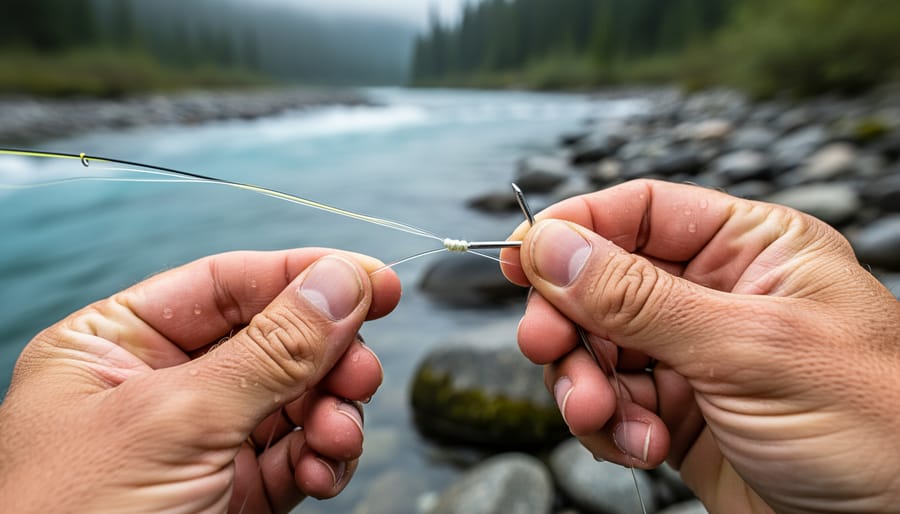
Standing waist-deep in a northern Ontario stream last spring, I watched a newcomer struggle with a tangled mess of line, leader, and tippet for twenty minutes before giving up and heading home. That frustration is avoidable. Setting up a fly fishing line takes about 15 minutes when you know the proper sequence: attach backing to your reel, connect the fly line with a nail knot, add a tapered leader, extend it with tippet, and tie on your fly. Master these five connections and you’ll spend your time casting instead of cursing.
Key Takeaway: Your complete fly fishing setup follows a simple…

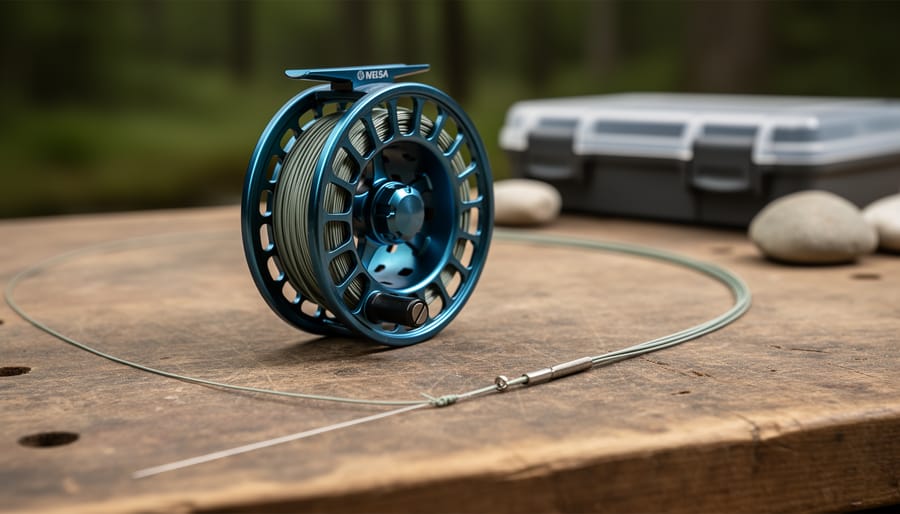
Close-up of a fly fishing reel with the fly line laid out neatly through the leader and tippet connections on a wooden bench.

How to Set Up Your Fly Fishing Line from Reel to Leader

Setting up a fly fishing line correctly means connecting four distinct components in the proper sequence: backing attached to your reel, fly line joined to the backing, leader tied to the fly line, and tippet connected to the leader. This complete system takes about 15 minutes to assemble once you understand the order, and getting it right the first time means smooth casts, proper line performance, and fewer tangles on the water.
I still remember the first time I tried assembling my own line system at a buddy’s cabin north of Kenora. I had all the pieces spread across his kitchen table, backing tangled around a chair leg, and …

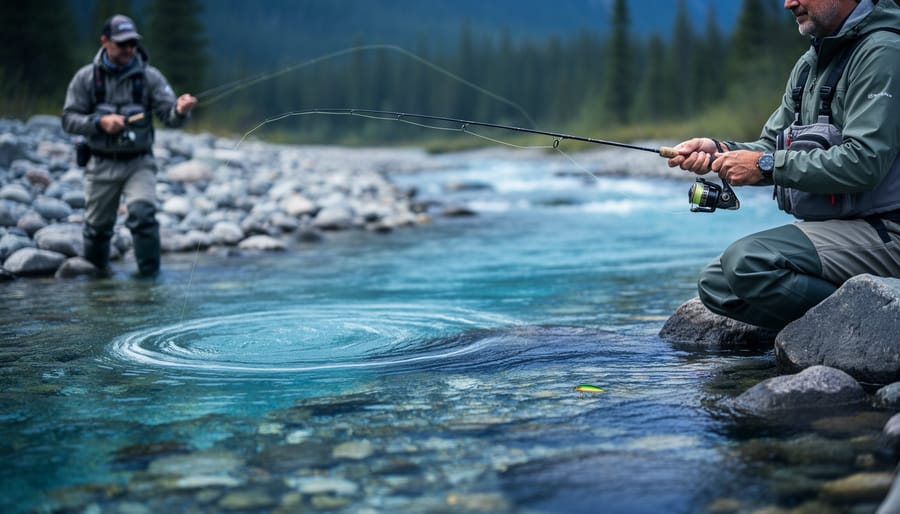
Two anglers casting in a clear Canadian trout stream—one using a fly rod and one using a spinning rod near rocky riverbank currents.

Fly Fishing vs Regular Fishing: Which Fits Your Canadian Waters?

For most Canadian anglers, fly fishing wins on elegance and finesse when chasing trout in rivers and streams, while conventional spinning or baitcasting remains unbeatable for versatility across species, water types, and sheer beginner-friendliness. The choice hinges on what you’re targeting and where you fish: if you dream of presenting dry flies to rising brook trout in a BC mountain creek or brown trout on Alberta’s Bow River, fly fishing is your path. If you want one setup that handles walleye on Saskatchewan lakes, pike in Ontario’s Kawartha region, and salmon off the Pacific coast, conventional gear does it all …

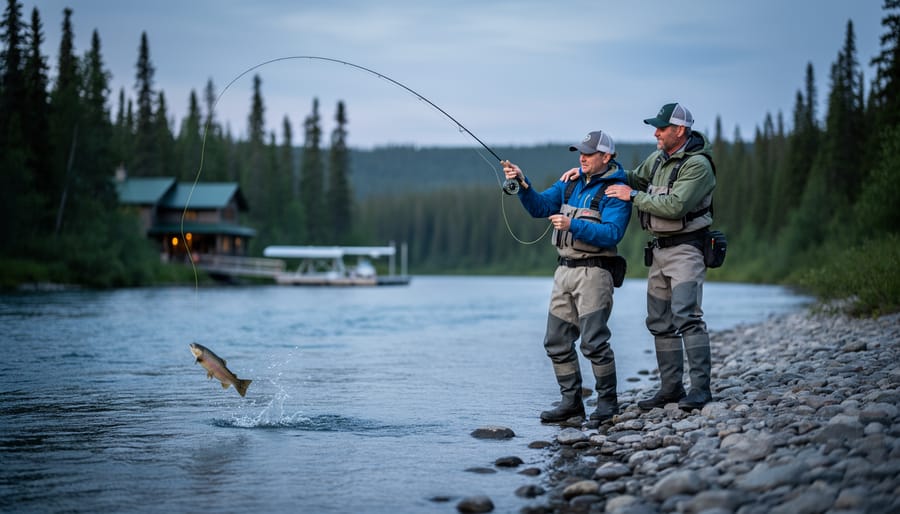
A fly fishing guide and beginner casting on a remote Canadian riverbank at dusk, with evergreen forest and lodge shoreline in the background.

Guide to Learning Fly Fishing for Sport Fish in Canada: Top Destinations, Access Points, and Local Tips

Canada’s remote waters hold some of the continent’s most pristine fly fishing opportunities, and the fastest way to master the craft while chasing trophy sport fish is through guided fly-in services that combine expert instruction with access to wilderness fisheries few anglers ever see. Whether you’re targeting aggressive northern pike in Algoma Country’s fly-in outposts or casting for wild trout in British Columbia’s backcountry with seasoned guides, these specialized services deliver hands-on …

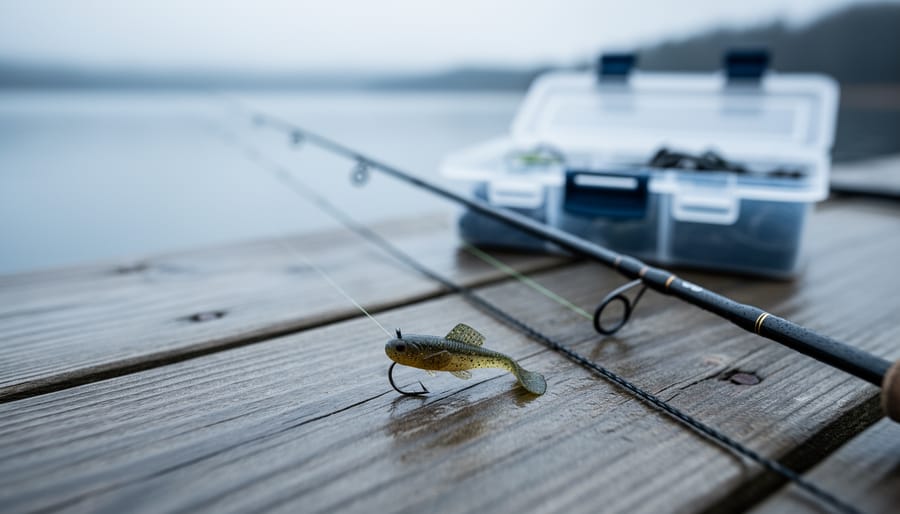
Close-up of a Ned rig—small soft plastic on a mushroom-head jig—on a fishing dock with light spinning tackle in the background.

How to Fish a Ned Rig: Simple Steps for More Bites in Canadian Waters

The Ned rig is a miniature finesse presentation that pairs a tiny soft plastic (typically 2 to 4 inches) on a mushroom or ball head jig, fished slowly on light line and spinning tackle to catch bass when they ignore everything else. Born from tournament desperation, this rig works because it looks like an easy meal: a small crawfish, goby, or baitfish barely moving across the bottom. You’ll fish it on 6- to 10-pound line with a medium-light spinning rod, dragging it across structure, hopping it in short bursts, or letting it glide back to the bottom after gentle lifts.
Key Takeaway: The …

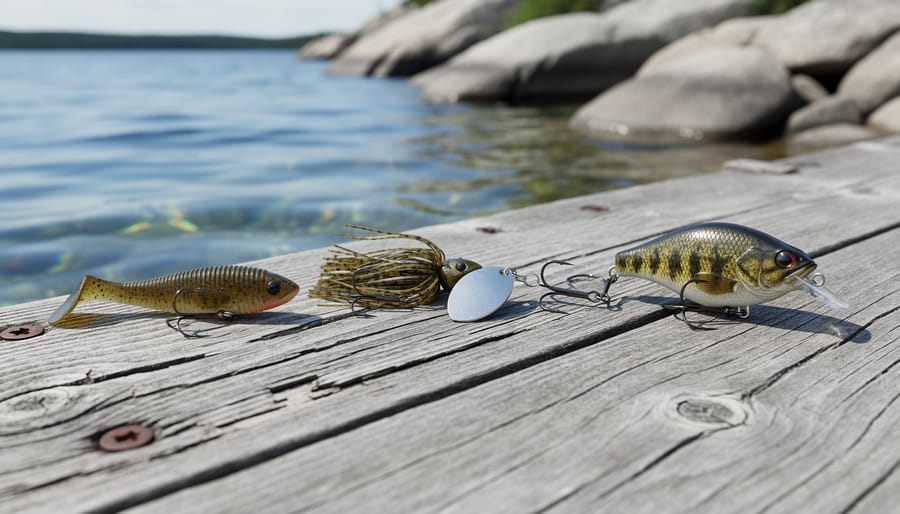
Three smallmouth bass lures arranged on a wooden dock beside rocky Canadian shoreline water.

8 Proven Smallmouth Bass Lures That’ll Fill Your Livewell in 2026

Smallmouth bass demand a different approach than their largemouth cousins, and the lures that consistently trigger strikes share a few common threads: compact profiles, natural movement, and the ability to work around rock and gravel structure where bronzebacks thrive. The best smallmouth lures for 2026 include proven performers like the Z-Man Finesse TRD for Ned rigging, the Booyah Blade spinnerbait for covering water fast, and the Berkley Dime 4 crankbait for diving into rocky zones. Each excels in specific conditions, from clear Canadian Shield lakes to current-heavy rivers.
I’ve spent enough mornings on Ontario’s …

Angler holding a fly rod while a sinking-tip streamer is positioned over underwater rocks in a clear Canadian lake.

7 Sink Tip Fly Lines to Get Your Streamer Down Fast in 2026

Sink tip fly lines solve a simple problem: how to get your streamer, leech, or nymph down into the strike zone without drowning your entire line. These hybrid lines pair a floating running section with a 6-to-20-foot sinking tip that pulls your fly deep while keeping the main body up where you can mend and manage slack. For anyone chasing lake trout in the Muskokas, swinging streamers for pike in Saskatchewan, or drifting deeper runs for steelhead, sink tips are the tool that bridges the gap between a full floater and a full …

Angler fishing at dawn from a Nova Scotia tidal shoreline, with a striped bass on wet rocks beside a spinning rod near an estuary

How to Fish for Striped Bass in Nova Scotia: Seasons, Regulations, and Tactics

The striped bass fishery in Nova Scotia is alive and thriving, and targeting these powerful coastal predators requires understanding three non-negotiables: the 2026 season dates, the strict size window, and the current regulations that protect this comeback species. You’ll fish tidal waters from April 15 to October 31 (or May 1 to September 15 in inland waters), target fish between 50 and 65 cm, and you’re allowed exactly one keeper per day.
Key Takeaway: Nova Scotia’s 2026 striped bass season runs April 15 to October 31 in tidal waters. You may keep one fish between 50-65 cm…