8 Proven Smallmouth Bass Lures That’ll Fill Your Livewell in 2026
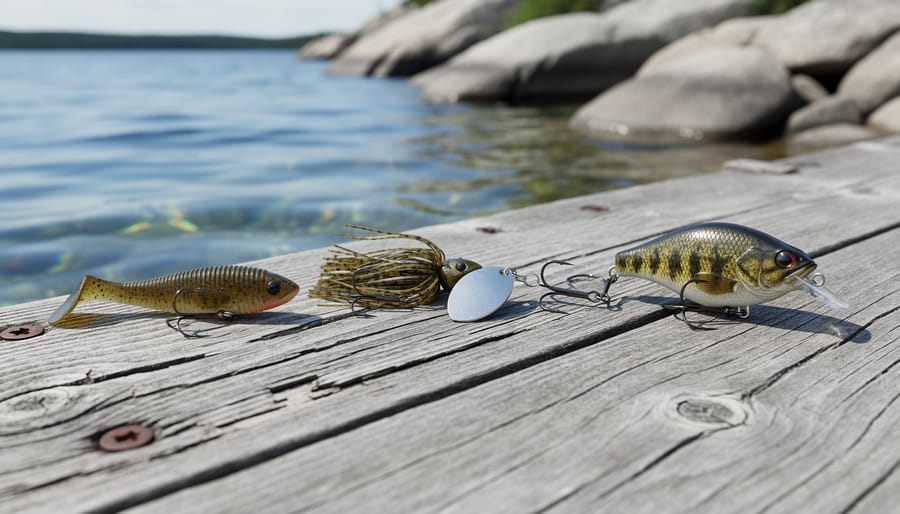
Smallmouth bass demand a different approach than their largemouth cousins, and the lures that consistently trigger strikes share a few common threads: compact profiles, natural movement, and the ability to work around rock and gravel structure where bronzebacks thrive. The best smallmouth lures for 2026 include proven performers like the Z-Man Finesse TRD for Ned rigging, the Booyah Blade spinnerbait for covering water fast, and the Berkley Dime 4 crankbait for diving into rocky zones. Each excels in specific conditions, from clear Canadian Shield lakes to current-heavy rivers.
I’ve spent enough mornings on Ontario’s smallmouth waters to know that success isn’t about having the biggest tackle box. It’s about choosing lures that match the aggressive, opportunistic feeding style of these fish. Smallmouth often suspend over rocky drop-offs or patrol windswept points, and they’ll ambush prey with speed that leaves little room for hesitation. That means your lure needs to trigger an immediate reaction or mimic something they’re already hunting: crayfish, minnows, or juvenile perch.
The eight lures we’re breaking down here aren’t trendy newcomers or rebranded classics. They’re field-tested options that account for varying water clarity, seasonal patterns, and the structure-heavy environments where smallmouth spend their time. Whether you’re finesse fishing deep ledges or burning a blade over shallow flats, you’ll find a specific tool for the job.
How We Chose These Smallmouth Bass Lures
Picking these eight lures wasn’t about grabbing the flashiest options or chasing marketing hype. I focused on what actually works when you’re targeting smallmouth bass across the diverse conditions we fish in Canada. Each lure earned its spot based on real-world performance, not just manufacturer claims or tournament buzz.
Here’s what guided my selections:
- Proven smallmouth effectiveness, not just general bass appeal, these lures trigger the specific feeding behaviors and preferences that make bronzebacks different from their largemouth cousins
- Versatility across Canadian water types, from clear shield lakes to stained rivers, rocky structure to weed edges
- Strong performance reputation and availability in 2026, ensuring you can actually find these lures when you need them
- Consistent feedback from the angling community, including guides, tournament anglers, and weekend warriors who depend on results
These aren’t theoretical picks pulled from a catalog. They’re lures I’ve watched produce fish after fish in challenging conditions, and that other serious smallmouth anglers reach for when it matters. Some are modern innovations taking advantage of new techniques, while others are proven classics that remain effective year after year. What they all share is a track record of filling livewells when smallmouth are the target.
1. Z-Man Finesse TRD, The Ned Rig Champion
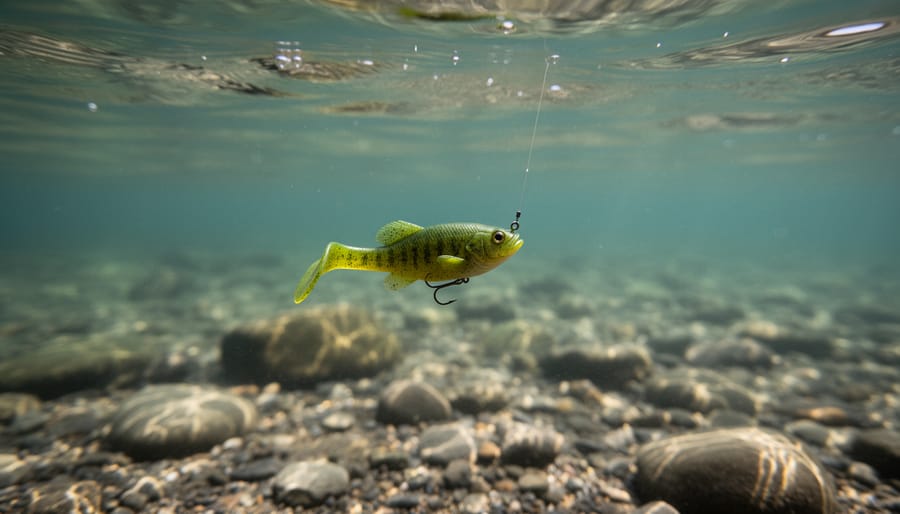
The Z-Man Finesse TRD sits at the top of our list because it flat-out catches smallmouth when nothing else will. I learned this truth the hard way on a bluebird July afternoon near Parry Sound, staring at fish I could see cruising below the boat but refusing every flashy spinnerbait and crankbait I threw. Switching to a green pumpkin TRD on a light jighead changed everything, three casts, three fish.
The Ned rig technique is beautifully simple. You thread this stubby, buoyant worm onto a mushroom-style jighead (usually 1/16 to 3/16 ounce), cast it out, and let it sink to bottom. The magic happens on the lift-and-fall: raise your rod tip slowly, let the lure settle back down, and pause. That standing posture when it’s resting, tail up, nose down, drives smallmouth crazy. They can’t help themselves.
This presentation dominates in clear Canadian shield lakes where smallmouth get a good look at everything. The subtle action and compact profile don’t spook pressured fish, and the buoyancy creates a hover effect that imitates everything from gobies to crayfish to struggling baitfish.
Work it painfully slow around rocky points, over sand-to-gravel transitions, and along the edges of offshore humps in 8 to 25 feet of water. When smallmouth are finicky, post-frontal conditions, bright sun, heavy fishing pressure, the Finesse TRD keeps producing while aggressive presentations go ignored. Keep a few natural colors (green pumpkin, brown, white) and you’re covered for most situations.
2. Booyah Blade, Vibration and Flash for Aggressive Strikes
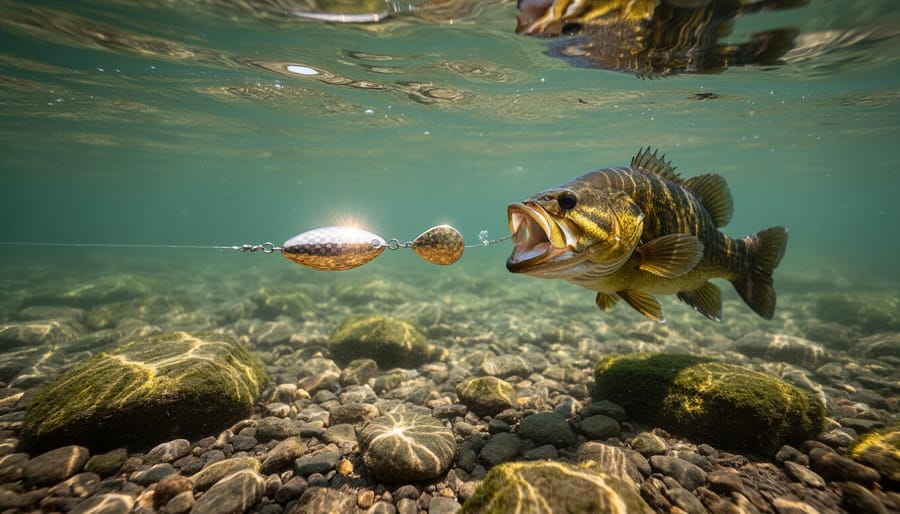
When smallmouth are aggressive and you need to cover water fast, the Booyah Blade spinnerbait becomes your best friend. I’ve thrown this lure countless times across Canadian shield lakes, and it consistently pulls fish from areas I might otherwise skip. The combination of vibration and flash triggers reaction strikes from smallmouth that simply can’t resist the commotion as it churns past their holding spots.
The Booyah Blade’s effectiveness comes down to its blade configuration. Most anglers run it with a Colorado and willow blade combination, the Colorado creates heavy thump and vibration while the willow adds flash and lets you retrieve faster without the lure helicoptering to the surface. That dual-blade setup is perfect for smallmouth because it appeals to both their lateral line sensitivity and their visual hunting instincts.
Retrieve speed matters more than most realize. Start with a steady, medium retrieve along rocky points and underwater shelves where smallmouth ambush baitfish. When you feel the lure tick rocks or deflect off structure, that’s prime, don’t slow down. Smallmouth often hit right after the lure bounces off an obstacle. Around weed edges, try burning it just above the vegetation to pull fish up from below.
Color selection depends on water clarity. In clear Canadian lakes, stick with natural patterns like white and chartreuse or shad imitations. When the water’s stained or you’re fishing deeper structure, switch to brighter colors, chartreuse and white or even all-white configurations that create maximum contrast. Overcast days call for darker blades that push more water and create a defined silhouette.
3. Berkley Dime 4, Crankbait Precision for Mid-Depth Hunting
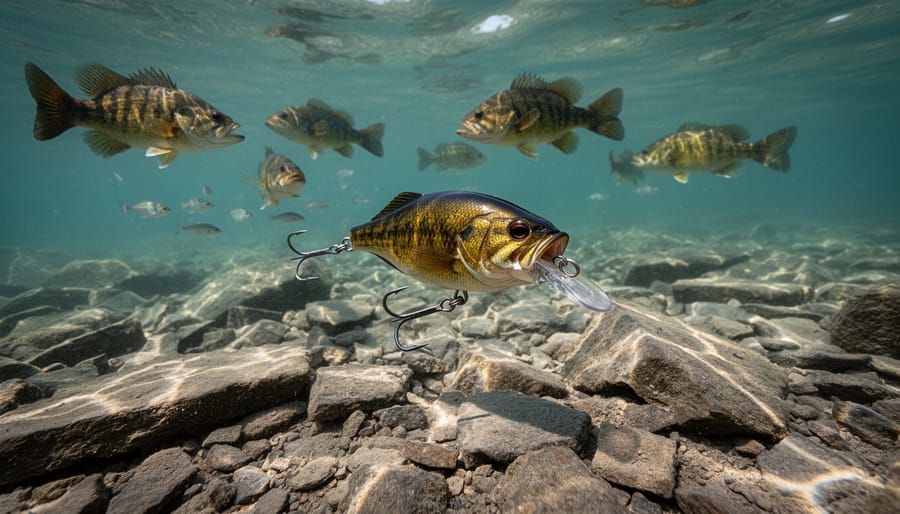
When smallmouth are holding at 8 to 15 feet along rocky transitions and drop-offs, the Berkley Dime 4 becomes the most efficient search tool in your tackle box. This crankbait earned its reputation as the top crankbait for 2026 by doing exactly what smallmouth anglers need: diving to productive mid-depth zones, deflecting off rocks without hanging up, and triggering reaction strikes from fish that might ignore slower presentations.
The Dime 4’s tight wobble and moderate diving depth make it perfect for working the rocky structure that defines Canadian shield lakes. Unlike deeper-diving cranks that hang up constantly or shallow runners that pass over the fish, this bait tracks through the strike zone where smallmouth patrol for crayfish and baitfish. When it bangs off a boulder or ricochets along a rock shelf, that erratic deflection often triggers an immediate strike from a smallmouth that wasn’t actively feeding.
I reach for a crankbait when I need to cover water quickly and when fish are relating to hard structure rather than suspended or buried in heavy cover. If you’re new to crankbait fishing and unsure where to start focus on maintaining bottom contact. Cast beyond your target area, crank down until you feel the lure ticking rocks, then use a steady retrieve with occasional pauses. Those pauses let the bait float up slightly before diving again, which often draws strikes from following fish. On steep drop-offs, work parallel to the edge rather than straight down the slope to keep the bait in the zone longer.
4. Z-Man Chatterbait Elite Evo, Bladed Jig Versatility
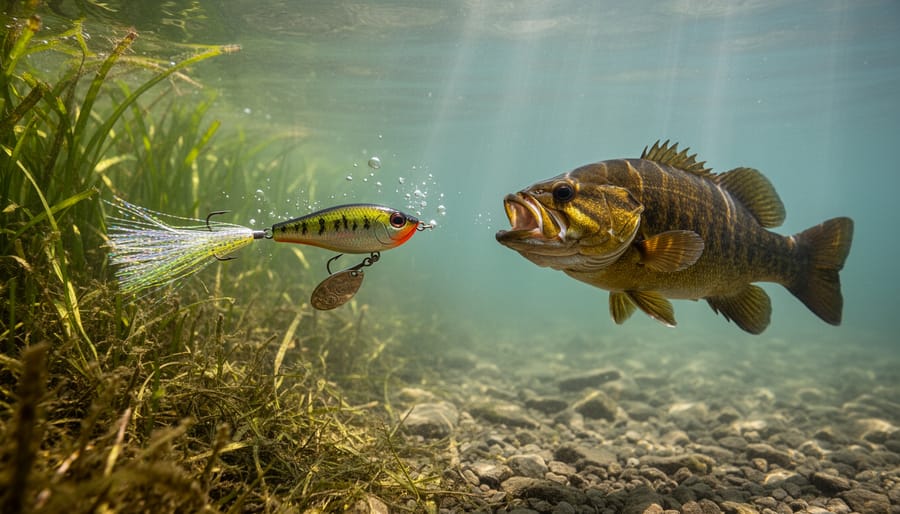
The Chatterbait Elite Evo changed how I approach smallmouth fishing in murky water. That distinctive blade vibration cuts through stained conditions where visual presentations fail, sending out thumps that smallmouth feel from distance. Unlike standard jigs, the blade creates an erratic hunting action that triggers reaction strikes even from neutral fish.
This bladed jig shines in versatility. I’ve caught smallmouth cranking it steadily over weed tops, burning it along rocky transitions, and even slow-rolling it through deeper water when fish suspend. The blade chatter disrupts the natural underwater soundscape, drawing curious smallmouth in for a closer look before they hammer it.
Trailer selection transforms the Chatterbait’s effectiveness. A 3.3-inch swimbait trailer adds bulk and a realistic swimming profile for aggressive fish. When bites slow, I’ll switch to a crawfish-style trailer that deflects off rocks with lifelike claw movement. In heavy vegetation, a smaller paddle tail keeps the presentation compact while maintaining action. Match trailer color to forage, white or chartreuse in stained water, natural greens and browns when clarity improves.
Retrieve technique matters more than speed. Start with a medium-steady retrieve to establish baseline action, then mix in pauses and twitches. Smallmouth often strike during those hesitations when the lure seems vulnerable. Around vegetation, rip it free from contact points, that sudden burst mimics fleeing baitfish and triggers violent strikes.
The bladed jig format has become essential because it covers water efficiently while offering enough vibration and action to compete with modern electronics-driven fishing approaches.
5. Charlie Brewer’s Slider Worm, Finesse Simplicity That Works
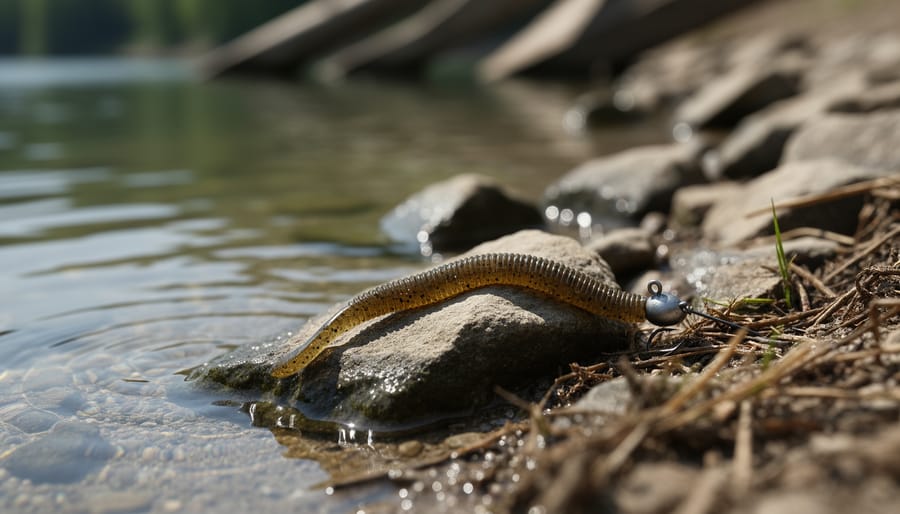
Sometimes the best lure is the one that doesn’t try too hard. Charlie Brewer’s Slider Worm proved that decades ago, and it’s still fooling smallmouth across Canada in 2026 because the fundamentals never go out of style.
This small worm, typically 4 to 6 inches, gets rigged on a simple jighead with the hook point exposed. That’s it. No fancy Texas rig, no weedless setup, just a hook through the nose and a slow, swimming retrieve. The beauty lies in that simplicity. The worm glides through the water with a subtle tail wiggle that mimics a wounded minnow or struggling baitfish, and smallmouth interpret that as an easy meal.
I’ve watched this thing work on days when nothing else would. Pressured lakes where the fish have seen every flashy crankbait and buzzbait in the box? The Slider just swims past their nose at a crawl, and they can’t help themselves. It’s particularly deadly in clear water where smallmouth get a good look and reject anything that seems off.
The technique requires patience. Cast it out, let it sink to your target depth, then retrieve just fast enough to keep it swimming horizontally. Pairing it with quality best fishing line in lighter test helps maintain that natural presentation, usually 6 to 8 pound fluorocarbon works perfectly.
Beginners love it because there’s no complicated rigging or technique to master. Experts keep it tied on because they know when the bite gets tough, going smaller and slower wins.
6. Lake Fork Lures Pro Drop Shot Worm, Vertical Precision
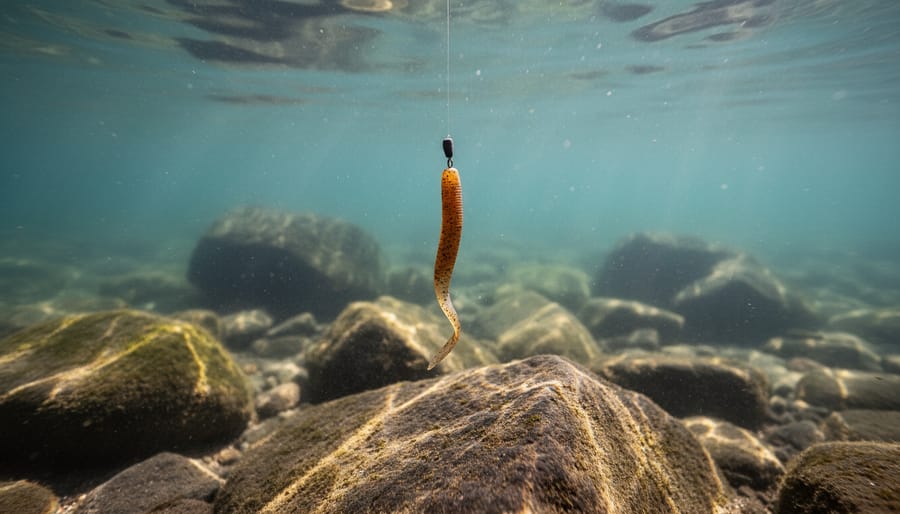
Drop shotting has become one of my go-to techniques when smallmouth are holding tight to structure or suspended off bottom, and the Lake Fork Lures Pro Drop Shot Worm is purpose-built for this finesse presentation. The technique keeps your bait hovering above the weight, creating a tantalizingly subtle action that even the wariest smallmouth can’t ignore.
Here’s why drop shotting dominates in certain situations: when fish are in deep water along rock faces or ledges, when they’re suspended and won’t chase faster-moving lures, or when crystal-clear conditions make smallmouth extra cautious. The vertical presentation lets you hold your bait in the strike zone indefinitely, working it with tiny twitches of your rod tip while the weight stays planted on bottom.
Rigging the Pro Drop Shot Worm is straightforward. Tie a Palomar knot to your hook, leaving a 12-18 inch tag end for your weight in deeper water, or 8-12 inches when fishing shallower. Nose-hook the worm so it hangs horizontally. For weight, I start with a 1/4-ounce drop shot sinker in moderate depths and go heavier in wind or current, you want just enough to maintain bottom contact without excessive drag.
The key is subtle rod work. Let the worm sit motionless for a few seconds, then give it tiny shakes or slow lifts. Smallmouth often hit on the pause. Use light line, 6-8 pound fluorocarbon, so the worm moves naturally with minimal input. When you feel that telltale weight or see your line swim sideways, set the hook with a smooth sweep rather than a violent hookset.
7. Lake Fork Lures Pro Hog, Creature Bait for Heavy Cover
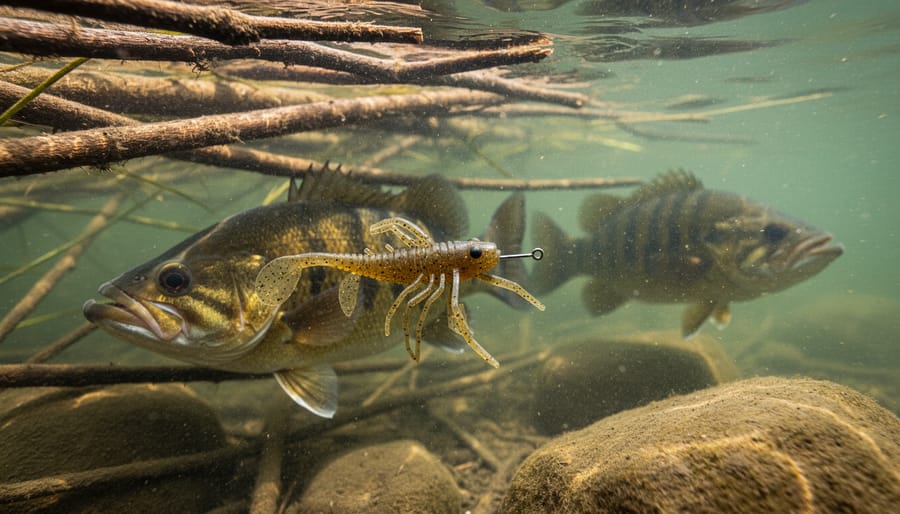
The Pro Hog looks nothing like the minnows and shad that dominate most tackle boxes, and that’s exactly why it works. This chunky creature bait sports multiple appendages, curly tails, flapping claws, and ribbed body sections, that create micro-movements even when the lure is barely moving. When a big smallmouth is hunkered in the rocks guarding its ambush point, that subtle lifelike action triggers an instinctive strike.
I usually Texas rig the Pro Hog with a 3/16 or 1/4 ounce bullet weight when I’m pitching it into boulder fields or along rocky shorelines. The streamlined setup lets you slip through gaps between rocks without constant snags, while the weight gets the bait down quickly to where territorial smallmouth are waiting. For deeper structure or when you want a slower fall, switch to a Carolina rig with the weight 18 inches up the line, this setup lets the Pro Hog glide and hover more naturally as it descends.
The real magic happens when you pause your retrieve. Those appendages keep fluttering and waving, making the lure look alive even when it’s sitting still. Bigger smallmouth, especially during the spawn and post-spawn periods, can’t resist something that looks like it’s invading their territory. For more strategies on targeting trophy-sized fish, check out these smallmouth tips. Watermelon and green pumpkin colors work well in clear water, while black and blue stand out in stained conditions.
8. Jenko The Don, Forward-Facing Sonar Minnow for Modern Anglers
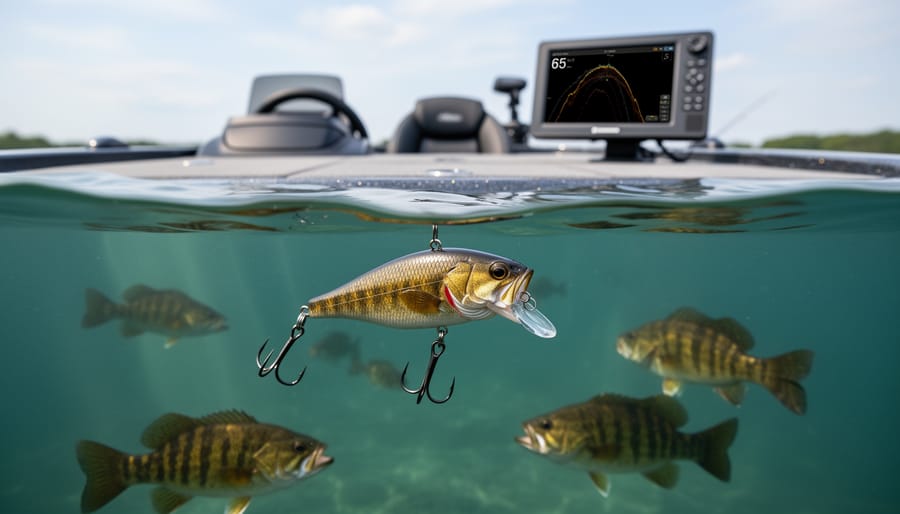
If you’ve added forward-facing sonar to your fishing gear checklist the Jenko The Don deserves a spot in your tackle box. This specialized minnow was designed specifically for the sight-fishing approach that electronics have made possible, and it’s become one of the most talked-about equipment choices among tech-savvy anglers in 2026.
The Don’s profile and subtle swimming action shine when you can watch smallmouth react to it on your screen. Unlike traditional lures that rely on aggressive vibration, this minnow creates a natural glide and dart motion that triggers bites from fish you can actually see approaching. When you spot a smallmouth suspended off structure or cruising a flat, you can cast beyond it, work the lure into its strike zone, and watch the whole interaction unfold in real time.
There’s definitely a learning curve. You need to master both the electronics and the precise lure presentation, which means initially you’ll spend more time staring at the screen than feeling bites. But once it clicks, the effectiveness is remarkable. You’re not blind-casting and hoping, you’re presenting directly to visible fish and adjusting your retrieve based on their body language.
This approach works exceptionally well for targeting bigger, more cautious smallmouth that often ignore standard presentations. The combination of sight-fishing and a realistic minnow profile lets you outsmart fish that have seen every lure in the box.
Matching Lures to Canadian Smallmouth Waters
The Canadian Shield lakes with gin-clear water and rocky drop-offs demand the Berkley Dime 4 crankbait and Z-Man Finesse TRD. Smallmouth in these environments are often visual hunters, so natural colors and precise presentations win. When the water’s clear, downsize to the Finesse TRD on a Ned rig and work it painfully slow along rocky transitions where smallmouth ambush prey.
Stained rivers and flowages change the game entirely. Here, the Booyah Blade spinnerbait and Z-Man Chatterbait Elite Evo shine because their vibration and flash help smallmouth locate your offering in reduced visibility. The blade thump cuts through murky water better than subtle finesse tactics. Cast these across current seams and along rocky banks where smallmouth hold in the flow.
Early season, when smallmouth are shallow and aggressive post-spawn, tie on reaction baits like the Chatterbait or Booyah Blade to cover water fast. As summer arrives and fish slide deeper or get finicky in the heat, switch to the Lake Fork Pro Drop Shot Worm or Charlie Brewer’s Slider Worm for a more methodical, vertical approach.
Around weed beds, the Lake Fork Pro Hog rigged Texas-style slips through vegetation without constant snags, while rocky points call for deflection lures like crankbaits that bounce off structure and trigger reaction strikes. Match your lure choice to the specific habitat you’re fishing rather than forcing your favorite into every situation.
Common Questions About Smallmouth Bass Lures
What colors work best for smallmouth bass lures?
Natural shades like green pumpkin, brown, and watermelon excel in clear water, while white, chartreuse, and black provide contrast in stained conditions. Smallmouth tend to favor more subtle, realistic colors compared to largemouth, though they’ll absolutely crush bright options when the water’s murky or during low-light periods.
How do smallmouth lures differ from largemouth lures?
Smallmouth lures typically run smaller and more finesse-oriented since smallmouth have smaller mouths and often feed on crayfish, minnows, and insects rather than the bigger prey largemouth target. You’ll have better success downsizing your presentations and using more natural, subtle actions rather than the aggressive, oversized baits that work for largemouth in heavy cover.
What’s the best all-around lure if you could only pick one?
The Z-Man Finesse TRD on a Ned rig wins this hands-down for versatility across seasons, water clarity, and smallmouth moods. It works in two feet or twenty, produces in both rivers and lakes, and catches fish when nothing else will.
Do expensive lures catch more fish than budget options?
Not necessarily. Presentation and location matter far more than price. That said, quality lures often feature better hooks, more durable construction, and refined actions that can make a difference over hundreds of casts, but a confident angler with a basic jig will outfish someone fumbling with premium gear they don’t understand.
When should you switch lures during a fishing session?
Give each lure at least 15-20 casts in different retrieves before switching, unless you’re getting follows without commits or the conditions clearly don’t match your presentation. If you’re marking fish on sonar but not getting bites, downsize or slow down rather than constantly cycling through your tackle box.
The biggest mistake I see anglers make is overthinking lure selection. Smallmouth aren’t as finicky as we convince ourselves they are. Water temperature, clarity, and structure matter more than whether you’re throwing the latest release or a beat-up tube jig from five seasons ago. Focus on matching your lure size and action to what smallmouth are eating in your specific water, then commit to working it properly through productive areas. Confidence in your presentation beats a boat full of unused lures every single time.
There’s something deeply satisfying about figuring out the right presentation for smallmouth bass. That moment when you tie on the Finesse TRD, make a cast to a rocky point you’ve been eyeing, and feel that unmistakable thump, it’s what keeps us coming back to the water. These eight lures give you a comprehensive toolkit for chasing smallmouth across Canada in 2026, whether you’re fishing the clear shield lakes of Ontario, the flowing rivers of Quebec, or the rocky reservoirs out west.
You don’t need all eight lures in your box tomorrow. Start with two or three that match the waters you fish most often, learn them inside and out, and build confidence before expanding your selection. Pay attention to what the fish are telling you, sometimes they want that subtle Slider Worm presentation, other days they’ll crush a Chatterbait ripped through the weeds.
Canada’s smallmouth fisheries are something special. Every lake has its own character, every season brings new challenges, and there’s always another rocky point to explore. Grab your rod, tie on one of these proven lures, and get out there. The adventure is waiting.