How Much Does an Ice Fishing Camera Cost in Canada? (2026 Price Guide)
An ice fishing camera in Canada can cost anywhere from about $134 at the entry level to well over $1,000 at the top end, with plenty of options in between.
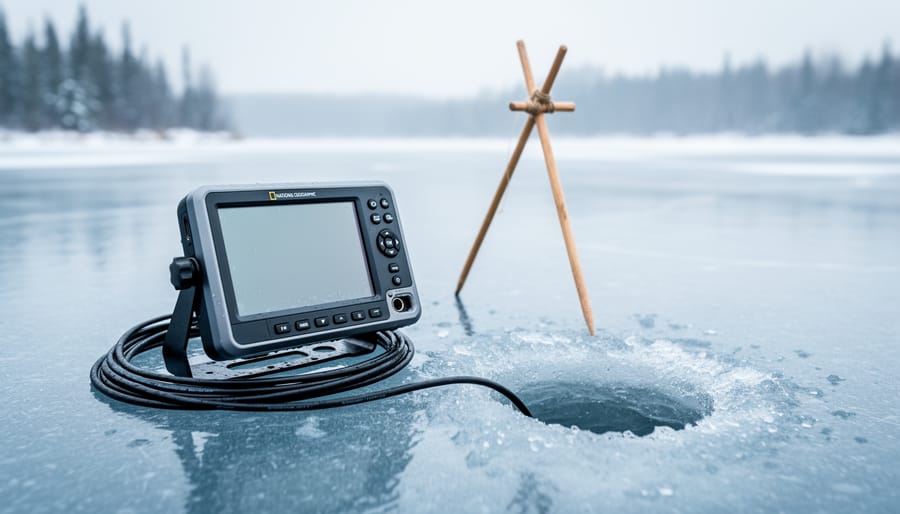
An ice fishing camera in Canada can cost anywhere from about $134 at the entry level to well over $1,000 at the top end, with plenty of options in between. Aqua-Vu models listed on Canadian retail sites run from $249.99 and $349.99 up to $599.99, and Up North Sports lists ice fishing underwater cameras at $379.99 and $389.95. Outdoor Life’s review of the best underwater fishing cameras puts the full spread at $134 to $1299.
So what moves the price? Four things do most of the work: screen size and picture quality, how much cable you get for deeper water, battery or power setup, and the brand’s warranty and support. A camera with a bigger screen and longer cable costs more, and that’s a trade-off worth thinking through before you spend.
I’ve watched plenty of first-timers grab the cheapest unit, then realize it wasn’t built for cold, or that it needed a power source they hadn’t packed. A little homework up front saves a frozen, frustrating afternoon on the lake.
Some models are plug-and-play, ready to use out of the box, and brands like FishPRO back theirs with a 12-month warranty. Below, we’ll break down cost by tier, show where Canadian anglers can buy, and cover how to use a camera safely on the ice this winter.
What You’ll Pay: Ice Fishing Camera Cost by Price Tier
Entry-Level: Getting Your Feet Wet Without Draining Your Wallet
If you’ve ever wondered what’s actually swimming under your feet, the entry level is a perfectly good place to start. It suits beginners and weekend anglers who just want a look through the ice without a big commitment. And no question is too basic here. I asked plenty of them myself.
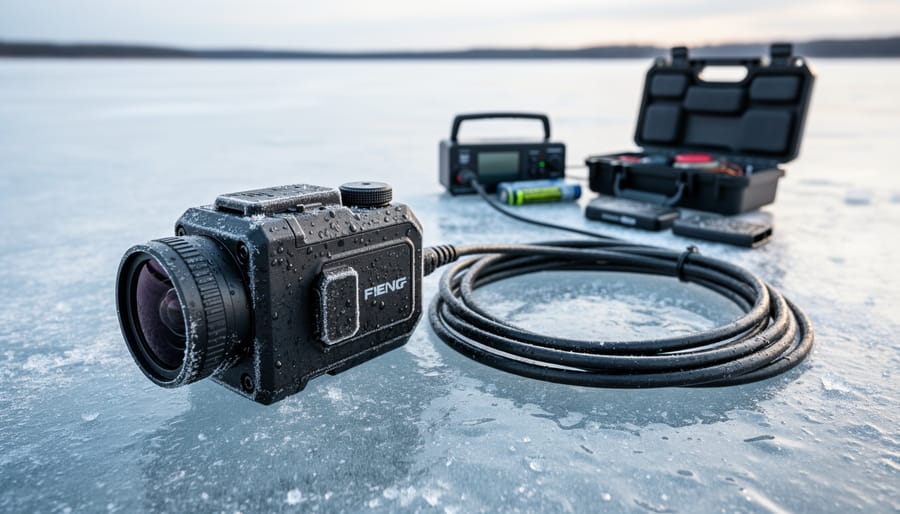
The lower end of the range starts around $134, based on Outdoor Life’s review of underwater cameras. A plug-and-play option like the FishPRO 2026 Upgrade is described as ready to use out of the box, with no complicated setup. It runs on DC12V and can charge from a power bank, which is handy on a cold morning. Here’s how observed prices stack up:
| Source | Observed Price or Range | What It Tells You |
|---|---|---|
| Outdoor Life review | $134 to $1,299 | Entry-level cameras exist, but the ceiling is high |
| Aqua-Vu Canada (CAD) | $249.99, $349.99, $599.99 | Canadian listings step up in clear price tiers |
| Up North Sports | $379.99 and $389.95 | Specialty retailers sit above the entry price |
These are observed listings and may change, so check current pricing before you buy. Starting small lets you learn what you like before spending more.
Mid-Range and Premium: Where Serious Ice Anglers Spend
Once you’re fishing most weekends, the conversation changes from “is a camera worth it?” to “how much camera do I actually need?” Canadian listings give a useful sense of where that money lands. Aqua-Vu cameras show up in CAD with prices like $249.99, $349.99 and $599.99, so there’s a real spread even within one brand. Up North Sports lists underwater cameras for ice fishing at $379.99 and $389.95, which sits right in the middle of that range. Prices vary by store and listing, so check current pricing before you commit.
At the top, Outdoor Life’s review puts the best underwater fishing cameras between $134 and $1,299. That ceiling is a long way from the low hundreds, and I won’t pretend every dollar buys a feature you’ll notice from a hole in the ice. The listings I found don’t spell out exactly what each step up delivers, so read the product details yourself.
Here’s how I think about it. If you’re out every weekend and want to study structure and fish behaviour, spending around $350 to $600 can make sense. If you fish a handful of days a season, a lower tier may be plenty. Match the camera to how seriously you fish, and you won’t overspend.
Where the Money Goes: A Cost Breakdown Beyond the Sticker Price
When I first priced out my camera setup, I made the classic mistake of staring at the tag on the box and thinking that was the whole bill. It wasn’t. The camera is the big-ticket item, but a handful of smaller costs show up once you’re standing on the lake with cold fingers wishing you’d planned better.
Here’s what I packed for my first proper outing, and what each piece adds to the real total:
- The camera unit and cable, which is the core of what you’re paying for.
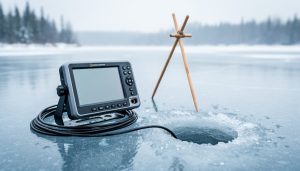
- A monitor or viewing setup so you can actually watch what’s happening below.
- A power source, since the FishPRO 2026 Upgrade is a DC12V device.
- A power bank, because that same camera supports charging by power bank.
- A bag or case to carry and protect the gear on the walk out.
- Warranty and support coverage, which has value even though you don’t see it on the ice.
Power is the one that surprises people. Because the FishPRO model runs on DC12V and can be charged by power bank, a decent power bank is a likely add-on if you don’t already own one. I tossed mine in the pack the night before, and I was glad I did. Nothing ends a morning faster than a dead battery twenty minutes in.
Then there’s carrying and protection. Lake walks are rough on electronics, and a camera tossed loose in a sled gets knocked around. I keep the cable coiled and the monitor wrapped so nothing gets cracked or soaked. It’s not a huge expense, but it’s real, so it’s worth budgeting a little for it.
Warranty is the quiet one. FishPRO covers its underwater and ice fishing camera with a 12-month warranty and 7×24-hour customer support. That won’t show up as a line item on your receipt, but it’s real value if something goes sideways partway through the season. Ask about coverage before you buy, wherever you shop.
Setup is mercifully simple. The FishPRO 2026 Upgrade is described as plug-and-play and ready to use out of the box, which means no extra setup gear or fiddly accessories. For a beginner, that keeps the extras list short.
Add it up and the sticker price tells only part of the story. Plan for the camera, a way to power it, and something to carry it in, and you won’t get any ugly surprises out on the ice.
What Changes the Price: Features, Retailer, and Ice-Fishing Suitability
Worth the Extra? A Quick Look at the Trade-Offs
Is a camera worth the money? I’ve gone back and forth on that myself. The first time I watched a perch drift up to my jig on screen, I was hooked. But hauling one more bag of gear across the ice isn’t everyone’s idea of fun.
Pros
- You see what’s actually below you, from weeds and rocks to drop-offs.
- Watching fish react teaches you more about their behaviour than guessing ever will.
- Plug-and-play options, like the FishPRO 2026 Upgrade, need no complicated setup.
- Warranty coverage, such as FishPRO’s 12-month plan, takes some risk out of the purchase.
Cons
- The upfront cost can be steep, especially toward the premium end.
- You’ll need extra power and gear to carry out to your hole.
- With prices running from about $134 to $1,299 in one review, you’ll have to do your research.
Stepping up in price makes the most sense if you fish often and want to learn the water, not just peek through the hole. If you’re still deciding what to buy, it helps to choose an ice fish finder alongside a camera, since the two do different jobs. For a handful of outings a winter, a simpler setup will do the job.
Buying vs. DIY: Where to Shop in Canada and What About Homemade Rigs?
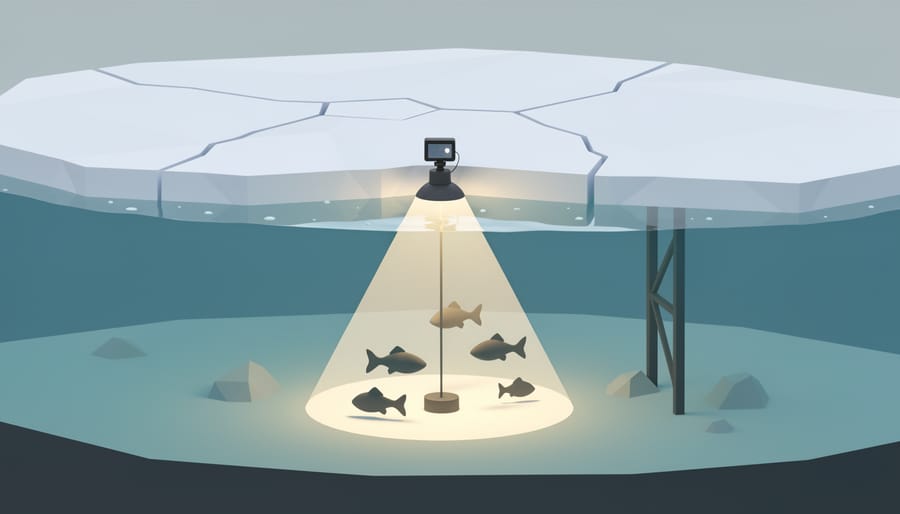
When it comes to getting a camera under the ice, you’ve really got two roads. The straightforward one is buying a ready-made unit from a Canadian retailer. You open the box, charge it up, and you’re fishing. Take the FishPRO 2026 Upgrade, which is described as plug-and-play and ready out of the box, and which comes with a 12-month warranty and 7×24-hour customer support. If something goes sideways on a cold morning, someone’s there to help.
The other road is DIY, a homemade or improvised setup. I get the appeal, because tinkering is half the fun of this hobby. But you’re trading money for time, effort, and risk. You’ll be sourcing parts yourself, troubleshooting on the ice, and you won’t have a warranty to fall back on. If water gets where it shouldn’t, that’s your problem. For most beginners, I’d say buy ready-made first and tinker later.
Here’s where to look in Canada:
- Aqua-Vu: underwater cameras listed in Canadian dollars, including $249.99, $349.99, and $599.99 items.
- Up North Sports: underwater cameras for ice fishing, listed at $379.99 and $389.95.
- Best Buy Canada: fishing gear and fish finders in its Canadian store.
- FishPRO: a 12-month warranty and 7×24-hour customer support.
Prices and stock change from store to store, so check current listings before you commit. And if you’re still building out your kit, my fishing gear checklist covers the essentials, while the ice reel buying guide helps with the rod-and-reel side of the equation.
Using Your Ice Fishing Camera Safely on the Ice This Winter
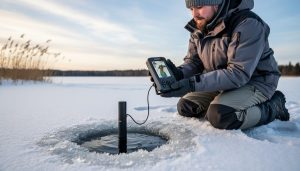
My first test run was in my backyard, on the kitchen table, with the camera sitting in a bucket of water. It sounds silly, but I’m glad I did it, because the monitor was dead when I plugged it in and I fixed it in the warmth of my own house instead of on a frozen lake with numb fingers. If you’re new to this, that little rehearsal is the best habit I can pass along.
Safety on the ice always comes first, and no camera is worth a risk. Check ice conditions through local sources and trusted guidance before you leave, and never assume a spot is safe because it was last week.
Here’s the checklist I follow on every first outing:
- Confirm the ice is safe using current local guidance, and bring a buddy or tell someone where you’re going.
- Charge or connect your power. Many cameras, like the FishPRO 2026 Upgrade, run on DC12V and can be charged by power bank, so top it up the night before.
- Test the camera at home in a bucket or sink to confirm the picture works.
- Pack your gear in one tidy bag: camera, cable, monitor, power bank and spare gloves.
- Set up at the hole, keeping the cable clear of walkways so nobody trips on it.
- Lower the camera slowly and watch the monitor before you drop a line.
- Pack out dry, wiping down the cable and keeping electronics off the snow.
If you’re a beginner, plug-and-play models are a real gift. The FishPRO 2026 Upgrade is described as ready to use out of the box with no complicated setup, which means less fiddling when your hands are cold. Keep a pair of thin liners under your mitts so you can handle buttons without exposing bare skin, and keep your monitor and power bank close to your body, since cold drains batteries fast.
If you want to try gear before you buy, browse the booths at the Winnipeg Ice Fishing Show and ask questions. Folks there love to talk shop, and no beginner question is a silly one.
Ice Fishing Camera Questions Canadian Anglers Ask
How much does an ice fishing camera cost?
It depends on the tier. Outdoor Life’s review puts the best underwater cameras between $134 and $1,299, while Canadian listings I’ve seen run from $249.99 up to $599.99. Prices shift by store, so check current listings before you buy.
Do I need a special camera for ice fishing?
Look for one that’s described as suitable for ice fishing. FishPRO, for example, sells a camera marketed for both underwater and ice fishing use.
How is it powered?
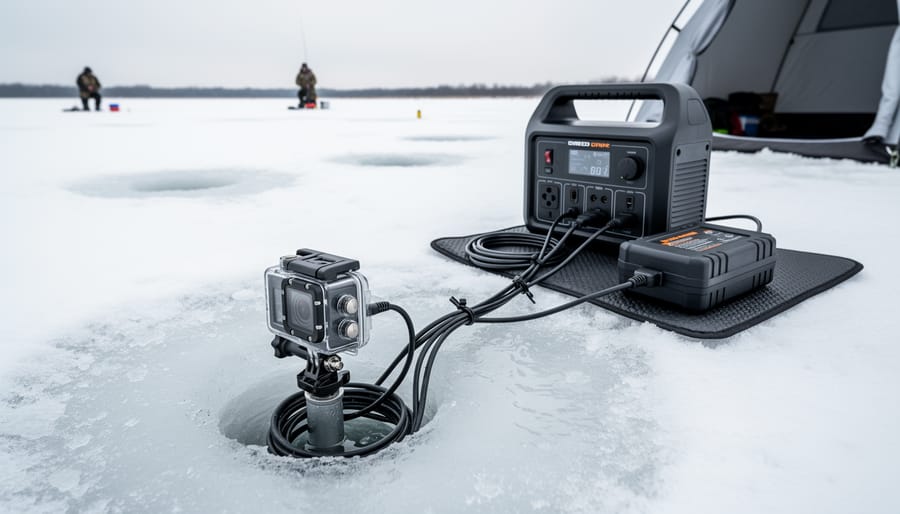
The FishPRO 2026 Upgrade runs on DC12V and supports charging by power bank, so tossing a power bank in your pack is a smart move.
Is a cheaper camera good enough for beginners?
Often, yes. A plug-and-play model that’s ready out of the box is plenty for learning what’s under the ice. You can always step up later once you know how often you’ll fish.
Where can I buy one in Canada?
Aqua-Vu cameras are listed in Canadian dollars, Up North Sports carries models at $379.99 and $389.95, and Best Buy Canada has a fishing gear and fish finder section.
Is there a warranty?
FishPRO offers a 12-month warranty with 7×24-hour customer support. Confirm the terms with any other retailer before you pay.
Still have questions? Don’t worry, nobody’s born knowing this stuff. If you’re new to the whole outdoors game, our beginner tips are a friendly place to build confidence before you head out on the ice.
So, that’s the whole picture. In Canadian listings, you’re mostly looking at the low hundreds up to about $600, and the wider reviews stretch that range a lot further at both ends. The sticker price is only part of it, so factor in power, a carry bag, and the warranty that comes with a ready-made unit.
Here’s my best advice: match the camera to how often you actually fish. If you’re out a handful of weekends a winter, a simpler setup will show you plenty. If the ice is your second home, stepping up can make sense. Either way, check current pricing at your favourite Canadian retailer before you commit, since listings shift.
I still remember the first time I lowered a camera through the hole and watched a fish drift in to check out my bait. It changed how I fished, and honestly, it made me a little giddy. That moment of seeing what’s really down there is worth chasing.
I’d love to hear about your first underwater-camera moment. Drop it in the comments, whether it was a curious perch or a total skunk. And if you want more fishing and harvesting updates, subscribe to the newsletter. See you out on the ice, and tight lines.