Bow River Fly Fishing: What I Learned Chasing Trout in Alberta’s Most Famous Water
The Bow River through Calgary offers some of the most productive year-round trout fishing on the continent, with wild rainbows and browns averaging 16 to 18 inches and fish over 20 inches a regular possibility. What sets this Alberta tailwater apart is the combination of trophy-size fish, walk-and-wade accessibility right from the city, and a nearly 12-month season that keeps productive when other rivers freeze solid.
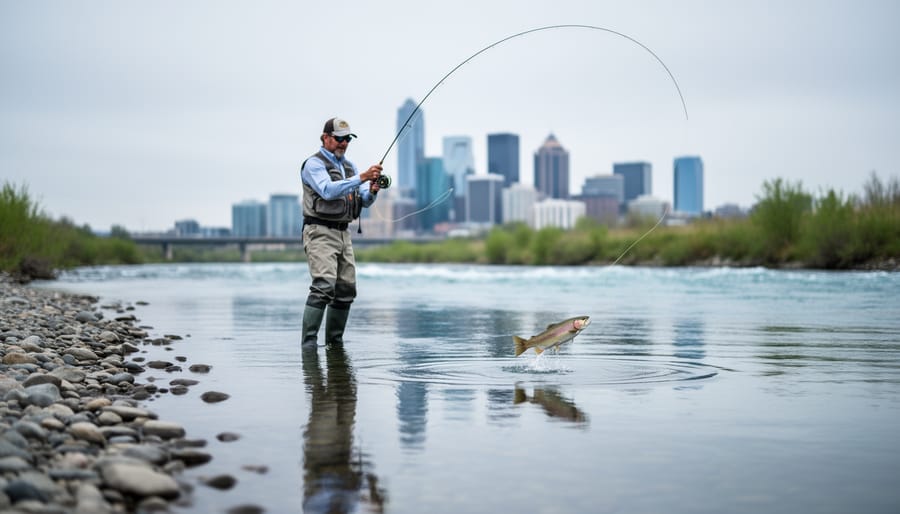
I’ll never forget my first morning on the Bow in late October, watching a 22-inch brown sip midges in the slick water below the weir while downtown office towers gleamed in the background. That strange juxtaposition of urban skyline and world-class wild trout sums up what makes this fishery remarkable. You can leave your hotel after breakfast, walk to the river, and be sight-casting to selective fish within 20 minutes.
The Bow’s productivity comes from dam releases that moderate temperatures and a nutrient-rich flow that fuels incredible insect hatches. Blue-winged olives blanket the water through spring and fall. Caddis swarms trigger aggressive surface feeds all summer. Winter midges bring fish up even in January. This abundance supports roughly 2,500 trout per mile in some stretches, numbers that rival Montana’s most famous rivers.
But here’s the reality: these fish see thousands of anglers every year. They’re educated, often maddeningly selective, and the techniques that work on backcountry streams won’t cut it here. Success on the Bow requires understanding seasonal patterns, matching the hatch with precision, and adapting your approach to pressured fish.
Whether you’re just learning fly fishing or chasing your next personal best, the Bow rewards preparation and patience. This guide walks through the seasonal windows, proven access points, and the gear and tactics that actually produce when the fish have seen it all before.
Why the Bow River Belongs on Every Canadian Angler’s List
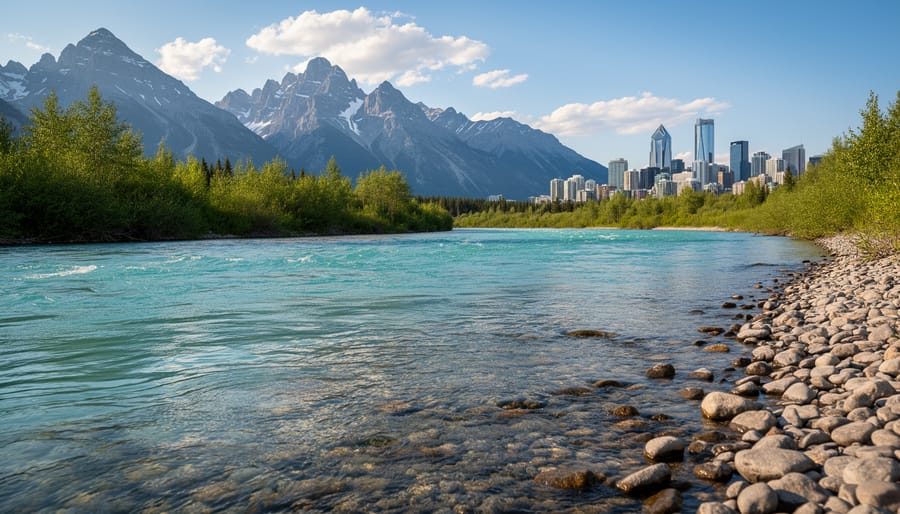
I still remember the moment I hooked my first Bow River brown, watching it carve through that impossibly clear water with the downtown Calgary skyline glinting behind it. That fish taught me something I hadn’t grasped on smaller prairie streams: this wasn’t just good fishing for Alberta or even Canada. This was world-class water, period.
The numbers tell part of the story. The Bow consistently produces rainbows and browns averaging 16 to 18 inches, with plenty of fish pushing past 20. I’ve fished rivers across the country where a 14-inch trout is a trophy day. Here, that’s routine. But it’s the combination of factors that makes this river genuinely special.
The tailwater release from the Glenmore Dam keeps water temperatures stable and creates predictable insect hatches that selective trout key in on. I learned to match the hatch properly on this river because I had to. These fish see pressure, they see every pattern in the box, and they’ll humble you if you’re sloppy with your presentation. That education alone was worth the trip.
What sealed it for me was the accessibility. I drove straight from the airport, parked at a public access point, and was wading within 20 minutes. No boat launch logistics, no float plane, no multi-day expedition. Just pull over and fish. For a river of this caliber, that’s almost unheard of.
Then there’s the setting itself. Casting with the Rockies rising in the west and the city humming in the background creates this strange, beautiful contrast. Urban fishery meets wilderness quality. That first evening, standing knee-deep with ospreys overhead and office towers behind me, I understood why anglers fly in from around the world for this. The Bow became my measuring stick for what exceptional trout fishing looks like.
When to Fish the Bow (And What to Expect Each Season)
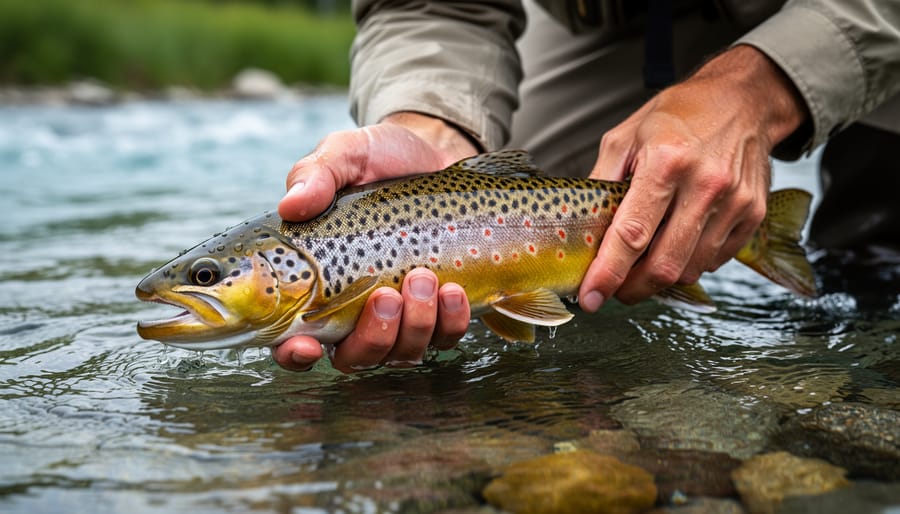
I learned quickly that the Bow River isn’t a “show up whenever” kind of fishery. Each season offers something different, and understanding the rhythm made the difference between frustrating days and unforgettable ones.
Spring arrives with challenges. From late April through June, snowmelt from the Rockies pushes water levels high and turns the river murky. During my first spring attempt, I watched tons of sediment roll past and understood why locals warned me off. Visibility drops to inches, and fish hold tight to banks and slower pockets. It’s not impossible, streamers and big nymphs can work the edges, but this is when I learned patience pays off by waiting for runoff to subside.
Summer transformed everything. July through September became my favorite window. Water clears, flows stabilize, and the Bow truly shines. Dry fly fishing peaks during these months with reliable mayfly, caddis, and midge hatches. I’ll never forget watching rainbows sip pale morning duns on a calm August evening, the Rockies glowing pink behind me. This is peak season for a reason, but expect company at popular access points.
Fall surprised me most. September through November brought bigger fish and fewer anglers. Brown trout shift into pre-spawn mode, becoming aggressive and willing to chase. I landed my personal best brown in October on a streamer, a fish that would’ve ignored me in summer. Cooler water temperatures mean midday fishing actually works, though I packed extra layers after shivering through a memorable October afternoon.
| Season | Water Conditions | Primary Hatches | Best Techniques |
|---|---|---|---|
| Spring (Apr-Jun) | High, murky | Limited visibility | Streamers, heavy nymphs |
| Summer (Jul-Sep) | Clear, stable | PMD, caddis, midges | Dry flies, nymphing |
| Fall (Sep-Nov) | Cooling, clear | Blue-winged olives | Streamers, nymphs |
| Winter (Dec-Mar) | Low, cold | Midges | Deep nymphing |
Winter fishing shocked this Ontario angler. December through March sees the Bow stay ice-free below the dam, offering opportunities even when trout won’t bite elsewhere. I bundled up in January and found steady midge hatches around noon. Fish move slowly in cold water, so I adjusted with lighter tippets and smaller flies. My hands went numb, but landing a chunky rainbow in minus-fifteen made it worthwhile.
The Stretches I Fished (And Where You Should Start)
Walk-and-Wade Access Points
The stretch below Graves Bridge became my go-to spot when I wanted to fish solo without launching a boat. There’s decent parking right off the highway, and you can wade both sides depending on water levels. The gravel bars make it manageable even for less confident waders, though you’ll want felt soles or studs, those rocks get slippery fast.
Policeman’s Flats offers easier access and saw fewer anglers during my morning sessions. The flats live up to their name with wadeable riffles that hold trout year-round. I caught my first Bow River rainbow here on a prince nymph, standing knee-deep with the Rockies framed perfectly behind me.
For a quick evening session, the McKinnon Flats area near Fish Creek provides multiple entry points. The water moves faster here, which intimidated me initially, but the pocket water between runs taught me to read currents better than anywhere else.
Weekends mean company at all these spots. I learned to arrive early or fish weekdays when possible, especially during summer’s peak dry fly season.
Float Fishing Sections
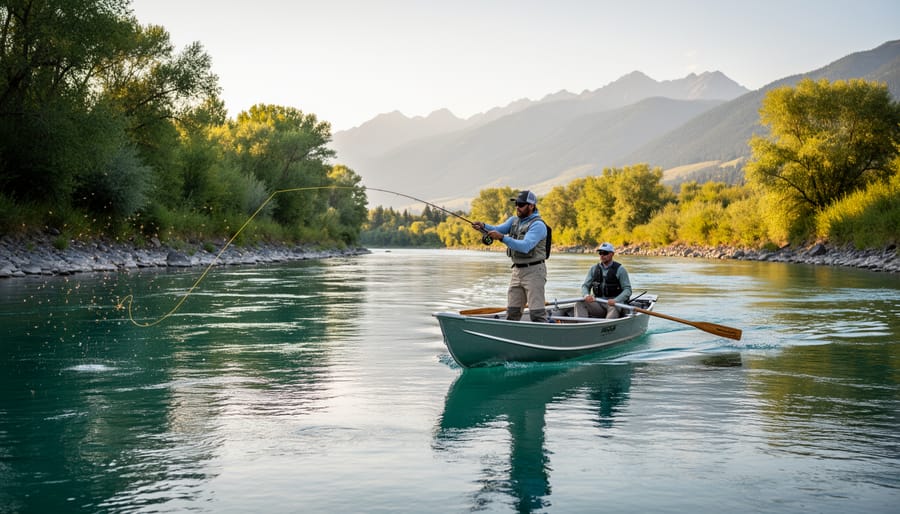
My first guided float down the Bow changed everything I thought I knew about covering water efficiently. We launched at McKinnon Flats and drifted 15 kilometres through some of the most productive trout habitat I’ve ever fished. The boat let us hit prime runs inaccessible to wade anglers, and my guide positioned us perfectly for technical presentations to feeding fish.
If you’re new to the Bow, I can’t recommend a guided float enough. The learning curve is steep, reading the currents, understanding which seams hold fish, knowing when to euro-nymph versus dry fly. A good guide compresses years of trial and error into a single day.
For experienced rowers considering a DIY float, you’ll need proper oar skills and intimate knowledge of hazards. The river moves fast, with bridge pilings, sweepers, and shallow spots that demand constant attention. I’ve watched skilled oarsmen from Montana struggle here. The popular McKinnon to Carseland stretch offers about 25 kilometres of classic drift boat fishing, but check current regulations on access points and mandatory stops. Winter floats require extra caution with ice shelves and cold water dangers.
Gear That Worked (And What I Wish I’d Brought)
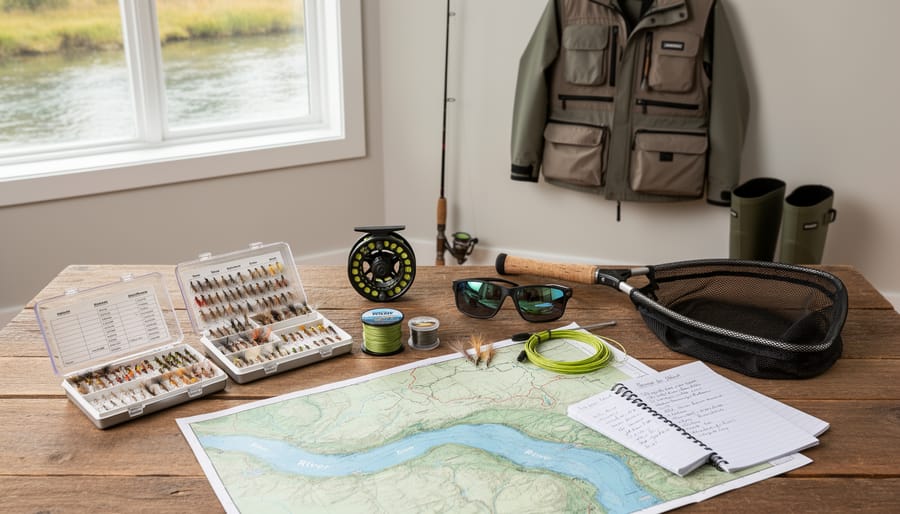
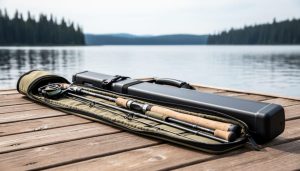
I showed up for my first Bow River session with a 6-weight rod, convinced it would handle everything. That setup worked fine for rainbow trout, but when a hefty brown hit my nymph rig in heavy current, I immediately wished I’d brought more backbone. A 5-weight will do the job, but I now lean toward a 9-foot 6-weight for the versatility it offers against bigger fish and windier conditions.
Your reel matters more here than on smaller streams. Bow River trout make long, powerful runs, especially the browns that push 20-plus inches. I learned this watching my backing disappear downstream while my budget reel’s drag system protested loudly. A quality reel with a smooth drag isn’t optional when a trophy fish decides to test you in fast water. Match it with adequate backing capacity because you’ll use it.
Line choice threw me initially. I brought a standard weight-forward floating line and struggled to get nymphs down in the deeper runs. The best fly line setup I found combined a floating line for dry fly work with a sinking tip or indicator line for nymphing the deeper pockets. Having both options covered 90 percent of the situations I encountered across different seasons.
Leaders and tippet deserve serious attention because Bow trout are notoriously selective. I started with 7.5-foot leaders and quickly realized I needed 9 to 12 feet for the clear water and educated fish. Tippet in 5X and 6X became my standard, though I’d occasionally drop to 4X for streamers or bump up to 7X when matching tiny midges during winter. Carry multiple spools because you’ll burn through tippet adjusting rigs throughout the day.
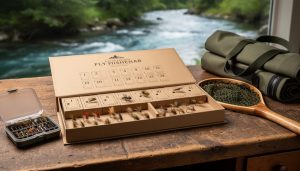
My fly box taught me hard lessons. I packed what worked back home and got schooled. Blue-winged olives, pale morning duns, and caddis patterns proved essential for surface action. Below the surface, San Juan worms, pheasant tails, zebra midges, and various bead-head nymphs caught fish consistently. Streamers like woolly buggers and sculpins produced during fall trophy season. I wish I’d brought smaller midge patterns for the winter and early spring windows when trout get picky.
Waders made a difference I hadn’t anticipated. The Bow’s rocky bottom and cold tailwater temperatures year-round demand quality breathable waders with good boots. I tried cheap stockingfoot waders my first trip and regretted it immediately when my feet went numb and I slipped on algae-covered rocks. Invest in felt or rubber-studded soles with ankle support.
The accessories I forgot hurt me: a thermometer to check water temps, hemostats for quick hook removal during catch-and-release, strike indicators in multiple sizes, split shot assortment for adjusting depth, and floatant plus sink paste. These small items solve big problems when conditions shift mid-session.
Techniques That Changed My Approach to Fly Fishing
The Bow River humbled me quickly. On my third cast of that first morning, I watched a beautiful rainbow rise, inspect my fly from six inches away, and reject it with what I swear was disdain. That moment taught me the single most important lesson about this fishery: these trout have seen everything.
Euro-nymphing became my breakthrough technique after a frustrating first day yielding only one small brown. My guide demonstrated the tight-line method, keeping all slack out of the system and using the rod tip to detect strikes rather than relying solely on an indicator. The difference was immediate. Within an hour, I’d landed three trout I never would have hooked with my old indicator setup. The technique lets you feel bottom structure, adjust depth instantly, and detect the subtle takes that Bow River fish are famous for. I now use some version of this approach on nearly every Canadian river I fish.
Reading tailwater currents required unlearning what I thought I knew about river structure. Unlike freestone streams, the Bow’s dam-controlled flows create feeding lanes that don’t always follow obvious seam lines. I spent an entire afternoon casting to what looked like perfect water before my guide pointed out the actual current tongue fifteen feet to my left, where eight trout were stacked and feeding. The lesson: watch the surface for subtle boils and foam lines that reveal the true hydraulics beneath.
Mending became an obsession. The Bow’s complex currents grab your line in three different speeds simultaneously, creating micro-drag that spooks fish even when you think you’ve achieved a perfect drift. I learned to mend before the line even lands, then follow with successive upstream mends to extend the drift. It felt awkward at first, almost like I was overcomplicating things, but it helped me catch more trout than any other single adjustment I made.
Matching the hatch taught me patience. During a blue-winged olive emergence, I cycled through seven different patterns before finding the exact size and profile that triggered strikes. The Bow’s trout are ruthlessly selective, especially during consistent hatches. I now carry multiple sizes of the same pattern and pay attention to subtle details like wing profile and body segmentation that I used to ignore.
What I Wish Someone Had Told Me Before My First Trip
My first trip to the Bow River was a humbling experience. I showed up in mid-July without a reservation for guide services, expecting to find open water and willing trout. Instead, I found crowded access points, selective fish that refused everything in my box, and a steep learning curve that could’ve been gentler with better preparation.
The catch-and-release culture here isn’t just a suggestion, it’s the foundation of this fishery’s success. Every trout you see has likely been caught before, and how you handle them matters enormously. I watched an experienced angler lose a beautiful brown because my technique isn’t working wasn’t refined enough to land fish quickly. Keep them in the water, use barbless hooks, and if you’re not confident in your landing skills, hire a guide for your first trip. The learning curve is worth it.
Summer weekends bring serious crowds to popular stretches. I made the mistake of arriving at a prime access point at 9 AM on a Saturday to find every run already occupied. Now I fish weekdays when possible or start before dawn. The wind, particularly afternoon gusts funneling down from the mountains, taught me that early mornings aren’t just about hatches, they’re about actually being able to cast.
Water temperature reports became my obsession after fishing through a heat wave when temps pushed past 18°C and the bite shut down completely. Check local fly shop reports and understand that this tailwater can fish well even in winter, but summer heat waves require adjusting your timing to cooler morning hours.
Do I need a guide for my first Bow River trip?
Not strictly necessary, but highly recommended. A guide will put you on fish faster, teach you the nuances of reading this tailwater, and help you avoid the most common mistakes that cost beginners productive water time.
Can I fish from shore or do I need a boat?
Plenty of excellent walk-and-wade opportunities exist throughout the system. You don’t need a boat, though drift trips access water that sees less pressure.
Can I keep fish from the Bow River?
The Bow operates as catch-and-release only for trout to preserve this world-class fishery. Respect this, it’s why the fishing remains exceptional.
How do I get a fishing license?
Purchase an Alberta fishing license online or at local retailers before you fish. Non-residents need a specific license, so plan ahead rather than scrambling the morning of your trip.
The biggest lesson? This river demands respect. It’s not a place to experiment carelessly or treat as just another trout stream. The fish are educated, the conditions change rapidly, and the community of anglers who’ve protected this resource for decades notice how you conduct yourself on the water.
Looking back on my time chasing trout on the Bow, I realize this river taught me more than just how to fish tailwaters. It humbled me when I thought I had fly fishing figured out. It rewarded persistence when those selective browns finally took my nymph rig. Most importantly, it showed me that world-class fishing doesn’t require remote wilderness access or expensive lodges.
The Bow changed how I approach every river now. I read currents differently. I adjust my nymphing depth without hesitation. I respect the fish and the water more deeply, knowing that catch-and-release only works when we handle trout with care and don’t love a place to death.
If you haven’t fished the Bow yet, make it happen. Whether you wade the public stretches or book a guide for your first float, this river deserves a spot on your Canadian fishing bucket list. Just remember that its accessibility is both a blessing and a responsibility. Crimp your barbs, keep fish in the water, and leave every access point cleaner than you found it.
This fishery has survived decades of pressure because anglers chose to protect it. We need to keep that tradition alive.
I’d love to hear about your Bow River experiences or answer questions about planning your first trip. And if Alberta’s already captured your imagination, there’s so much more to explore beyond Calgary’s city limits.