7 Sink Tip Fly Lines to Get Your Streamer Down Fast in 2026
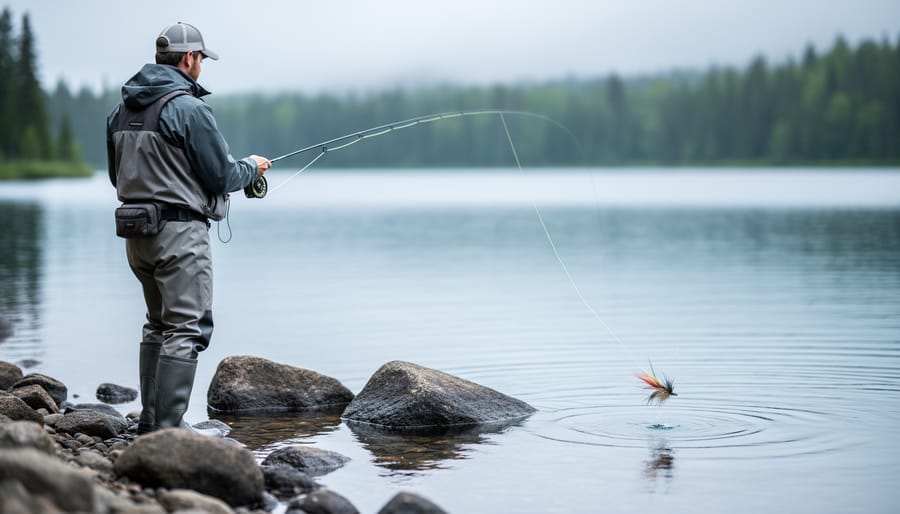
Sink tip fly lines solve a simple problem: how to get your streamer, leech, or nymph down into the strike zone without drowning your entire line. These hybrid lines pair a floating running section with a 6-to-20-foot sinking tip that pulls your fly deep while keeping the main body up where you can mend and manage slack. For anyone chasing lake trout in the Muskokas, swinging streamers for pike in Saskatchewan, or drifting deeper runs for steelhead, sink tips are the tool that bridges the gap between a full floater and a full sink.
I’ll be honest: I fished floating lines for years before switching to sink tips, and the difference was immediate. That first outing on Lake Simcoe with a Type 3 tip rated at 3.5 ips changed how I approached structure. Instead of stripping furiously to keep a Clouser down, I could fish methodically, letting the tip do the work while I focused on presentation. The setup isn’t complicated, and if you’re just getting into fly fishing for beginners sink tips open up water you’d otherwise miss with a standard setup.
The specs matter more than you’d think. A Class III tip sinking at 2.5 to 4 ips will fish the 5-to-8-foot zone, perfect for shallow weed edges. Step up to a Class V at 5.5 to 6.5 ips, and you’re working 8 to 15 feet, where the big fish hold in summer. This guide breaks down the best sink tip options for 2026, how to match sink rate to depth, and which lines perform across the varied conditions we face in Canadian waters.
How We Chose These Lines
I’ve tested dozens of sink tip lines over the past five seasons, chasing pike in murky Saskatchewan sloughs and trout in Alberta’s fast-flowing freestone rivers. The lines featured here earned their spots based on five concrete criteria. First, sink rate matters, measured in inches per second, ranging from subtle 1.25 ips options for spooky fish to aggressive 6 ips models that punch through current. Second, tip length versatility, because a 10-foot tip behaves differently than a 24-footer when mending or controlling depth. Third, weight range coverage from WF4 to WF12, ensuring you can match the line to your rod and target species, whether you’re throwing small streamers for cutthroat or heaving articulated pike patterns. Fourth, mending capability, since a supple floating section lets you adjust drift and presentation mid-swing. Finally, real-world performance in cold northern water and varied current speeds, where theoretical specs meet actual fishing conditions. The goal was balancing depth control with castability, you need to get down fast, but still turn over weighted flies without wearing out your arm.
1. Scientific Anglers Sonar Sink Tip, The Depth Adjustable Workhorse
I still remember standing waist-deep in a northern Manitoba lake, watching my streamer skate across the surface while I knew the pike were holding fifteen feet down. That day taught me the value of adjustable depth control, and I’ve kept a Scientific Anglers Sonar Sink Tip in my trout fishing gear ever since.
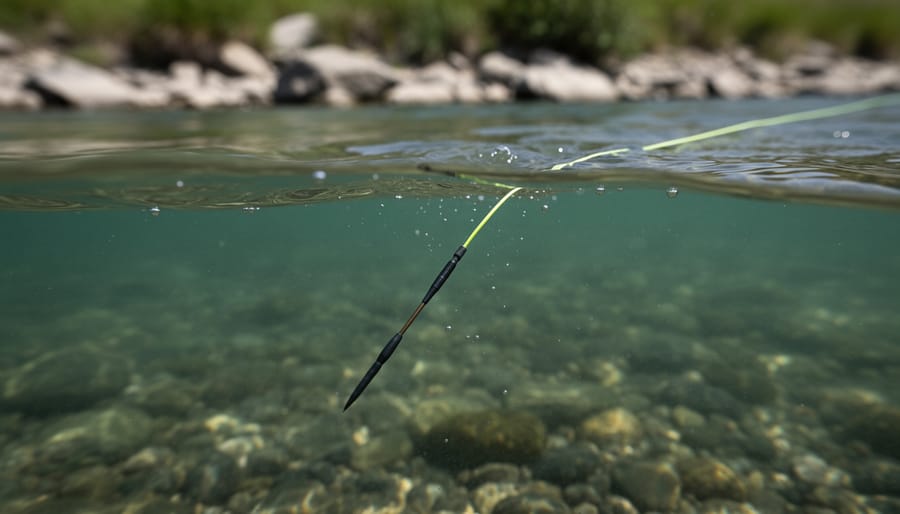
The Sonar Sink Tip stands out because it offers three distinct classes across weight-forward options from WF4 through WF8, giving you serious flexibility without hauling multiple full spools. Class III runs 2.5 to 4.25 inches per second and reaches 5 to 8 feet down, perfect for moderate depth situations like stream pools or shallow lake edges. When you need more reach, Class IV pushes 3.75 to 5.25 ips and covers 6 to 10 feet, which I’ve found ideal for Saskatchewan walleye lakes where fish suspend just off bottom structure. Class V is the heavy hitter at 5.50 to 6.50 ips, diving 8 to 15 feet into zones where lake trout cruise during summer stratification.
What makes this system work is the floating running line paired with varying tip lengths and densities. You’re not committing to a single depth profile, so if you fish both shallow rivers and deeper lakes across a season, one spool with interchangeable tips saves money and simplifies your kit. I keep Class III and V tips on hand and swap based on water conditions rather than guessing before I arrive.
The Sonar Sink Tip works best for anglers who fish varied depths regularly and want one versatile platform instead of a drawer full of specialized lines. It’s not the cheapest option, but the adjustability justifies the investment when you’re chasing species across different water columns.
2. Scientific Anglers Frequency Sink Tip, The Visible All-Rounder
I’ll never forget the first time I tried fishing a streamer at dawn on Lake Simcoe. The sun hadn’t cracked the horizon, and I was blind-casting into darkness, completely losing track of where my line sat in the water column. I’d strip, pause, then realize I had no idea if my fly was six inches down or six feet. That’s when a buddy handed me a Scientific Anglers Frequency Sink Tip and said, “Watch the glow stick.”
The Frequency Sink Tip (WF5-WF9, Class III) solves the visibility problem with an optic yellow-green tip that practically glows in low light. You can actually see where your line is during the retrieve, which sounds like a small thing until you’re fishing the margins in pre-dawn gloom or that magic hour before full dark. The 2.5-4.0 ips sink rate drops your streamer into that 5-8 foot zone where aggressive pike and smallmouth hang out without plummeting to the bottom.
I spotted the fluoro tip arcing through my retrieve one evening on Muskoka and realized I was pulling way too fast, barely giving the fish time to react. Slowed it down, watched the tip pulse with each strip, and connected on three solid fish in twenty minutes. The visible tip turned guesswork into feedback.
This line works beautifully for anglers who fish early or late sessions on Ontario lakes, where light is scarce but fish are active. The Class III sink rate is versatile enough for varied depths without needing constant line changes, and that bright tip keeps you connected to what’s happening below.
3. Scientific Anglers Sonar Clear Tip, The Stealthy Shallow Option
I’ll never forget my first encounter with truly spooky trout. It was early September on a northern Alberta stream, water so clear I could count pebbles on the bottom from twenty feet away. Every fish I approached bolted before my fly landed. I’d been throwing a floating line with a long leader, but even that seemed too heavy, creating just enough disturbance on entry to send wary cutthroats scattering. I needed something that would get below the surface tension without the splash, and that’s when a fellow angler showed me his Sonar Clear Tip.
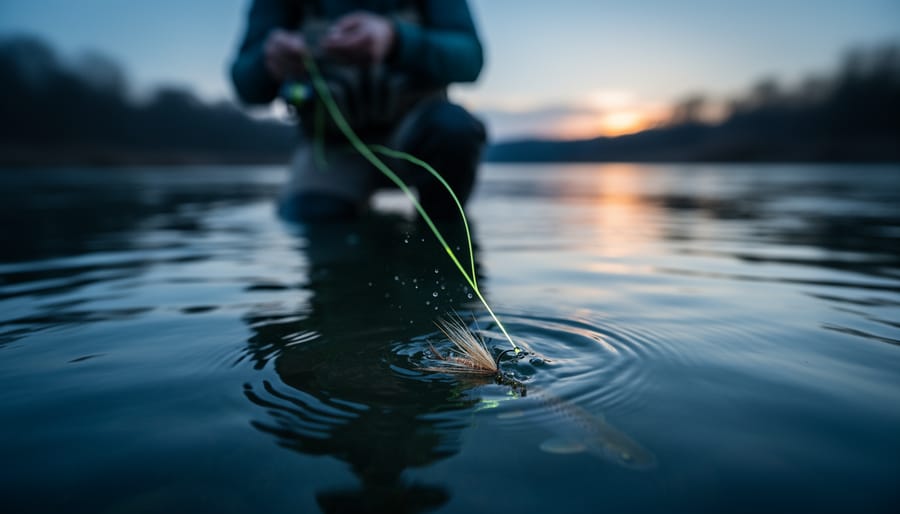
The Scientific Anglers Sonar Clear Tip is the lightest touch in the sink tip world. Available in WF6 through WF12 and rated as Class I, it sinks at just 1.25 inches per second, reaching effective depths of 1 to 4 feet. That might not sound impressive compared to faster-sinking options, but when you’re dealing with selective fish in gin-clear water, subtlety wins. The slower descent lets your fly drop naturally rather than plummeting past the zone, and the clear tip disappears against most stream backgrounds, a huge advantage when trout are eyeing everything suspiciously.
I use the Clear Tip when I need to fish just beneath the surface film without the line shadow and wake of a full floater. It’s perfect for working streamers through shallow flats where fish are feeding up but still cautious, or for presenting leeches and buggers to trout hovering a couple feet down in calm pools. The gentle sink keeps you connected to the fly without telegraphing your presence, turning refusals into confident strikes.
4. Scientific Anglers Sonar Titan Sink Tip 6, The Fast-Sinker for Deep Runs
Last summer on the Churchill River in northern Saskatchewan, I learned the hard way that standard sink tips don’t always cut it. I was working a deep channel where lake trout were holding 15 feet down in heavy current, and my Class IV line kept getting swept downstream before reaching bottom. After two frustrating hours of casting into the void, I switched to the Scientific Anglers Sonar Titan Sink Tip 6, and everything changed.
The Titan Sink Tip 6 drops at an aggressive 6 inches per second, making it the fastest sinker in the Sonar lineup. That rate translates to hitting 12 feet in just 24 seconds, even in moderate current. Where other sink tips get pushed off course by flowing water, this line punches straight down to where fish are actually holding.
I use this setup primarily in three situations: deep pools with slack current where trout suspend near bottom structure, fast river runs where standard sink tips can’t overcome the push, and late-season lake fishing when I need to get below the thermocline. On that Churchill trip, the Titan let me finally reach the channel bottom, and within 20 minutes I hooked a thick 24-inch laker that had probably been ignoring my earlier shallow presentations all morning.
The trade-off is control. A 6 ips sink demands attention during your retrieve because the line drops fast and can snag bottom quickly if you’re not actively stripping. This isn’t a line for beginners or casual presentations, it’s a problem-solver for when nothing else reaches the zone. When you need serious depth in challenging water, the Sonar Titan Sink Tip 6 delivers.
5. RIO Premier 24ft Sink Tip, The Mending Master
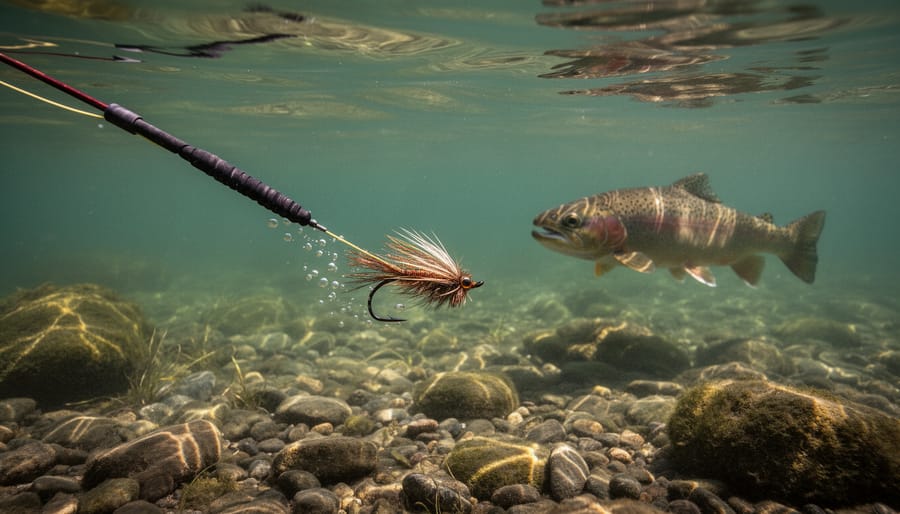
I learned the hard way about mending one October afternoon on the Bow River. I was swinging streamers through a deep run where big browns hold, but my line kept dragging mid-drift, pulling the fly across current instead of drifting naturally. Fish after fish turned away at the last second. That’s when I switched to the RIO Premier 24ft Sink Tip, and suddenly I could control the drift.
The RIO Premier stands out because of its supple floating body. Most sink tips feel like hauling a garden hose, but this one stays pliable even in cold water, letting you throw upstream mends to slow down the fly or downstream mends to speed it up. When you’re drift-fishing streamers for trout or applying pike fishing tips in weedy bays, that control makes all the difference between a natural presentation and a spooked fish.
The 24-foot sinking tip gives you extended depth coverage without committing to a full sinking line. In a river run that drops from four feet to eight feet, that length lets the tip settle into the deeper pocket while your floating running line stays high enough to manage. You can track the drift visually and feel exactly when the streamer enters the strike zone.
My go-to trick in variable current: cast quartering upstream, let the tip sink for a three-count, then throw a quick upstream mend to buy another two feet of natural drift before the swing starts. The RIO’s suppleness makes that mend effortless, and I’ve taken more aggressive strikes in that controlled swing phase than any other moment in the drift.
6. Cortland Sink Tip Type 3, The Controlled Streamer Specialist
I switched to the Cortland Sink Tip Type 3 after a frustrating morning on a northern Saskatchewan lake where pike kept following my streamers but refusing to commit. The problem wasn’t the fly, it was depth. My floating line kept the streamer too high, while a full sinking setup pulled it below the strike zone. The Cortland’s 10-foot sinking tip hit the sweet spot, dropping my articulated leech into that magic 5 to 8 foot band where pike cruise and attack without hesitation.
The Type 3 designation means this line sinks at 3 to 4 inches per second, which sounds technical until you’re on the water. In practice, it gives you enough depth to reach fish holding below the surface without the tip plummeting so fast you lose contact with your fly. That tactile connection matters when you’re stripping streamers, every twitch, follow, and strike telegraphs back through the line. I remember feeling a pike nose my fly twice before it hammered on the third strip, and I set the hook precisely because I could track the whole interaction through the rod.
- Medium-depth retrieves where fish hold 4 to 6 feet down
- Fishing weed edges without snagging the bottom
- Covering water efficiently with consistent depth control
- Maintaining feel during aggressive strip-and-pause presentations
The 10-foot sinking section is short enough to cast comfortably yet long enough to keep your fly swimming level through the retrieve. Unlike longer tips that can create awkward hinge points, this length feels integrated with the floating running line. You can mend when needed, adjust your retrieve speed without the fly rocketing up or diving down, and stay connected to what’s happening below. For pike, walleye, and streamer-hungry trout across Canadian waters, this controlled approach turns followers into biters.
7. Understanding Sink Tip Basics, Types and When to Use Each
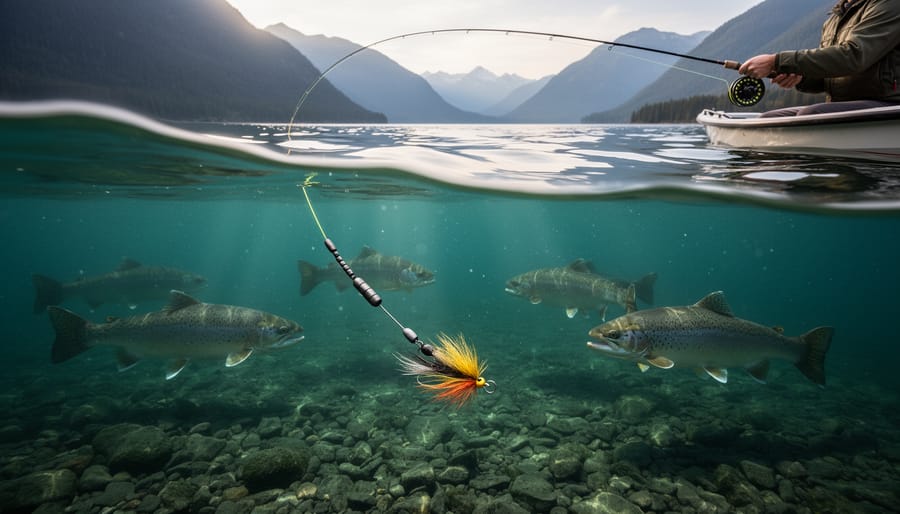
A sink tip fly line splits the difference between a full floating line and a complete sinking line, and that’s exactly why it solves so many problems on Canadian waters. The design is simple: you’ve got a floating running line for the majority of the length, then a 6′ to 20′ tip section that sinks. This hybrid setup lets you mend line on the surface while your fly dives below, giving you depth without losing control of your drift or retrieve.
Type 3 sink tips are where most anglers start, and for good reason. With a sink rate of 3 1/2 to 4 ips and an effective depth of 5′-8′, they hit the sweet spot for streamer fishing in moderate depths. I’ve relied on Type 3s for years when fishing Saskatchewan pike lakes in early summer, where the fish are holding just above weed beds at six or seven feet. The sink rate gets you down fast enough to stay in the zone, but not so aggressive that you’re constantly snagging bottom or losing feel.
The real advantage over a full sinking line becomes clear when you’re working structure or varying depths. With a sink tip, your floating running line stays on top, so you can mend, adjust your drift, and pick up for the next cast without hauling 90 feet of submerged line to the surface. A full sinking line, by contrast, pulls everything down, which is perfect for deep lake trout or trolling scenarios but brutal for active casting and presentation adjustments.
Match your sink rate to where the fish are holding and how they’re behaving. Slower rates work in shallow tailouts or when fish are suspended mid-column. Faster tips punch through current or get you to the bottom of deeper pools. If you’re building your fishing gear checklist and fishing varied waters, a Type 3 sink tip covers the widest range of conditions without needing a quiver of specialized lines.
What to Watch For
Before you buy any sink tip, check three critical specs that most product listings bury in the fine print. First, confirm the actual tip length, manufacturers sometimes list “10-foot tip” when they mean the entire head section, not just the sinking portion. Second, verify the sink rate matches your target depth and current speed; a 2.5 ips Class III tip won’t cut it in fast Saskatchewan tailwaters where you need 5+ ips to reach bottom. Third, make sure the line weight corresponds to your matched rod and reel setup, overlining by one weight is acceptable for turning over heavy streamers, but going two weights up ruins your casting mechanics and defeats the precision these lines offer.
Many anglers also overlook leader length with sink tips. A 9-foot leader attached to a 15-foot Class V tip creates an awkward hinge point that tangles on the cast and limits your ability to feel strikes. Drop to a 4-6 foot leader with sink tips; the sinking section already gets your fly deep, and a shorter leader maintains better connection to the fly during the retrieve.
Adding a sink tip to my arsenal genuinely changed the game. Before, I’d spend entire mornings casting over fish holding in deeper channels or hugging the bottom of fast runs, watching my floating line drift uselessly overhead. Once I matched the right sink rate to my home waters, a Class IV for the deeper Saskatchewan pike lakes, a Type 3 for Alberta’s trout streams, I started connecting with fish that had been invisible to me for years. Suddenly, late fall trout and aggressive spring pike became accessible, not theoretical.
The key is matching your sink tip to where and how you fish. If you’re working shallow weed edges, a Class I gets you just below the surface without snagging. Chasing lake trout at depth or punching through current? Go heavier. Don’t overthink it, grab a versatile Class III to start, fish it hard, and let the water tell you what adjustments you need.
Experiment with tip lengths and sink rates this season. You’ll unlock fishing zones that were closed to you before, and that’s worth every cast.
Common Questions About Sink Tip Fly Lines
How do I choose between Class III, IV, and V sink tips?
Match the class to your target depth and current speed. Class III (2.5-4.25 ips, 5-8 feet) handles most streamer situations in moderate current, Class IV (3.75-5.25 ips, 6-10 feet) works for deeper runs or faster water, and Class V (5.50-6.50 ips, 8-15 feet) punches through heavy current or reaches fish holding near bottom in deep lakes.
Can I use sink tips in shallow water?
Absolutely, just pick a slower sink rate like a Class I (1.25 ips, 1-4 feet). These subtle-sink tips work beautifully when you want flies riding just under the surface film without the tip dragging bottom in three feet of water.
How does tip length affect my casting?
Shorter tips (6-10 feet) turn over easier and feel more responsive, making them great for tight casting lanes or when you’re learning. Longer tips (15-24 feet) give you extended depth coverage and better drift control but require a bit more effort to load the rod properly on your backcast.
What’s the real difference between a sink tip and a full sinking line?
A sink tip gives you a floating running line with only the forward section sinking, so you can mend, pick up line quickly, and feel strikes more directly. Full sinking lines put the entire line underwater, better for trolling or fishing consistently deep, but much harder to mend or recast without stripping everything back in.
I’ve found these questions come up every time I’m rigging sink tips with someone new to the technique. The sink rate choice trips up a lot of anglers at first, but once you fish each class a few times, you start recognizing which water calls for what speed. That Class I has saved me on spooky trout days when even a Type 3 felt too aggressive, and the Class V has been essential for reaching lake trout holding fifteen feet down in cold northern lakes.
Leader setup with sink tips doesn’t need to be complicated, I run shorter, stouter leaders (4-6 feet of 10-15 lb test) because the sinking tip already controls depth. A long, delicate leader just tangles or rides up above the tip, defeating the purpose of getting down fast.