How to Fish for Striped Bass in Nova Scotia: Seasons, Regulations, and Tactics
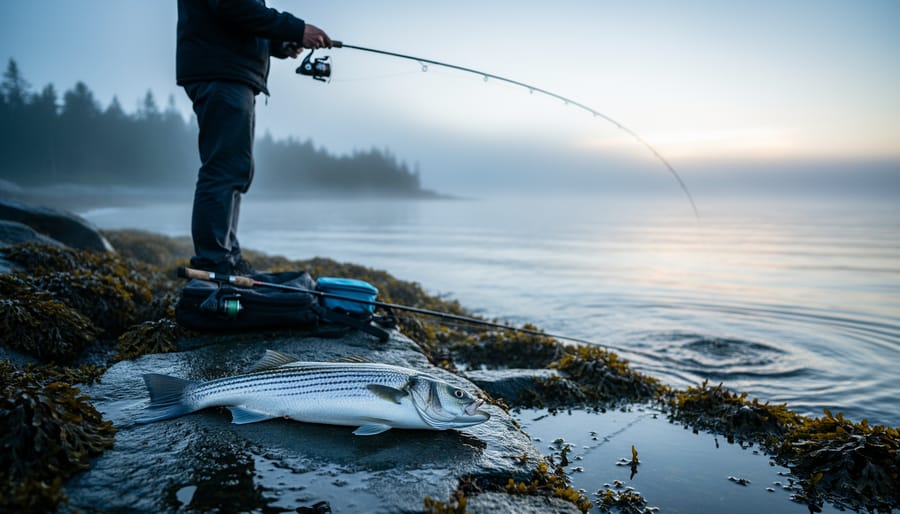
The striped bass fishery in Nova Scotia is alive and thriving, and targeting these powerful coastal predators requires understanding three non-negotiables: the 2026 season dates, the strict size window, and the current regulations that protect this comeback species. You’ll fish tidal waters from April 15 to October 31 (or May 1 to September 15 in inland waters), target fish between 50 and 65 cm, and you’re allowed exactly one keeper per day.
I’ve chased stripers along the Maritimes for years, and Nova Scotia offers something special: accessible shoreline fishing, boat opportunities in protected estuaries, and the real chance at a double-digit fish without chartering a boat or traveling to remote water. These fish push into tidal rivers during spring and hang around structure through fall, feeding aggressively on baitfish and giving anglers honest shots at 20- to 30-pound fish on medium spinning or casting gear.
The regulations matter more here than in most fisheries. This population rebounded from near-extinction, and the harvest window exists to protect both juveniles and the large spawning females that keep the fishery sustainable. The size slot means you’ll release plenty of fish, including some true giants over 65 cm that would be wall-hangers elsewhere. Fishing hours shift mid-season, bag limits are enforced strictly, and size compliance isn’t optional.
This guide walks you through the tackle, techniques, and timing that consistently produce fish, grounded in current regulations and real-time patterns that work in estuaries, river mouths, and tidal shorelines across the province.
What You’ll Need to Fish for Striped Bass
Rod and Reel Setup
A medium-heavy spinning rod in the 7 to 8-foot range paired with a 3000 to 4000-size reel is the sweet spot for most Nova Scotia striped bass fishing. I run 20 to 30-pound braided main line for casting distance and sensitivity, with a 20 to 30-pound fluorocarbon or monofilament leader to handle the fish’s abrasive mouth and reduce visibility in clear water. Choosing the best fishing line makes a tangible difference when you’re fighting a fish in strong tidal current.
In tidal waters where stripers ambush bait in heavy current and around structure, that heavier setup gives you the backbone to pull fish away from rocks and pilings. Inland waters tend to fish lighter because the fish are often smaller and the current less aggressive, so you can drop to the medium end of the spectrum if you prefer finesse. Conventional reels work well for experienced anglers throwing big plugs or working deep water, but spinning gear is more versatile and beginner-friendly. Having matched gear that balances power and feel lets you detect strikes and manage fish confidently within that tight 50 to 65 cm legal window.
Lures and Bait That Produce
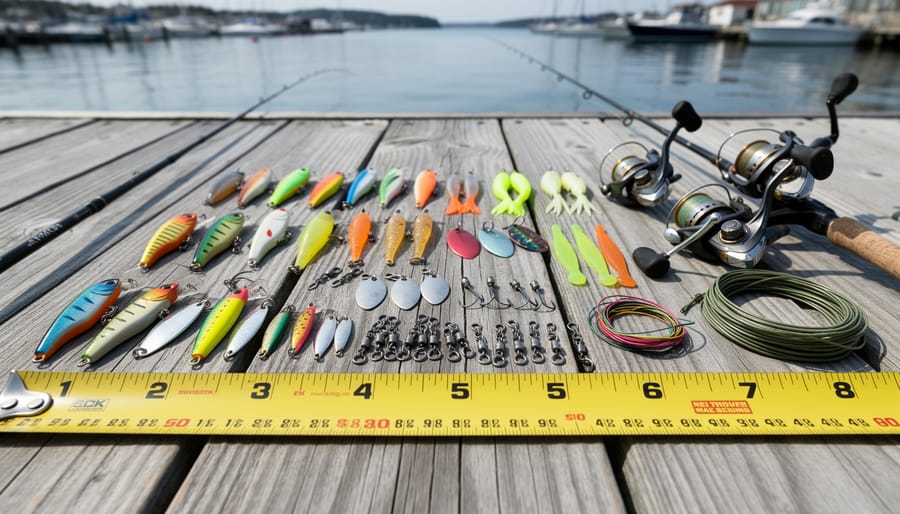
I’ve caught striped bass in Nova Scotia on everything from slow-rolled soft plastics to surface explosions at dawn, and the truth is these fish aren’t terribly fussy once you match the presentation to the conditions. The lures that consistently produce here mirror what works elsewhere in Atlantic Canada, with a few local preferences shaped by our tidal ranges and baitfish.
Soft plastics, particularly 4- to 6-inch paddletails and shad bodies in white, chartreuse, or rootbeer, account for most of my keeper fish in tidal estuaries. I rig them on ¾- to 1-ounce jigheads and work them near the bottom on the current, letting the tail thump as the water does the work. Topwater plugs shine during the legal morning and evening windows when stripers push bait to the surface; I’ve had heart-stopping strikes on walk-the-dog style lures in low light along rocky shorelines. Crankbaits in the 4- to 6-inch range, especially those that dive to 6-10 feet, cover water fast and trigger reaction strikes when fish are scattered. Bucktail jigs (1 to 2 ounces) tipped with a soft plastic trailer are deadly in current and around structure.
For different conditions, consider:
- Tidal estuaries with current: white or chartreuse paddletail soft plastics on ¾, 1 oz jigheads
- Early morning or late evening surface activity: walk-the-dog topwater plugs in bone or chrome
- Mid-depth searching in inland waters: medium-diving crankbaits in shad or perch patterns
- Strong current or deep holes: bucktail jigs (1-2 oz) in white, with a plastic trailer
- Murky or stained water: brighter colors like chartreuse or fire tiger; clear water: natural silvers and whites
Natural bait, live or cut mackerel, herring, and gaspereau, works exceptionally well, especially for anglers fishing from shore who want to set a line and wait. I’ve watched stripers inhale a fist-sized chunk of mackerel on a fish-finder rig in an outgoing tide. The trade-off is mobility: bait fishing is more passive, while lures let you cover water and adapt quickly to changing fish behavior.
Essential Accessories
Beyond your rod, reel, and tackle, a few essential accessories will make your Nova Scotia striped bass trips safer, more productive, and compliant with regulations. A rubberized landing net protects the fish and makes landing easier in current; choose one with a long handle if you’re fishing from rocks or a boat. Needle-nose pliers or forceps are critical for quick, safe hook removal, especially when releasing fish that fall outside the 50-65 cm slot. A durable measuring tape or marked landing net is non-negotiable, you need to verify your catch is within the legal size window before you keep it, and eyeballing doesn’t cut it. I carry a headlamp on every trip because some of the best fishing happens at dawn, dusk, or into the legal evening hours; a hands-free light lets you tie knots, measure fish, and move safely in low light. Finally, pack weather-appropriate layers: Nova Scotia’s coastal and tidal waters can shift from warm sun to cold wind and rain in an hour, and staying dry and comfortable keeps you fishing longer. If you’re building your kit from scratch, cross-reference a comprehensive fishing gear checklist to ensure you haven’t missed anything before your first trip.
Know the Rules Before You Fish
Season Dates for 2026
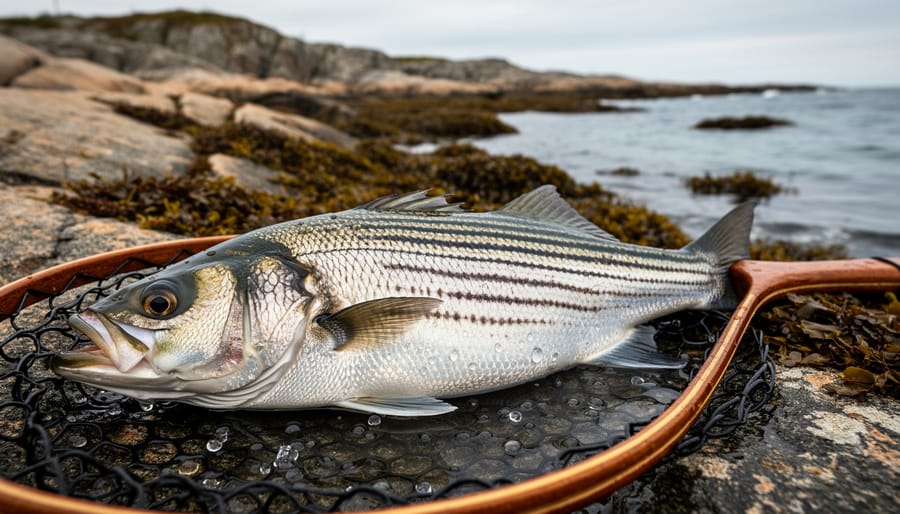
Nova Scotia splits its striped bass season by water type, and the difference matters for trip planning. Tidal waters, estuaries, river mouths, and coastal zones influenced by the tide, are open April 15 through October 31, giving you more than six months to chase fish. Inland waters, which include rivers and lakes upstream from tidal influence, run a shorter window: May 1 to September 15. The tidal vs inland dates align with striped bass migration and spawning behavior. Fish move into tidal estuaries early in spring and linger through fall, while inland runs peak during the warmer months when bass push upstream to spawn and feed. The staggered closures protect spawning stocks and give the fishery breathing room. If you’re planning a trip, confirm which water type you’ll be fishing, tidal zones offer the longest season and the most flexibility, but inland rivers can deliver excellent action during their compressed window if you time it right.
Daily Fishing Hours
Tidal waters have strict time windows that you need to plan around. From April 15 through June 30, you can fish starting two hours before sunrise and must stop no later than two hours after sunset. Come July 1, those hours expand dramatically: you’re legal from 04:00 in the morning until midnight, giving you flexibility to fish prime low-light periods at dawn and dusk plus the entire day between.
These restrictions aren’t arbitrary. Early-season limits protect spawning fish during their most vulnerable period, while the summer expansion recognizes reduced spawning activity and lets anglers target the excellent twilight bite that striped bass are known for. If you’re planning a trip in May or June, you’ll need to check sunrise and sunset times for your specific date and location, showing up at the wrong hour means you’re fishing illegally, even if the season is open. I’ve watched anglers scramble off the water at sunset during spring trips, and it’s a reminder that your watch matters as much as your tackle box.
Size and Bag Limits
Nova Scotia’s striped bass regulations are designed to protect the fishery, and they’re strict for good reason. You’re allowed to keep one fish per day, and that same one-fish limit applies to your total possession, meaning you can’t accumulate multiple fish over several days of fishing. The fish must measure between 50 and 65 centimeters, measured from the tip of the snout to the tip of the tail with the mouth closed and the tail pinched together. This narrow slot protects both the younger, growing fish and the large breeding females that keep the population healthy.
I carry a proper measuring tape in my tackle bag and measure every fish on a flat surface before I make any decisions. If it’s under 50 cm or over 65 cm, it goes back immediately. Don’t guess, don’t eyeball it, and don’t keep a fish that’s even close to the edges of the slot, measure it accurately. The conservation officers take these limits seriously, and so should you. This fishery has rebounded because anglers respect the rules, and staying within the size window is how we keep it viable for future seasons.
Step-by-Step: Your First Striped Bass Trip
Step 1: Check Current Regulations and Confirm Your Dates
I learned this lesson the hard way on my second Nova Scotia trip. I’d researched tackle and tides for weeks, but I never checked whether the season was actually open for the estuary I’d chosen. I showed up in late April, ready to fish, only to discover I was targeting inland water, which doesn’t open until May 1st. The tidal season had started April 15th, but I was in the wrong spot entirely.
Before you book anything, confirm which water type you’re fishing. Tidal waters run April 15th through October 31st; inland waters open May 1st and close September 15th. These dates matter more than you think. Next, check the legal fishing hours for your target dates. From April 15th to June 30th in tidal waters, you can only fish starting two hours before sunrise and must stop two hours after sunset. From July 1st onward, hours expand to 04:00 to midnight.
Finally, secure your Nova Scotia recreational fishing license. You can’t legally fish without one, and it’s a simple online purchase. These beginner tips apply to striped bass, too: know the rules before you wet a line, or you’ll waste your trip.
Step 2: Choose Your Fishing Location
Nova Scotia offers striped bass in two distinct environments: tidal waters and inland waters. Your choice depends on when you’re fishing and what kind of experience you want. Tidal waters, estuaries, river mouths, and coastal zones where freshwater meets salt, hold fish from mid-April through October and offer the longest season. Inland waters (rivers and lakes upstream of tidal influence) run May through mid-September but can provide calmer conditions and easier access for shore anglers.
Productive striped bass habitat shares a few key features. Look for moving water: current breaks behind rocks or points, eddies at the mouths of tributary streams, or the edges of tidal flow where baitfish congregate. Rocky shorelines and drop-offs near structure hold fish during tidal changes. Estuaries with a mix of shallow flats and deeper channels let you target feeding bass as the tide pushes or pulls.
Don’t rely on online hotspot lists, they’re often outdated or overhyped. Instead, study a map for the features I just described, talk to local tackle shops, and scout during legal hours. I’ve had my best Nova Scotia striped bass days on stretches I found by walking the bank at low tide and noting where current carved out deeper pockets.
Step 3: Decide on a Guide or Go Solo
Your first decision is whether to hire a guide or fish on your own. For first-timers, a local guide removes much of the guesswork. A good guide knows where fish are moving, understands the tidal windows and hourly restrictions, brings proper tackle, and helps you stay compliant with the slot limit and bag rules. You’ll spend more time fishing and less time figuring out the regulations or wandering unproductive water.
If you’re hiring, look for guides who fish Nova Scotia’s striped bass waters regularly and can explain their approach to the season and the current regs. Ask about their typical catch-and-release practices and whether they provide gear or if you need to bring your own. Many guides work the estuaries and tidal rivers during the open season, and a half-day trip can teach you enough to fish independently on future visits.
Going solo is entirely doable if you’ve done your homework on the rules and have experience reading tidal water. You’ll need your own equipment, a solid plan for timing your trip within legal hours, and the discipline to measure and release fish that fall outside the 50-65 cm window. I’ve done both, and while a guide accelerated my learning curve, fishing alone let me explore at my own pace and build confidence in my ability to find and catch these fish.
Step 4: Time Your Trip to the Tides and Conditions
Striped bass are tidal creatures, and your success hinges on fishing when they’re actively feeding. I’ve found the most productive windows align with moving water, particularly the first two hours of incoming tide and the last two hours of outgoing. These transitions push baitfish and stir up food, triggering aggressive strikes. Slack tide, when the current pauses, often sees fish go quiet.
Water temperature matters too. Spring fish are sluggish in cold water (below 10°C), becoming more active as temperatures climb into the mid-teens through summer. Fall brings another feeding surge before the season closes October 31st.
Time of day overlaps with tidal timing. Dawn and dusk produce reliably, but remember those legal hours in tidal waters: you’re restricted to two hours before sunrise until two hours after sunset from April 15 to June 30. After July 1st, you get the extended 04:00 to midnight window, letting you fish prime low-light periods legally. I always check tide charts and local sunrise/sunset times when booking a trip, there’s nothing worse than arriving at the perfect tide only to realize you can’t legally fish it yet.
Step 5: Fish the Water Methodically
Start by covering water systematically rather than random casting. Work parallel to the shoreline or structure, making casts every few feet to search different zones. Fan your casts from short to long, then shift position and repeat. Striped bass often hold in specific feeding lanes within a seemingly uniform stretch, so thorough coverage pays off.
Vary your retrieve until you find what triggers strikes. A steady medium-speed retrieve works as a baseline, but don’t be afraid to pause, twitch, or rip the lure erratically. I’ve had fish ignore a slow roll only to crush the same lure when I burned it just under the surface. Watch for surface activity, baitfish getting nervous, or swirls that signal feeding fish, then adjust your presentation to match the energy level you’re seeing.
One August evening on a tidal flat, I was grinding through casts with nothing to show when a single aggressive boil appeared thirty yards out. I switched to a topwater popper, dropped it right in the zone, and before I could pop it twice a thick-bodied striper hammered it. That fish taught me to stay alert and react fast when the water tells you something’s changed.
Step 6: Land, Measure, and Handle Your Catch
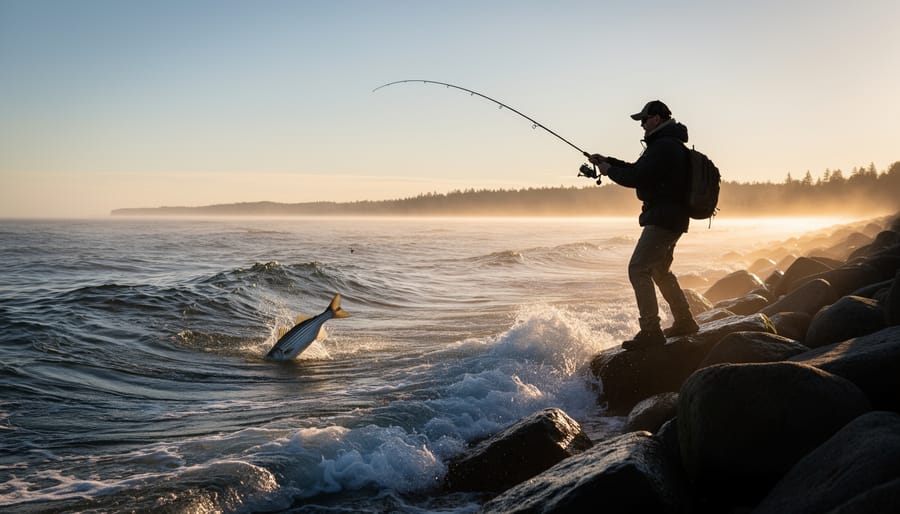
Once your rod bends and a striped bass commits, keep steady pressure and let the fish tire itself on the reel’s drag rather than horsing it in. When it’s ready, scoop the net under the fish headfirst in a single smooth motion. I always wet my hands before touching a bass, dry hands strip their protective slime coat, making them vulnerable to infection.
Slide the fish onto a measuring board or lay your tape along the lateral line from the nose to the tip of the tail. You need an exact measurement: the legal window is 50 to 65 centimeters, and a fish even one centimeter under or over must go back immediately. If it’s short or long, support the bass upright in the water until it swims away on its own power.
Legal fish? Decide quickly whether you’re keeping it. If so, dispatch it humanely with a sharp blow behind the head, then place it on ice in a cooler. If you’re releasing, cradle the bass horizontally, revive it by moving it gently back and forth to push water through the gills, and let it swim from your hands when it’s strong. That 1-fish limit means you’re done for the day after you keep one, so choose deliberately.
How to Know You’re Fishing Legally and Responsibly
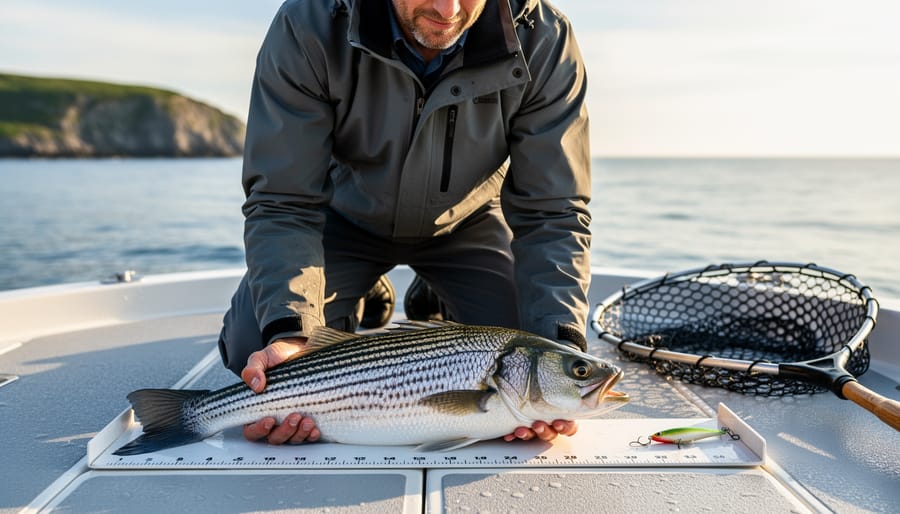
The regulations are straightforward, but compliance depends on your diligence in the moment. The 50-65 cm size window isn’t a guideline, it’s the law, and measuring correctly matters. Carry a waterproof measuring tape or a marked net, and measure from the tip of the snout to the end of the tail with the fish lying flat. If a fish looks borderline, measure it twice. When you’re unsure about any regulation, whether it’s legal hours for a specific date, the definition of “tidal waters” for a particular river section, or new emergency closures, check the Nova Scotia Department of Fisheries and Aquaculture website before you fish, or call their office directly. Conservation officers patrol these waters, and ignorance isn’t a defense.
Beyond the legal minimum, responsible fishing protects the fishery you’re enjoying. I’ve watched striped bass populations rebound in Atlantic Canada over the past two decades, and that recovery depends on anglers doing more than just staying within the slot limit. Simple practices make a real difference:
- Measure every fish accurately before deciding to keep or release it
- Use single-barbless hooks to minimize injury and speed up releases
- Keep fish in the water during unhooking whenever possible, and limit air exposure to under 30 seconds
- Stop fishing well before the legal cutoff time to avoid accidentally violating the daily hour restrictions
- Release undersized, oversized, and any fish you don’t plan to eat immediately
Handle fish with wet hands, support their weight horizontally, and revive exhausted fish by holding them upright in moving water until they swim away strongly. If you harvest your one legal fish, put it on ice right away and eat it fresh, striped bass from cold Nova Scotia waters is excellent table fare, but only if you’ve earned it legally and treated the resource with respect.
Common Questions About Striped Bass Fishing in Nova Scotia
Do I need a boat to fish for striped bass in Nova Scotia?
No, you don’t need a boat. Shore fishing from estuaries, river mouths, and rocky tidal points can be just as productive as fishing from a boat, especially during the early and late hours when striped bass move into shallow water to feed.
What’s the best time of year for striped bass fishing?
Late spring through early summer tends to be most productive in tidal waters, particularly from late May through June when water temperatures rise and baitfish are abundant. Fall fishing in September and October can also be excellent as striped bass feed heavily before winter.
What do I do if I catch a fish over 65 cm or under 50 cm?
You must release it immediately. Only striped bass between 50 cm and 65 cm can be legally retained, and you’re limited to keeping one fish total. Handle oversized and undersized fish gently, minimize air exposure, and get them back in the water quickly.
Can I fish at night during the season?
It depends on the date and location. In tidal waters from April 15 to June 30, you can only fish from two hours before sunrise to two hours after sunset. From July 1 to October 31 in tidal waters, you can fish from 04:00 to midnight, which allows for some night fishing.
How do I find a reputable striped bass guide?
Look for licensed guides with established online presence and reviews, ask fellow anglers for recommendations, and verify that any guide you’re considering emphasizes legal compliance and conservation. A good guide will discuss regulations upfront and provide all necessary equipment.
One question I hear often is whether striped bass fight hard enough to justify the regulations and size restrictions. The answer is absolutely yes. These fish are powerful, aggressive feeders that will test your drag and your patience. A 55 cm striped bass in tidal current can feel like a much larger fish, and the explosive surface strikes on topwater lures create some of the most exciting moments you’ll experience in Maritime waters.
If you’re traveling from outside Nova Scotia, plan extra time to scout locations and adjust to tidal patterns. What works in other striped bass fisheries won’t always translate directly here. The tidal swings are dramatic, the water is colder than southern US fisheries, and the fish respond differently to lures and presentations. Give yourself a learning curve, fish multiple tides if your schedule allows, and don’t get discouraged if your first session is slow. This fishery rewards persistence and attention to detail more than sheer hours on the water.