Why Every Canadian Angler Needs a Matched Fly Fishing Rod and Reel in 2026
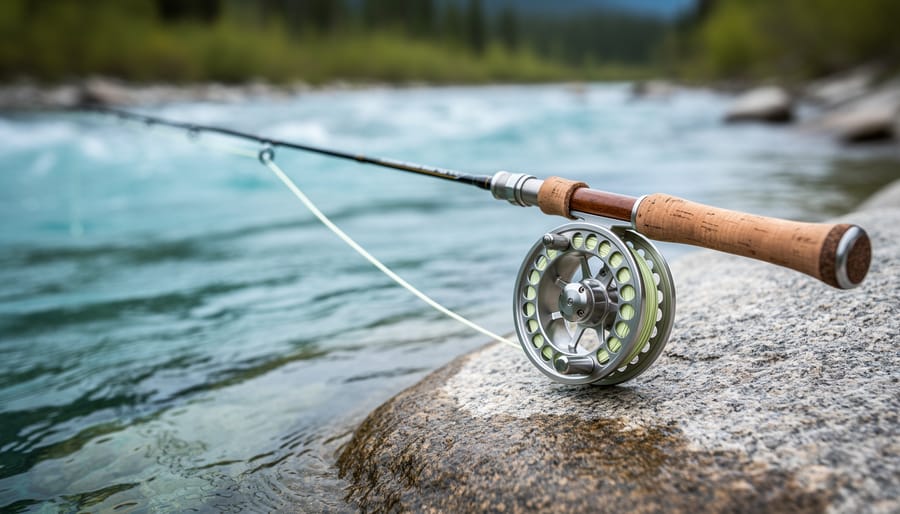
I still remember the first time I paired a proper fly rod with a matched reel. Standing knee-deep in Alberta’s Bow River, everything suddenly clicked. The line flowed smoothly, the casting felt effortless, and within twenty minutes I’d hooked my first decent rainbow trout. That’s the difference a well-matched system makes.
Most anglers shopping for fly fishing gear in 2026 face the same confusion I did back then: buying a rod and reel as separate pieces without understanding how they work together. You end up with a heavy reel on a delicate rod, or a powerful setup that can’t handle the subtle presentations Canadian trout demand. The truth is, your rod and reel function as a single unit, and getting that balance right determines whether you’ll spend your day fighting your equipment or actually fishing.
The good news? Matching a fly rod with the right reel isn’t complicated once you understand three core principles: weight balance, line capacity, and drag system requirements. Whether you’re targeting smallmouth bass in Ontario’s cottage country, steelhead on the BC coast, or brook trout in Quebec’s backcountry streams, these fundamentals remain the same.
This guide breaks down exactly how to choose rod and reel combinations that work for Canadian waters. I’ll walk you through weight classes from 3-weight creek rods to 8-weight setups for coastal species, explain what features matter for our diverse fisheries, and share real-world examples from lakes and rivers across the country. You’ll also learn which combinations work best at different price points, from budget-friendly starter setups to premium outfits that’ll last decades.
By the end, you’ll know precisely what to look for when building your fly fishing system, without wasting money on mismatched components or gear that doesn’t suit where you actually fish.
Understanding the Rod and Reel Partnership
The Weight Class System
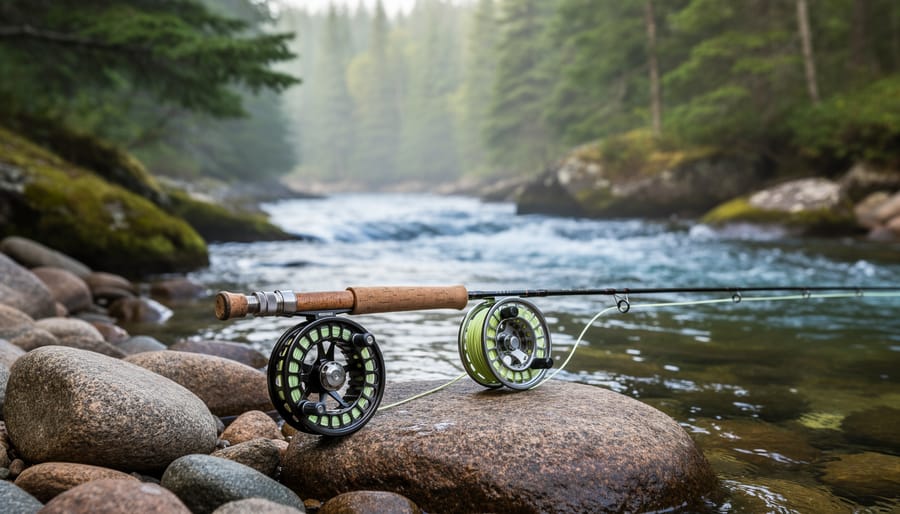
The weight system runs from delicate 3-weights up to powerful 8-weights and beyond, with each number representing the rod’s ability to cast a specific line weight. Your reel needs to balance that weight both physically and functionally, or you’ll end up with a setup that feels wrong in your hand and performs worse on the water.
A 3-weight or 4-weight outfit is your precision tool for brook trout in small Ontario streams or BC spring creeks where finesse matters more than distance. The light rod demands a correspondingly small reel, one that won’t throw off the balance point when you’re making delicate presentations to spooky fish in clear water. I’ve fished 3-weights on backcountry streams where the entire setup felt like an extension of my arm, the kind of connection that makes you forget you’re holding equipment.
Move up to 5-weight or 6-weight territory and you’re in the sweet spot for most Canadian trout fishing. These rods handle everything from lake-run rainbows to river cutthroat, and the reels need enough backing capacity for fish that actually use your drag system. When you match line weight to rod properly at this level, you get a setup that casts well in wind and turns over weighted nymphs without feeling like you’re wielding a pool cue.
At 7-weight and 8-weight, you’re targeting species like northern pike or steelhead that demand heavier tackle. The reels get substantially larger, with drag systems that can handle sustained runs and backing capacity measured in hundreds of yards. A pike setup with mismatched weights will fail you when a 40-inch fish decides to test your gear against submerged logs and weed beds.
Why Balance Matters on the Water
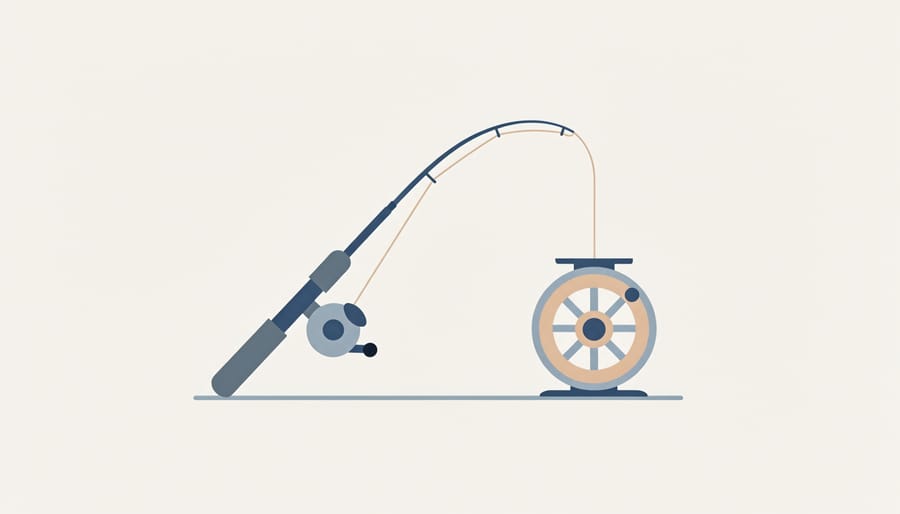
I learned this lesson the hard way on the Bow River last August. I’d paired a lightweight 4-weight rod with a chunky reel that belonged on a 7-weight. The moment I started casting, something felt off. The rod tip wobbled during the forward stroke, my loops collapsed halfway through the presentation, and I fought every cast instead of enjoying the rhythm. When a nice rainbow finally took my nymph rig, the whole outfit felt front-heavy and awkward during the fight.
Contrast that with a properly balanced setup I used two weeks later on Last Mountain Lake in Saskatchewan. The 6-weight rod and matching reel created a natural pivot point right at my grip. Casting felt effortless, the line shot forward cleanly even in wind, and I could fish all day without my wrist aching. The difference isn’t subtle once you experience both extremes.
Here’s what balance actually means on the water: when you grip the cork and let the rod hang horizontal, a matched setup rests level or tips slightly downward. Too heavy a reel makes the butt drop, tiring your hand. Too light and the rod tip sags, killing your casting efficiency and making delicate presentations nearly impossible in the breezy conditions we face across the prairies and foothills.
Choosing Your First Fly Fishing Rod with Reel Combo
The Sweet Spot for Canadian Trout Fishing
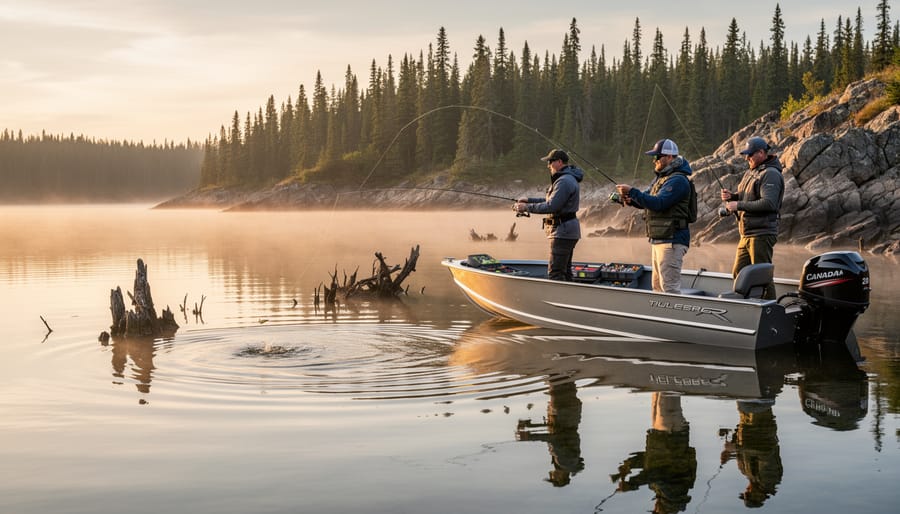
I’ve fished everything from 3-weights on tiny Muskoka creeks to 8-weights chasing coastal steelhead, and here’s what I keep coming back to: a 5-weight fly fishing rod with reel handles about 80% of what you’ll encounter on Canadian trout waters. It’s that rare middle ground that actually works.
The 5-weight has enough backbone to punch through prairie winds when you’re working Saskatchewan streams, yet it’s delicate enough to present size 16 dry flies on clear Ontario spring creeks. I’ve used mine everywhere from the Bow River’s technical runs to backcountry cutthroat lakes in BC, and it never feels overmatched. When you’re building your fishing gear checklist this is where you start.
The weight class also pairs perfectly with the most common line sizes for Canadian trout species. Whether you’re targeting brook trout in Algonquin Park or rainbows on the Thompson River, a 5-weight handles the streamers, nymphs, and dry flies you’ll actually throw. Your rainbow trout gear needs versatility above all else, and the 5-weight delivers that without compromise.
The real beauty? When you eventually add a second setup for specialized fishing, you’ll still reach for your 5-weight combo more often than not. It’s the reliable workhorse that earns its place in the truck, season after season.
Testing Rods Before You Commit
I spent years buying rods based on specs alone, ordering online and hoping for the best. Then I’d get to the water and realize the action felt wrong or the weight balance was off. Here’s the truth: reading about a rod is nothing like holding it in your hand and feeling how it loads.
Demo days are the closest thing we have to test-driving a car before buying. Events like the ECHO Demo Day that happened on May 30th at Fish Tales Fly Shop in Calgary show what these opportunities look like. Anglers could cast the complete ECHO lineup, including models like the Trout X and Carbon XL, from 11 am to 2 pm without spending a dime. That’s three hours to feel the difference between rod actions, test various weights, and see which setup suits your casting stroke.
Most fly shops in Canada run similar events throughout spring and early summer. Call ahead and ask when manufacturers will be visiting. Bring your own reel if you have one to see how it balances with different rods. Cast with the line weight you’ll actually use, not just what’s spooled on the demo setup.
When you’re testing, pay attention to more than just distance. Notice how quickly the rod recovers between casts, whether you feel strain in your forearm after twenty casts, and if the tip tracks straight or wobbles. Try roll casts too, since that’s what you’ll do most often on brushy Canadian streams.
If demo days aren’t accessible, many shops will let you step outside and cast in their parking lot or a nearby park. A good retailer wants you confident in your purchase. They’d rather spend fifteen minutes letting you test rods than deal with returns later.
Budget-Friendly Combos That Actually Perform
I’ll never forget standing in a Calgary fly shop in 2023, staring at a combo priced at $89 and wondering if it was garbage or a hidden gem. The shop owner, sensing my skepticism, told me something that changed my perspective: “Not every budget rod is junk, and not every expensive one is worth the money.” Three years and countless river days later, I’ve tested enough affordable setups to know he was right.
The entry-level landscape has genuinely improved in 2026. You can walk into most Canadian fly shops and find functional 5-weight combos starting around $150 that won’t embarrass you on the water. I’ve personally put cheaper outfits through their paces on Alberta creeks and Ontario rivers, and some have surprised me. The key is understanding what corners get cut at different price points, and whether those compromises matter for how you’ll actually fish.
| Price Tier | Typical Range (CAD) | What You Get | Best For |
|---|---|---|---|
| Entry | $150-$300 | Functional components, heavier blanks, basic drag systems | Beginners testing the sport, backup gear |
| Mid-Range | $400-$700 | Lighter materials, smooth drags, better casting feel | Committed anglers, primary outfits for regular use |
| Premium | $800+ | Top-tier components, refined actions, extended warranties | Dedicated enthusiasts, specialized applications |
At the entry level, expect a rod that feels a bit stiffer and weighs more than pricier options. The reel drag won’t be silk-smooth, but it’ll handle brook trout and smaller rainbows without issue. I learned to cast with a $180 combo, and it caught plenty of fish before I upgraded. The main limitation shows up in sensitivity. You won’t feel every subtle take or detect light strikes as easily, but you’re still fishing, and that matters more than perfection when you’re starting out.
Mid-range combos, roughly $400 to $700, represent the sweet spot for most Canadian anglers who fish more than a few times per season. This is where you’ll notice real performance gains. The rod blank becomes lighter and more responsive, the reel’s drag system handles bigger fish with confidence, and the overall balance feels noticeably better in your hand after a full day casting. I upgraded to this tier after my second season, and the difference was immediately apparent on a windy Saskatchewan lake. The lighter weight reduced fatigue, and the improved drag saved a couple of feisty pike that would’ve snapped my old setup.
Here’s what I tell friends who ask about budget: buy the best you can reasonably afford, but don’t obsess over top-tier gear until you know you love the sport. A $500 combo that you actually use beats a $1,200 outfit that sits in your closet because you felt too intimidated to take it out. And honestly, most fish don’t care what rod cost. They care whether your fly looks tasty and your presentation doesn’t spook them.
Specialty Setups for Canadian Waters
Heavy-Duty Pike Setups
Pike fishing in Canada is a completely different ball game than trout fishing, and your rod and reel combo needs to reflect that reality. I learned this the hard way on Lac La Ronge in Saskatchewan, where a 30-pound pike snapped my backing after a blistering run because my reel simply couldn’t hold enough.
For serious pike work at Ontario’s pike fishing destinations or Saskatchewan’s expansive lakes, you’re looking at an 8-weight or 9-weight rod minimum. These aren’t the delicate sticks you’d use for brook trout. Pike rods need backbone to turn big fish away from weed beds and power to cast the large, air-resistant flies that pike love.
The reel matters even more than you might think. A large arbor design with a smooth, reliable drag system is non-negotiable. Pike make explosive runs that can strip 50 yards of line in seconds, so your reel needs to handle that without seizing up. I always recommend a reel with at least 150 yards of backing capacity, preferably 200. That might sound excessive until you hook your first 40-incher.
Look for sealed drag systems that can handle the abuse of weedy, muddy Canadian pike waters. Cheaper reels with exposed drags will fail when you need them most. The extra investment in a quality large arbor reel designed for bigger fish pays off the first time a monster pike tests your setup and your reel doesn’t blink.
Backcountry and Hiking Combos
Last summer I hiked six kilometres into a nameless lake in northern BC, my full-sized 9-foot 5-weight strapped awkwardly to my pack. By the time I reached the water, I’d snagged the rod tip on three spruce branches and nearly lost my balance crossing a creek. The brookies were willing, but the whole experience taught me that gear built for vehicle access doesn’t translate to backcountry fishing.
A proper hiking combo prioritizes three things: weight, packability, and durability under rough handling. Four-piece rods are now standard, but look for models that break down small enough to fit inside your pack rather than strapped to the outside where every branch becomes a hazard. I’ve had good luck with 7’6″ to 8’6″ lengths in 3-weight or 4-weight, which handle typical backcountry species without the bulk of longer rods.
Reels matter more than you’d think when you’re counting ounces. Modern machined aluminum reels offer excellent strength-to-weight ratios, but for true ultralight setups, some anglers opt for large arbor designs that strip unnecessary material while maintaining line capacity. A quality 3-weight reel shouldn’t weigh more than three ounces.
The tradeoff you’re making is casting distance and wind performance. That shorter, lighter rod won’t punch through a stiff breeze like your 9-footer, and you’ll sacrifice some reach on big water. But when you’re targeting small alpine streams or sheltered forest lakes, these limitations rarely matter. The fish you’re chasing in remote locations aren’t leader-shy lunkers, they’re eager opportunists that haven’t seen much pressure.
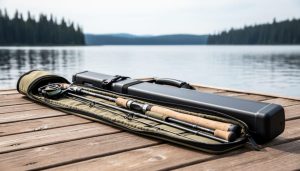
Pack a rod tube or protective sleeve. I learned this the hard way after cracking a ferrule against a rock during a scramble up a scree slope.
Caring for Your Rod and Reel Investment
I learned the hard way that our Canadian winters don’t play nice with fly gear. After storing my first decent rod and reel in a damp basement one year, I found the reel seat corroded and the guides tarnished come spring. That mistake cost me a weekend trip to the Bow River and taught me that proper care isn’t optional when you’re investing in quality equipment.
Your rod and reel face challenges here that anglers in milder climates never see. Temperature swings from minus 30 in February to plus 30 in July, road salt spray during transport, and the grit from gravel bars all take their toll. Coastal anglers fishing BC’s tidal waters deal with the added enemy of saltwater, which accelerates corrosion faster than anything else.
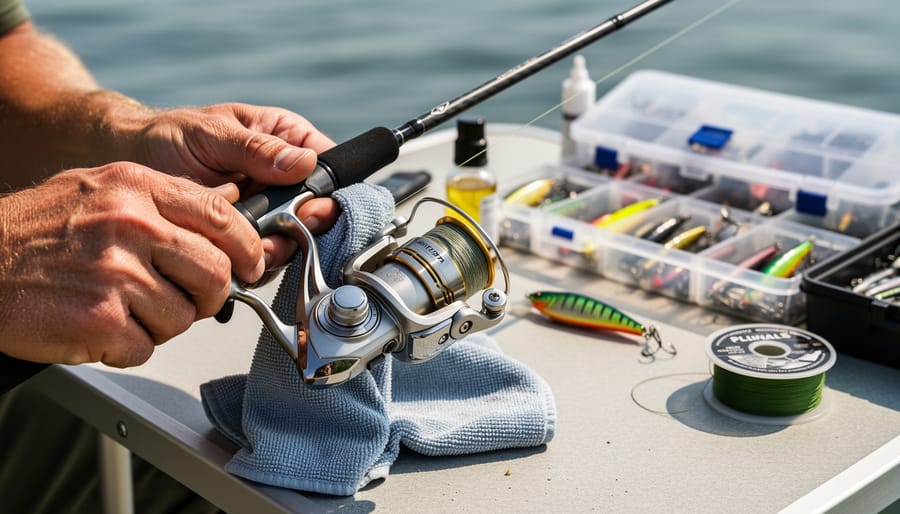
After each saltwater outing, rinse your entire setup with fresh water. I mean really rinse it, not just a quick splash. Pull some line off the reel and run water through the guides while the rod is assembled. For the reel, remove the spool and rinse both the frame and spool separately, then let everything air dry completely before reassembling. That half-hour of care prevents hundreds in repair costs down the line.
Here’s my seasonal maintenance routine that keeps gear performing year after year:
- End-of-season cleaning: Strip all line and backing off the reel, wash both rod and reel thoroughly with mild soap and warm water, inspect guides for cracks or rough spots, and check the reel drag for smoothness.
- Proper storage: Store rods in their tubes standing upright or hanging horizontally, never leaning in a corner where they can develop a set. Keep reels in a dry space with silica packets nearby to control moisture.
- Pre-season inspection: Before the opener, run your fingers along each guide to feel for nicks that could fray your line, test the reel drag under tension, and make sure ferrules fit snugly without forcing.
- Line and backing replacement: Change your fly line every two seasons of regular use, or annually if you fish frequently. Replace backing every three to four years, or immediately if you’ve battled fish into it repeatedly.
Transport protection matters more than most anglers realize. I keep a towel in my truck to wrap rods during the drive to remote lakes, protecting them from the rattle and bounce of logging roads. Rod tubes aren’t just for planes. They’re insurance against the realities of accessing good Canadian water, which often means rough trails and tight squeezes through alder thickets.
One often-overlooked detail is reel foot maintenance. That small metal piece that slides into your reel seat takes a beating. Apply a tiny bit of candle wax to the reel foot a couple times per season. It slides in smoother and creates a moisture barrier that prevents freezing in the seat during those surprise late-season cold snaps.
Common Mistakes Anglers Make
I’ve watched countless anglers walk into my favorite Alberta fly shop and make the same mistake I did twenty years ago: buying a beautiful rod and then grabbing whatever reel fits their budget. That mismatch cost me a nice rainbow on the Bow River when my cheap, oversized reel threw off my timing on a delicate dry fly presentation.
The most common error is ignoring weight balance. I’ve seen guys pair a lightweight 4-weight rod with a chunky reel that belonged on an 8-weight, then wonder why their arm gets tired after an hour. Your setup should balance near the grip, not tip forward or backward. Before you buy, hold the assembled combo with one finger under the rod seat. If it tips hard either direction, keep looking.
Another frequent misstep is prioritizing looks over function. That gorgeous wooden reel might photograph well on Instagram, but if you’re fishing Saskatchewan pike waters, you need a reel with serious drag and backing capacity. I learned this the hard way when a northern pike stripped all my backing in about fifteen seconds because I’d chosen style over substance.
Many anglers also overlook line matching. Your reel needs to accommodate the proper weight-forward line for your rod, plus adequate backing. I’ve watched fishermen discover mid-season that their reel can’t hold enough backing for steelhead runs, forcing them to buy a second reel.
Finally, skipping hands-on testing before purchase remains the biggest mistake. Your buddy’s favorite combo might feel completely wrong for your casting stroke. Take advantage of opportunities to cast different setups, even if it means waiting for an event or making a special trip to a shop with a casting pond.
Looking back on all those casting sessions, demo days, and conversations with fellow anglers across Canada, I’ve learned that finding your perfect fly fishing rod and reel combo isn’t just about specs on paper. It’s about how the setup feels when you’re waist-deep in a Prairie stream at dawn or fighting the wind off a Northern Ontario lake. The best combination is genuinely the one that disappears in your hands, letting you focus on the rise rather than your equipment.
If you’re still uncertain about what works for your home waters, get out there and cast. Visit your local shop, attend demo events, or hire a guide who can let you try different setups while chasing actual fish. Some of my most valuable lessons came from guides on trophy fishing expeditions who handed me their personal rigs and said, “Here, feel this.”
Your journey with fly fishing is unique. The rod and reel you choose will become an extension of your casting style, your favourite waters, and your fishing personality. Don’t rush it. The search itself, trying different weights and actions, discovering what feels right, that’s part of what makes this sport so rewarding. I’d love to hear what combo you eventually settle on and where it takes you across Canada’s incredible waters.