Why Canadian Fly Anglers Keep Asking About Scientific Anglers Lines
Scientific Anglers is a fly line and fly fishing gear brand that says it has been at the forefront of innovation for over 80 years, and its whole mission…
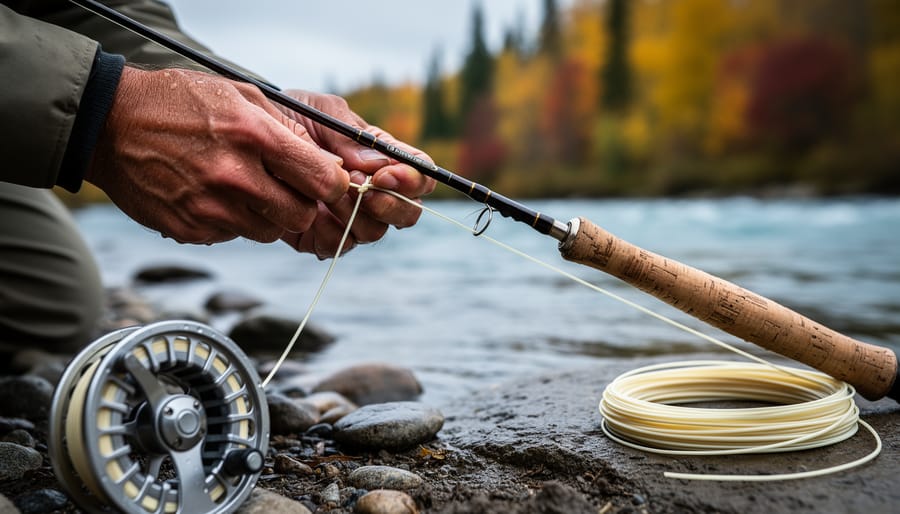
Scientific Anglers is a fly line and fly fishing gear brand that says it has been at the forefront of innovation for over 80 years, and its whole mission comes down to one idea: crafting high-performing products so anglers can pursue every fish with confidence. If you’re new to fly fishing, the line is the part to understand first. Unlike spin fishing, where the lure’s weight does the casting, a fly rod casts the line itself, and that line carries a nearly weightless fly out to the fish.
That’s why a brand built around fly lines matters. The right line makes casting feel easy. The wrong one makes every cast a fight.
There’s fresh news for saltwater anglers, too. Scientific Anglers says its Sonar Saltwater Intermediate fly line has been updated and upgraded for the 2026 season.
Canadian anglers have options for getting hold of the gear. The Scientific Anglers site has a dealer locator page, and Drift Outfitters, which calls itself Ontario’s Fly Fishing Shop since 2015, says it ships Scientific Anglers products across Canada. Below, we’ll break down how fly lines work in plain language, what the Sonar update means, and how to match a line to your rod and your water.
So, Who Is Scientific Anglers Anyway?
If you’ve spent any time near a fly shop wall, you’ve probably seen the Scientific Anglers name on a few of those boxes. So who’s behind it?
Scientific Anglers is a fly line and fishing products company, and it says it has been at the forefront of over 80 years of innovation. That’s the company’s own description of its history, and it’s worth reading as a brand statement rather than a guarantee of anything in particular. Still, a brand that has stuck around that long clearly has a story worth knowing.
The company also says it’s crafting high-performing products so anglers can pursue every fish with confidence. That’s a nice way of putting it, and honestly it matches what most of us want from our gear. We want to stop thinking about the equipment and start thinking about the fish.
Here’s a practical bit for Canadian readers. Scientific Anglers lists its headquarters at 4100 James Savage Road in Midland, Michigan. Its quick info lists customer contact hours as Monday to Friday, 9am to 5pm EST. If you’re calling from Canada, keep that time zone in mind so you don’t ring up on a Saturday morning, coffee in hand, and get nobody.
Keep in mind that this is a snapshot of what the company says about itself, and I’m sticking to those facts rather than guessing at the rest. Think of it as the introduction handshake. Next, we’ll get into what actually matters on the water: what a fly line does and why it deserves your attention.
Fly Lines 101: What You’re Actually Paying For
Floating, Intermediate and Sinking: When Each One Earns Its Keep
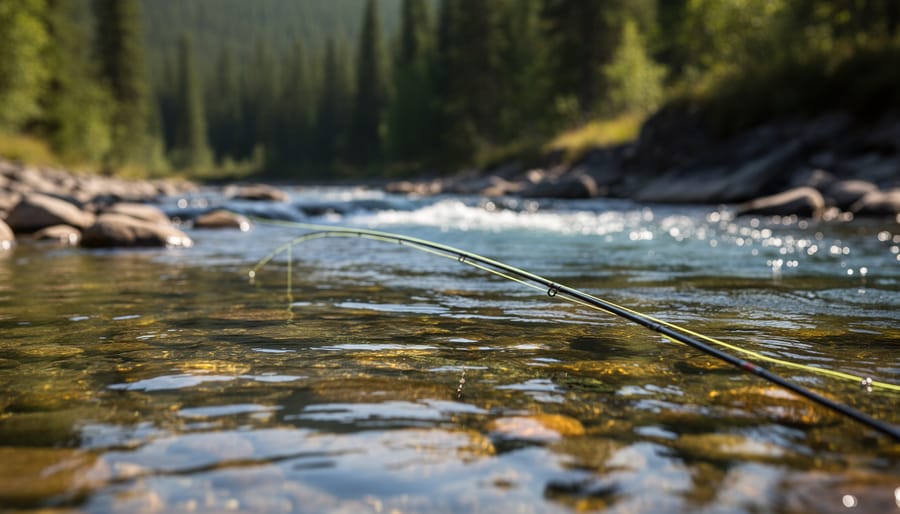
Here’s the simple way I think about it: match the line to where the fish are holding. A floating line stays on top, an intermediate line sinks slowly just under the surface, and a sinking line drops down to deeper water.
| Line type | Where it shines | Example Canadian situation | Beginner-friendly? |
|---|---|---|---|
| Floating | Dry flies, nymphs, shallow water | A trout stream in southern Ontario | Yes, the easiest to learn on |
| Intermediate | Just below the surface, windy days, shallow lakes | Trout along a weedy lake shoreline | Fairly easy once you’ve got the basics |
| Sinking | Deeper water, fish holding low | Pike along a drop-off in northern Ontario, Alberta or Saskatchewan | A little trickier at first |
Floating lines are where most of us start, and for good reason. You can see what your fly is doing, and picking the line back up off the water is simple. That makes them a gentle teacher on a trout stream.
Intermediate lines are the quiet problem-solvers. On a breezy lake, a floating line gets pushed around by the wind and drags your fly with it. An intermediate line sinks just enough to stay put, so your fly swims where you want it.
Sinking lines come into their own when fish sit deep. Pike often lurk near weed edges and drop-offs in the big, cool lakes of northern Ontario, Alberta and Saskatchewan. Getting a fly down to them can make all the difference.
You don’t need all three on day one. Start with a floating line and add the others as your water asks for them.
What’s New for 2026: The Sonar Saltwater Intermediate
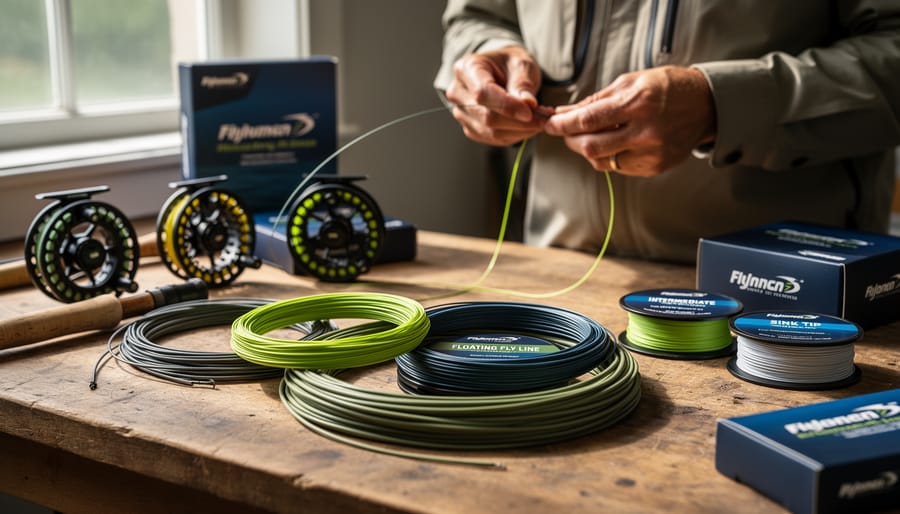
Here’s the one current product detail I can pin down. Scientific Anglers says its Sonar Saltwater Intermediate fly line has been updated and upgraded for the 2026 season. That’s the company’s own announcement, and it’s where I’ll stop, because the details of what changed aren’t something I can confirm.
Let me explain why an intermediate line is worth knowing about. Think of it as a slow sinker. A floating line sits on top of the water, while an intermediate line sinks gently, so your fly rides just under the surface instead of dropping out of sight. If you’ve ever watched fish refuse a fly on the surface but swirl at something a few inches below, you already understand the appeal. It’s also a handy choice on windy days, when a floating line gets pushed around by chop and drags your fly with it.
That slow, shallow presentation isn’t only for the ocean. Plenty of freshwater anglers use intermediate lines on lakes for trout, and some pike fishers like them for working a fly just beneath the surface. So if you’re curious about the style, you’re in good company.
One honest caution: this particular line carries “Saltwater” in the name, so it’s built with salt-water fishing in mind. I don’t have specs, prices or performance claims for it, and I’m not going to guess at them. If it’s on your radar, check the product page on the Scientific Anglers site for the full details of what’s new, or ask a fly shop how it would suit the water you fish.
Finding Scientific Anglers Gear in Canada
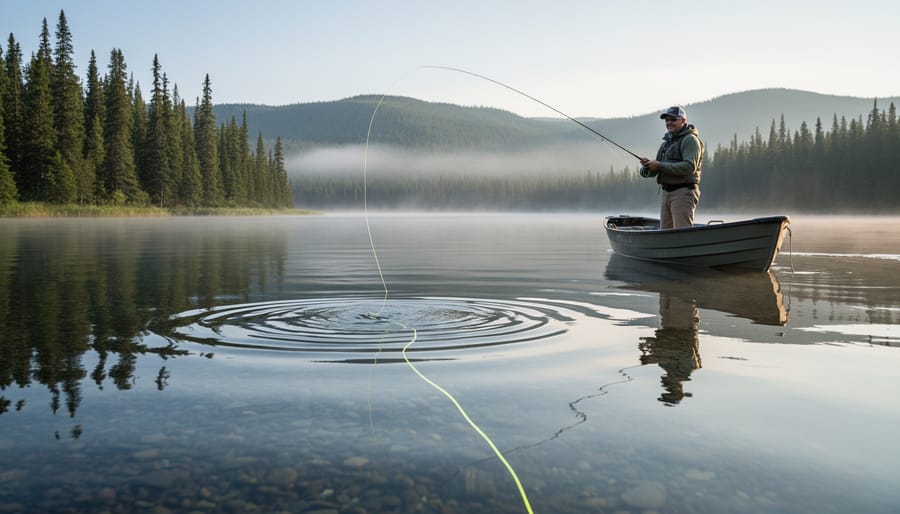
Here’s the good news for Canadian anglers: you don’t have to cross the border to get your hands on Scientific Anglers gear. The company’s website has a dealer locator page, which makes it a handy first stop when you want to see who carries the lines near you. It beats wandering from shop to shop hoping to get lucky.
If you’d rather shop from home, Drift Outfitters says it ships Scientific Anglers products across Canada. They describe themselves as Ontario’s Fly Fishing Shop since 2015, so they’ve been around long enough to know the questions beginners tend to ask.
Here’s a simple way to go about it:
- Open the dealer locator on the Scientific Anglers site and see which shops are closest to you.
- Call or drop into a local fly shop. A quick chat at the counter tells you more than any product page.
- Ask about line weight matched to your rod, and bring your rod along if you can.
- If you’re buying online from a Canadian retailer, confirm shipping details before you check out.
I’d really encourage you to lean on your local shop. Fly shop staff are usually anglers first and salespeople second, and most of them love talking lines. Nobody there has forgotten what it felt like to stare at a wall of boxes full of numbers and letters.
So ask the “silly” questions. What does that taper do? Why does this one cost more? Every one of those questions is how people learn this sport, and a good shop will be glad you asked.
Matching a Line to Your Rod and Water: A Beginner’s Checklist
Picking a line doesn’t have to feel like decoding a secret language. Think of it as a short checklist you can run through at the shop counter.
Start with your rod. Most rods have a line weight printed right above the grip, something like a 5 or a 6. Match your line to that number. It’s the single most important step, and it’s where most beginners trip up. If you’re brand new, our guide to fly fishing for beginners walks through reading those markings.
Think about your fish. Trout are usually happy with lighter lines that land softly. Pike are a different story. They hit hard and have teeth, so anglers chasing them tend to step up to heavier gear and tougher leader material. Neither choice is wrong, it just depends on who you’re hoping to meet.
Consider your water. A shallow, clear stream asks for something different than a deep northern lake. Floating lines keep your fly up top, while intermediate lines let it sit just below the surface. Ask yourself where the fish will be hanging out.
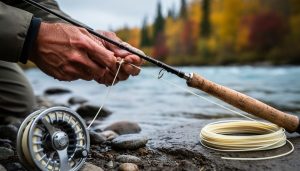
Plan the whole system. Your line is only one piece. Backing sits on the reel underneath, and the leader connects line to fly. When you set up your fly line, each part needs to work with the others. This step-by-step breakdown of going from reel to leader shows how it all fits together.
I learned this the hard way. Early on, I spooled a heavy line onto a light trout rod because it was on sale. Every cast felt like flinging a wet rope, and the rod just couldn’t load properly. I went home frustrated and a little embarrassed. The fix was simply matching the numbers.
If you’re still gathering gear, a solid fishing gear checklist helps you cover the rest. And remember, shop staff love beginner questions. Ask away.
Quick Answers to Common Questions
Here are the questions I hear most often from folks curious about the brand, with straight answers.
Is Scientific Anglers available in Canada?
Yes, you can get it here. Drift Outfitters, which calls itself Ontario’s Fly Fishing Shop since 2015, says it ships Scientific Anglers products across Canada.
Where can I find a dealer?
The Scientific Anglers website has a dealer locator page, which is the best place to start. Your local fly shop is also worth a visit, since staff can tell you what they carry.
What does an intermediate line do?
An intermediate line sinks slowly, so your fly rides just below the surface instead of sitting on top. Anglers use it to work flies in that shallow zone, and it’s a handy line to understand even if you fish freshwater.
Can a beginner use a premium line?
Absolutely. A good line is easier to cast and handle, so it can help while you’re learning. What matters most is matching the line weight to your rod.
Who do I contact with product questions?
Scientific Anglers lists customer hours as Monday to Friday, 9am to 5pm EST, so plan your call around that from anywhere in Canada.
Still not sure which way to lean? Ask a shop to let you handle a few lines side by side. Nobody minds a beginner’s questions, and the best fly anglers I know started by asking plenty of them.
Scientific Anglers is clearly on more Canadian anglers’ radar these days, and that’s worth being curious about. But no brand name can pick the right line for you. That comes down to your rod, the water in front of you, and how you like to fish.
So here’s my nudge: swing by a local fly shop, ask a few questions, and don’t worry about sounding like a beginner. Everyone started somewhere. Then spool up a line you’re curious about and try it on your next trip. You’ll learn more in one afternoon of casting than in a week of reading.
If you’d like more fishing and harvesting updates, subscribe to our newsletter.
Lately I keep picturing a quiet northern lake at first light, mist lifting off the water, loon calls drifting across, and a fly line landing soft as a whisper. That’s the feeling worth gearing up for.