Fly Fishing vs Regular Fishing: Which Fits Your Canadian Waters?
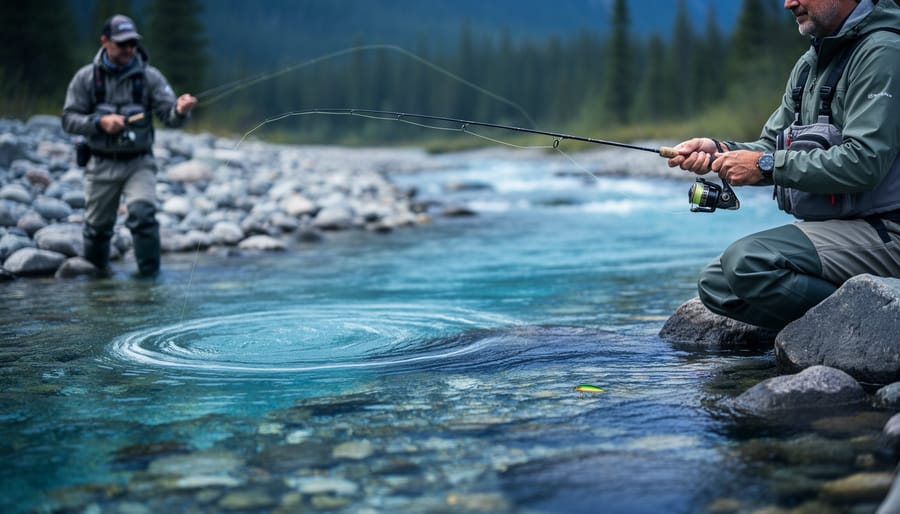
For most Canadian anglers, fly fishing wins on elegance and finesse when chasing trout in rivers and streams, while conventional spinning or baitcasting remains unbeatable for versatility across species, water types, and sheer beginner-friendliness. The choice hinges on what you’re targeting and where you fish: if you dream of presenting dry flies to rising brook trout in a BC mountain creek or brown trout on Alberta’s Bow River, fly fishing is your path. If you want one setup that handles walleye on Saskatchewan lakes, pike in Ontario’s Kawartha region, and salmon off the Pacific coast, conventional gear does it all without the steep learning curve.
I spent years spinning for pickerel and pike before picking up a fly rod on Alberta’s Crowsnest River, and the contrast hit me immediately. Fly fishing isn’t just a different technique. It’s a different rhythm altogether. You’re working with the weight of the line itself to deliver a nearly weightless fly, reading currents, matching hatches, and timing presentations to the millisecond a fish tilts toward the surface. Conventional fishing, whether you’re thumbing a baitcaster or flipping a spinning reel, relies on lure weight or bait to carry your cast. It’s intuitive, forgiving, and effective within an hour of your first outing.
Both methods catch fish. Both have devoted followings across Canada. But they attract different anglers for different reasons, and understanding those differences before you invest in rods, reels, waders, and licenses will save you frustration and money. Whether you’re gearing up for British Columbia’s April 1 season opener or planning a summer trip to Ontario’s river systems, knowing which approach suits your target species, budget, and patience level makes all the difference on the water.
At-a-Glance: Fly Fishing vs Regular Fishing
Choosing between fly fishing and regular fishing can feel overwhelming when you’re staring at rows of rods in a tackle shop or planning your first Canadian fishing trip. Both methods catch fish, sometimes the same species in the same water, but they get there in fundamentally different ways. Before we dig into the nuances, here’s how they stack up across the factors that actually matter when you’re deciding which approach fits your fishing goals.
| Category | Fly Fishing | Regular Fishing |
|---|---|---|
| Gear Complexity | Specialized rod, reel, weighted line, tapered leaders, flies | Rod, reel, line, lures or bait, simpler combinations |
| Learning Curve | Steeper initial learning, rhythm-based casting technique | More accessible starting point, faster to basic competence |
| Prime Target Species | Trout, salmon, grayling, surface feeders | Pike, walleye, bass, lake trout, multi-species versatility |
| Typical Canadian Waters | Rivers, streams, spring creeks, some lakes | Lakes, rivers, reservoirs, deep water, anywhere fish live |
| Cost to Start | Higher upfront investment for quality basics | Lower entry point, scales to any budget |
This snapshot reveals the core trade-off: fly fishing offers a specialized, technique-driven path that excels in specific scenarios, while regular fishing provides versatility and ease of entry across Canada’s incredibly diverse waters. The same regulations, size limits, and licensing requirements apply to both methods, your choice of tackle doesn’t change the rules. What changes is how you fish, where you’ll find the most success, and what kind of angling experience you’re chasing.
What Fly Fishing Is (And How It Works)
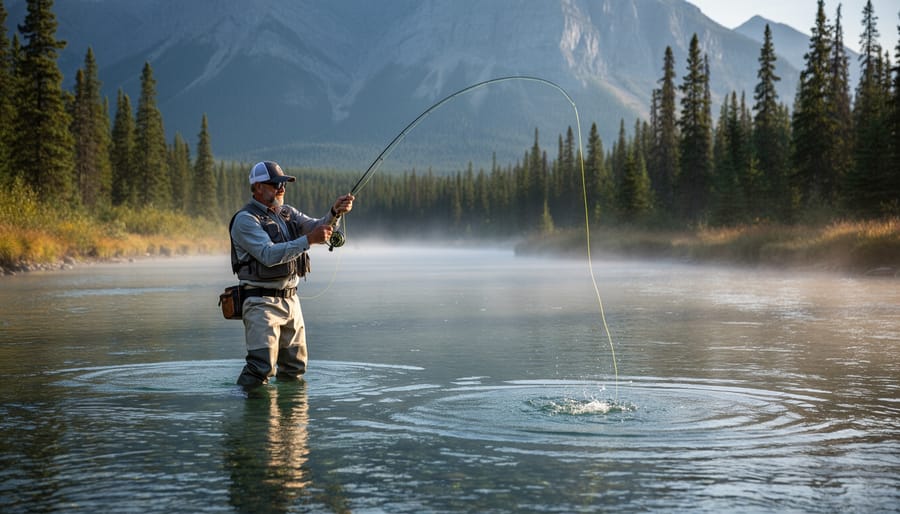
Fly fishing turns conventional casting on its head. Instead of hurling a weighted lure and letting the line follow, you’re casting the weight of the line itself to deliver a nearly weightless fly to the water. That fly, a hand-tied creation of feathers, fur, and thread, imitates the insects, baitfish, or other small prey that trout and other surface-feeding species can’t resist.
The technique centres on a rhythmic back-and-forth casting motion. You load the flexible rod by sweeping it backward, pause as the line straightens behind you, then drive it forward to unfurl the line and gently place the fly exactly where you want it. It’s part choreography, part physics, and entirely different from the overhead whip of a spinning rod. The goal isn’t distance or power, it’s delicate presentation that fools wary fish into thinking your artificial fly is the real thing drifting naturally on the current.
- Fly
- An artificial lure made from feathers, fur, and thread tied onto a lightweight hook to imitate insects, baitfish, or other natural prey. The fly is nearly weightless, so the line carries it during the cast.
- Presentation
- The act of delivering the fly to the water in a way that looks natural and doesn’t spook the fish. A good presentation lands softly and drifts drag-free with the current.
- False Casting
- Repeatedly casting the line back and forth in the air without letting the fly touch the water, used to extend line, dry the fly, or adjust your aim before the final presentation.
- Drift
- The natural, drag-free movement of the fly on or below the water’s surface, mimicking how real prey behaves in the current. Controlling drift is essential to convincing fish your fly is alive.
- Matching the Hatch
- Selecting a fly pattern that closely resembles the insects currently hatching or present in the water. Trout can be selective feeders, so matching size, colour, and silhouette often makes the difference between strikes and refusals.
This approach shines in Canadian rivers and streams where trout, salmon, and grayling feed on the abundant insect life. The clear, flowing water of an Ontario creek or an Alberta mountain stream is ideal fly fishing terrain. You’re reading the water, spotting rising fish, and choosing a fly to match what they’re eating right now.
I’ll never forget my first morning on a small Ontario trout stream, fumbling through false casts while a friend coached me from the bank. The line kept collapsing in a heap, the fly snagged willows behind me, and I questioned whether this was worth the effort. Then one cast came together. The line unfurled like a ribbon, the fly settled softly in a dark pool beneath an undercut bank, and a speckled brook trout rose to take it. That instant, the visual take, the tight line, the living connection, made everything click. The rhythm became muscle memory, and I understood why people fall hard for this method.
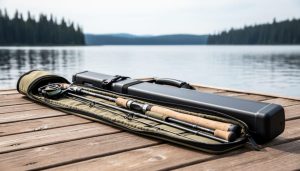
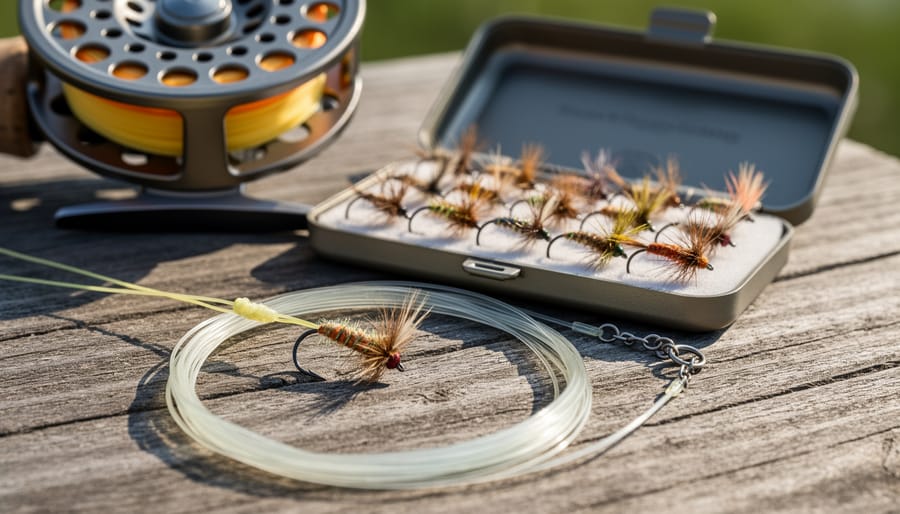
The fishing gear checklist for fly fishing looks different from conventional tackle. You’ll need a 9ft, 5-weight fly rod, a matching reel with adjustable drag, WF5F fly line, a 7.5-9ft tapered leader with 4X or 5X tippet, breathable chest waders, polarized sunglasses, and a rubber-mesh landing net. It’s specialized equipment built for finesse rather than versatility, and every piece plays a role in that precise, delicate presentation.
What Regular Fishing Is (And How It Works)
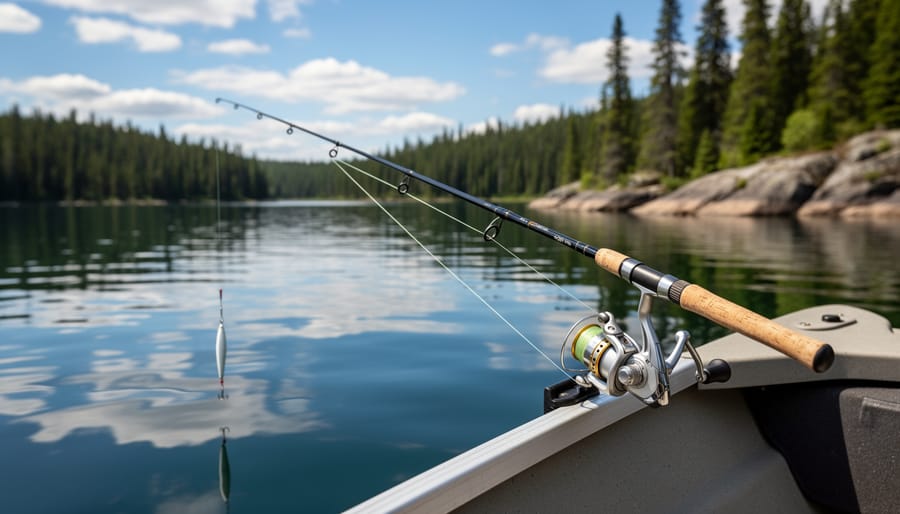
Regular fishing, what most of us call conventional or spin fishing, works on a simple principle: the weight of your lure or bait pulls the line off the reel during the cast. Whether you’re using a spinning rod, baitcaster, or trolling setup, you’re relying on that terminal tackle to get your offering where the fish are. The rod loads and releases, the weighted end flies out, and you’re fishing. No specialized casting technique required for basic competency.
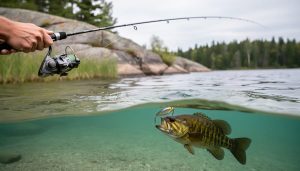
That simplicity translates to incredible versatility. A single spinning rod can handle everything from jigging walleye in 20 feet of water to casting spoons for pike along weed edges, working crankbaits for bass in rocky shallows, or trolling spoons for lake trout at depth. You can fish lakes, rivers, reservoirs, and even Great Lakes tributaries with the same basic approach, adjusting your tackle and presentation to match conditions and species.
I learned this firsthand on a northern Saskatchewan trip chasing pike. We worked the shoreline weeds with big spoons and inline spinners, covering water fast and triggering aggressive strikes. When a toothy northern hammers a spoon on the retrieve, there’s no mistaking it, the rod loads hard and the fight is on. That same setup handled the occasional walleye we picked up over rock transitions, and we could switch to deeper-running lures when fish moved off the shallows during midday heat.
Regular fishing dominates Canada’s pike fishing destinations walleye waters, bass lakes, and anywhere you’re targeting species that chase baitfish or feed at varying depths. It’s effective, accessible, and lets you adapt quickly to changing conditions without rebuilding your entire approach.
Head-to-Head: Breaking Down the Differences
Gear and Equipment Setup
The gear divide between fly fishing and conventional methods runs deeper than most beginners realize. Walk into any tackle shop and you’ll see the evidence: fly gear occupies its own specialized corner, while regular fishing tackle spans entire walls with dizzying variety. The fundamental difference? Fly fishing uses the weight of the line itself to cast nearly weightless flies, while conventional fishing relies on weighted lures or bait to pull light line through the air.
A complete beginner fly fishing setup represents a coordinated system where every component must match:
- 9-foot, 5-weight fly rod, the versatile all-rounder for Canadian trout streams
- Matching 5-weight reel with adjustable drag, balances the rod and controls fighting fish
- WF5F fly line (weight-forward, 5-weight, floating), the casting engine that delivers your fly
- 7.5 to 9-foot tapered leader with 4X or 5X tippet, the nearly invisible connection to your fly
- Breathable chest waders, access to prime water without soaking through
- Polarized sunglasses, spot fish and protect your eyes from errant hooks
- Rubber-mesh landing net, land and release fish without damaging their slime coat
This integrated approach means you can’t just grab a fly rod and expect results. The rod, reel, line, and leader all work together as a casting unit. Switch from a 5-weight to a 7-weight rod and you’ll need matching line to load the rod properly. It’s precise, purpose-built, and admittedly intimidating at first.
Regular fishing gear offers immediate versatility. A medium-action spinning rod paired with a 2500-series reel loaded with 8-pound monofilament handles everything from Ontario panfish to Saskatchewan walleye. Want to target bigger pike? Swap to 20-pound braided line and heavier lures. The same rod-and-reel combo adapts to dozens of situations by changing what you tie on the end. Baitcasting setups add precision for bass and muskie anglers, but the principle holds: one outfit, countless applications.
The cost and learning implications matter. That coordinated fly setup runs $400 to $600 for quality beginner gear, and you’ll spend your first few outings learning to cast before you catch much. A decent spinning combo starts around $100, and you’re fishing effectively within the first hour. Neither approach is wrong, but fly fishing demands specialized investment and dedicated practice before applying those trout fishing techniques on the water. Regular tackle rewards you faster, then deepens as your skills grow.
Learning Curve and Skill Development
Here’s the honest truth: fly fishing will humble you in the first few hours. The cast alone, that graceful back-and-forth rhythm you’ve seen in videos, demands coordination most of us don’t have naturally. You’re learning to control sixty feet of weighted line with a flick of your wrist, timing the pause as the line unfurls behind you, then driving it forward without snapping the nearly weightless fly off your tippet. I watched a guy tangle himself three times in twenty minutes on his first attempt. He laughed it off, but the frustration was real.
Regular fishing? You can catch fish your first outing. The motion is instinctive: pull the rod back, thumb the spool, release. A seven-year-old can master a basic spinning cast in an afternoon. The gear makes sense immediately, reel, line, lure, fish.
But here’s where it gets interesting: both paths lead to lifelong learning. Fly fishing frontloads the challenge. You’ll spend weeks practicing casting in a park before you’re confident on the water, then months learning to read currents, match insect hatches, and tie a proper clinch knot with frozen fingers. The skills stack quickly once the foundation clicks.
Conventional fishing starts easier but deepens just as far. Mastering baitcaster backlash control, understanding seasonal patterns for walleye, reading structure with electronics, these take years. The difference is you’re catching fish while you learn instead of perfecting technique first.
Target Species and Water Types
Fly fishing shines brightest when you’re chasing trout, salmon, and Arctic grayling in moving water. Those species feed heavily on insects and baitfish near the surface, making them perfect targets for the delicate presentation a fly offers. In Alberta, the Bow River’s rainbow and brown trout are legendary fly fishing quarries, while BC’s coastal rivers draw anglers targeting steelhead and Pacific salmon during their runs. Ontario’s Grand River and Credit River hold strong brown trout populations that respond beautifully to mayfly and caddis imitations, and the remote streams of northern Saskatchewan and BC offer pristine grayling fishing for those willing to venture off the beaten path.
Regular fishing dominates when versatility matters. Pike, walleye, bass, lake trout, and muskie all respond better to conventional tackle that lets you fish deeper, cover more water, and present larger baits or lures. Ontario’s Kawartha Lakes and Lake of the Woods are walleye havens best approached with jigging spoons or live bait rigs. Saskatchewan’s northern lakes produce massive pike that inhale spoons and spinnerbaits. BC’s Interior lakes hold hefty rainbow trout that cruise deep and chase trolled lures, while southern Ontario’s bass waters from Georgian Bay to the St. Lawrence reward anglers casting crankbaits and soft plastics.
The pattern is simple: fly fishing for surface-oriented species in rivers and streams, conventional gear for everything else across lakes, reservoirs, and deeper water.
Licensing, Regulations, and Season Timing
Here’s a question that trips up newcomers: does choosing fly fishing mean different regulations than regular fishing? The short answer is no. Whether you’re casting a dry fly or jigging for walleye, you’re playing by the same rulebook. Ontario’s fishing regulations apply to both techniques equally, covering everything from possession and catch limits to size restrictions for every species. Your method doesn’t matter to the law, what counts is what you’re targeting and where you’re fishing.
Licensing works the same way across Canada. In British Columbia, for example, the licence year runs from April 1 to March 30, regardless of whether you prefer a fly rod or a spinning reel. With the 2026 season starting April 1, you’ll need a valid 2026-27 licence in hand, available for purchase starting March 1 if you want to beat the rush. Same licence, same season dates, same regulations. The only real difference is the tackle in your hand.
Cost to Get Started
Fly fishing demands more upfront cash. A quality beginner fly setup, rod, reel, line, leader, tippet, waders, and a few flies, runs $400 to $700 CAD if you buy thoughtfully. Budget kits exist closer to $200, but they often frustrate more than they help with clunky reels and noodle-soft rods.
Regular fishing costs less to start. A decent spinning combo (rod and reel), basic tackle box, a handful of lures, and some line totals $100 to $250. You can wet a line your first afternoon without breaking the bank.
Both paths scale upward fast if you chase premium gear, but conventional tackle gives you a gentler entry point. Fly fishing asks for commitment before the first cast; regular fishing lets you ease in and decide how deep you want to go.
Who Should Choose Fly Fishing
Fly fishing calls to a specific breed of angler. If you’re targeting trout and salmon in rivers and streams across Canada, this is your method. Those silver-sided rainbow trout rising to mayflies on a BC river, the Atlantic salmon holding in Quebec pools, the bull trout in Alberta’s mountain waters, these fish demand the delicate presentation and natural drift that fly fishing delivers. You can’t replicate that experience with a spinning rod.
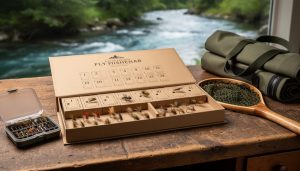
You’ll thrive with fly fishing if the process matters as much as the catch. This isn’t chuck-and-reel fishing. You’re reading currents, studying insect hatches, adjusting your presentation, and perfecting your cast. The technique itself becomes part of the reward. There’s genuine satisfaction in analyzing what bugs are on the water, selecting the right pattern from your box, and watching a fish rise to your perfectly-drifted dry fly.
The rhythm of fly casting has a meditative quality that hooks certain people immediately. That smooth back-and-forth motion, the line unfolding in the air, the quiet focus required, it becomes almost therapeutic. I still remember the first time I matched the hatch on an Alberta stream, watching pale morning duns hatch while cutthroat trout sipped them from the surface. Switching to a size-16 PMD pattern and hooking that first selective riser felt like cracking a code.
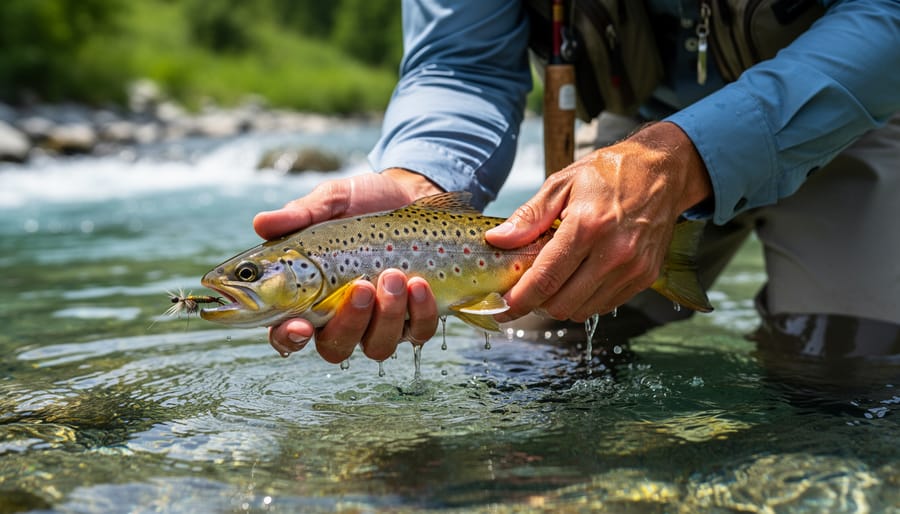
Catch-and-release anglers often gravitate toward fly fishing. The barbless hooks, gentle handling techniques, and quick releases align naturally with conservation-minded fishing, especially in regulated trout waters where you’re fishing purely for the experience.
Who Should Choose Regular Fishing
Regular fishing is your answer if you’re chasing variety across Canada’s lakes and reservoirs. I learned this on a week-long Ontario cottage trip where my spinning rod handled everything from dawn walleye to afternoon smallmouth bass to evening pike, same setup, different lures, zero downtime switching gear. That versatility is conventional fishing’s superpower.
You should grab a spinning or baitcasting outfit if you target pike, walleye, bass, or lake trout. These species often hold in deeper water or patrol open lakes where fly fishing becomes impractical. A crankbait running 15 feet down or a jig bouncing rocky structure will outfish any fly presentation in those scenarios.
Beginners get results faster with regular tackle. You can be catching fish your first afternoon, versus the weeks many folks need before their fly casting clicks. There’s no shame in wanting immediate success, fishing should be fun, not frustrating.
If you plan to keep fish for the table, conventional methods offer better control across diverse environments. You’re not limited to rivers and surface feeders. And when you’re ready to expand your skills, you can always learn fly fishing in Canada while keeping your spinning rod ready for different situations.
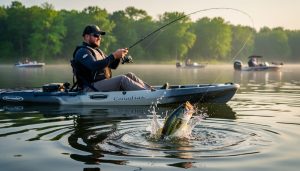
Regular fishing also suits anglers who prefer staying mobile, covering water from boat or shore, and adapting quickly to changing conditions. It’s fishing without boundaries.
What Each Option Is
At its core, fly fishing is a casting technique where the weight of a specialized fly line propels a nearly weightless artificial fly to the target. The fly itself, typically made from feathers, fur, and thread, imitates insects, baitfish, or other small prey that fish feed on. You’re presenting a delicate imitation on or near the water’s surface, often to fish that are actively feeding on natural insects. The rhythm is deliberate: you’re not just tossing and retrieving, you’re placing the fly exactly where a real bug would land.
Regular fishing, often called conventional or spin fishing, works the opposite way. Here, the weight of your lure or bait creates the cast while your line simply follows along. You might be throwing a spoon for lake trout, bouncing a jig for walleye, or dragging a crankbait for bass. The gear is simpler and more forgiving, a spinning rod and reel loaded with monofilament or braided line. You can fish any depth, retrieve at any speed, and adapt quickly to whatever species you’re targeting. It’s the Swiss Army knife of fishing methods, which explains why most Canadian anglers start here and many never leave.
Common Questions About Choosing Your Approach
Is fly fishing harder than regular fishing?
Fly fishing has a steeper initial learning curve because you’re controlling the cast with the weight of the line rather than a weighted lure, and the technique requires more practice to master. That said, regular fishing has its own complexities at advanced levels, both paths offer lifelong skill development.
Can you fly fish in lakes, or is it only for rivers?
You can absolutely fly fish in lakes. While rivers and streams are classic fly fishing water, stillwater fly fishing for trout, bass, and other species is hugely popular across Canada, especially in British Columbia and Alberta.
Should I learn regular fishing first before trying fly fishing?
There’s no rule saying you must start with conventional gear. If trout and salmon in rivers are your main interest, jump straight into fly fishing. Many anglers do both depending on where they’re fishing and what they’re targeting.
Which method catches more fish?
Effectiveness depends entirely on the situation. Fly fishing often outperforms conventional methods when trout are surface-feeding on insects, while regular fishing excels for deeper presentations and aggressive predators like pike and walleye.
The beauty of fishing in Canada is you’re not locked into one approach forever. I’ve met countless anglers who started with a spinning rod for bass and walleye, then picked up a fly rod after watching someone work a dry fly on a river. Others went the opposite direction, adding conventional gear to their arsenal when they wanted to chase lake trout or northern pike.
Your choice of technique doesn’t affect licensing or regulations, all regular fishing regulations, size limits, and possession limits still apply whether you’re casting flies or throwing lures. In British Columbia, for instance, the fishing season starts April 1, 2026, and you’ll need a valid 2026-27 licence regardless of your chosen method. The rules are about conservation and sustainability, not what’s on the end of your line.
Here’s the truth I’ve learned after years of chasing fish across Canadian waters: you don’t have to pick a side in the fly fishing versus regular fishing debate. The anglers having the most fun are the ones who match their method to the moment.
Fly fishing owns the technical game. When you’re standing knee-deep in an Alberta stream, watching mayflies hatch while trout sip from the surface, nothing beats the precision of a well-presented dry fly. The rhythm of the cast, the delicate tippet, the satisfaction of fooling a selective fish, that’s fly fishing at its finest. It’s built for trout, salmon, and the kind of focused, almost meditative fishing that turns a day on the water into something deeper.
Regular fishing gives you everything else. Pike ambushing your spinnerbait in a Saskatchewan weed bed. Walleye at dusk on an Ontario reservoir. Lake trout suspended thirty feet down in BC’s interior lakes. Conventional gear adapts to species, depths, and conditions that fly tackle can’t touch. It’s versatile, accessible, and devastatingly effective when you want to put fish in the net.
Most passionate anglers I know carry both. A fly rod for the spring creek, a spinning rod for the big lake. Your target species and water type will guide you more than any article ever could. Try one, try both, find what pulls you back to the water. That’s the only verdict that matters.