How Canadian Pike Hunt Differently (And Why Your Technique Isn’t Working)
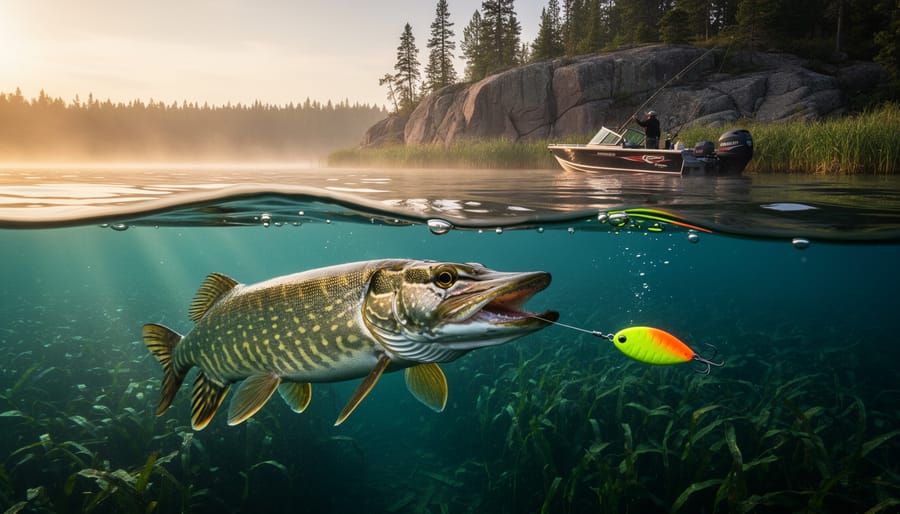
Cast large spinnerbaits along weed edges in early morning when pike actively hunt baitfish in the shallows. Work the lure with a steady retrieve punctuated by occasional pauses, letting the blades flutter as they sink—this triggers aggressive strikes from pike waiting in ambush positions.
Target depth transitions where rocky points drop into deeper water, especially during mid-summer when pike move to cooler zones. Use wire leaders rated for at least 20 pounds to prevent bite-offs, and opt for quick-strike rigs when fishing with dead bait to reduce fish mortality.
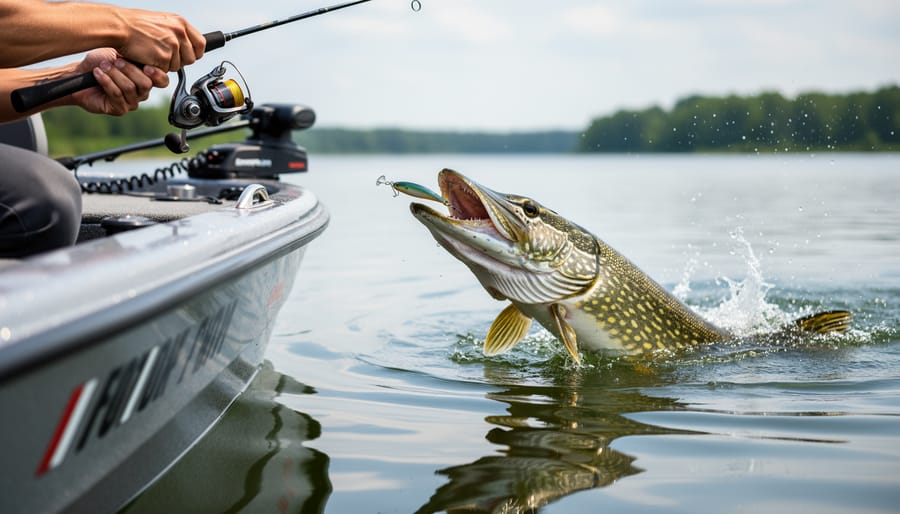
Master the figure-eight technique beside your boat on every retrieve. As your lure approaches, trace a large figure-eight pattern with your rod tip just beneath the surface. Pike frequently follow lures without striking, and this final presentation triggers follows into explosive boatside attacks that’ll get your heart racing.
Switch to suspending jerkbaits during late fall when water temperatures drop below 50°F. Pike metabolism slows but they still feed aggressively before winter. Rip the bait forward three times, then pause for five to ten seconds, allowing the lure to hang motionless in the strike zone.
Canadian waters present unique challenges—ultra-clear Shield lakes demand natural colors and longer casts, while tannin-stained prairie reservoirs respond to bright chartreuse and orange patterns. Understanding how pike behavior shifts across Canada’s diverse ecosystems separates consistent anglers from those who struggle. The techniques you’ll master here combine decades of on-water experience with regional knowledge that transforms average outings into trophy days.
Why Canadian Pike Behave Like No Other Predator
I’ll never forget the first time I saw a Canadian pike absolutely demolish a ten-inch whitefish in water so clear I could count the predator’s teeth. That moment taught me something crucial: pike up here in Canada are operating on a completely different level than their cousins down south.
The secret lies in our water. Canadian lakes and rivers maintain frigid temperatures well into summer, hovering between 55-68°F during prime fishing months. This cold water creates a metabolic sweet spot for pike. While warm-water pike get sluggish and irritable when temperatures climb, Canadian pike stay aggressive and energetic throughout their feeding windows. They’re built for these conditions, and it shows in how they hunt.
Our extended growing seasons create another game-changing advantage. In many Canadian waters, pike have access to abundant forage for seven to eight months of the year. We’re talking massive populations of whitefish, cisco, perch, and suckers. This feast-or-famine mentality you see in southern pike? It barely exists here. Canadian pike can afford to be selective, which means they’re also incredibly opportunistic when the right presentation comes along.
Here’s what really sets them apart: Canadian pike are ambush predators with patience. They’re not desperately chasing every lure that swims by because they don’t have to. They’re waiting for that perfect moment when a baitfish shows weakness or when something triggers their territorial instinct. This behavior means your retrieval speed, lure action, and presentation angles matter far more than simply casting repeatedly.
The clarity of Canadian waters also factors heavily into their behavior. In the gin-clear lakes of Northwestern Ontario or the Saskatchewan river systems, pike rely heavily on sight to hunt. They’ll follow your lure for fifty feet, analyzing it, before either striking or turning away. This visual hunting style demands that anglers pay attention to realistic color patterns and erratic retrieve techniques that mimic injured prey rather than healthy, strong swimmers.
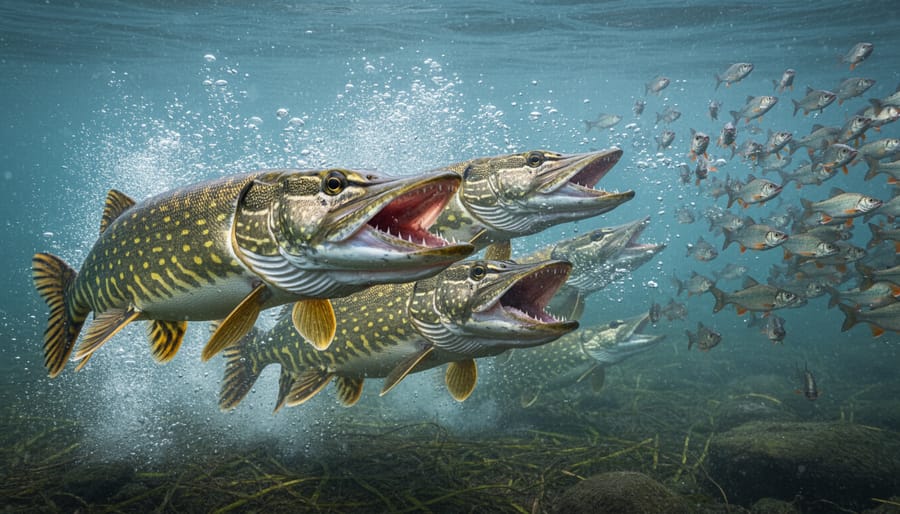
Reading Canadian Water: Where Pike Actually Hide
Shallow Bays and Weed Beds
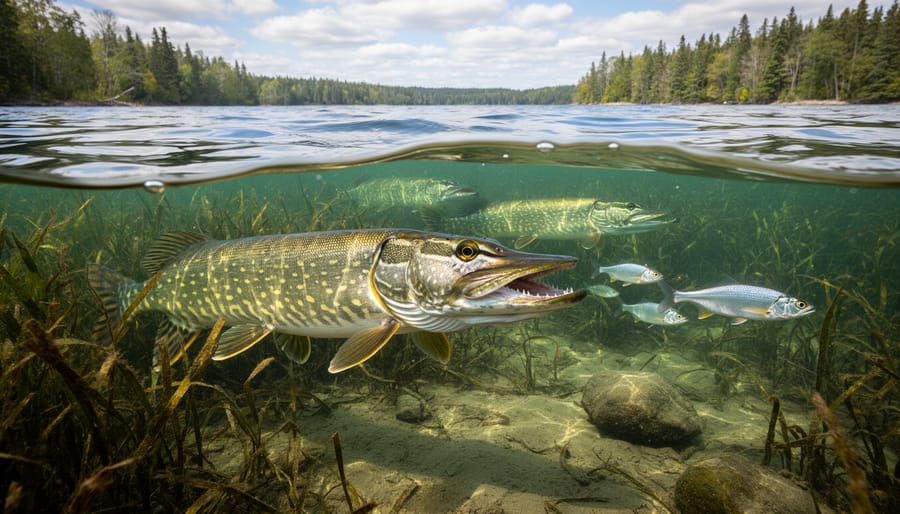
Shallow bays and weed beds are absolute pike magnets, especially during spring and early summer when these toothy predators move in to spawn and ambush prey. I’ve had some of my most memorable pike encounters in water barely deep enough to cover my knees.
Look for bays with a mix of cabbage weeds, coontail, and lily pads in two to six feet of water. The key is finding edges where vegetation transitions to open pockets. Pike love these ambush points where they can burst out at unsuspecting baitfish. Pay special attention to inside turns along weed lines and any irregularities in the vegetation pattern.
The golden hours for targeting these shallow zones are early morning and evening during late spring through early fall. Water temperatures between 55 and 65 degrees are ideal. Come mid-summer, focus on these areas when cloud cover keeps things cooler, or shift to deeper weed edges during the heat of the day.
When scouting, polarized sunglasses are essential for spotting subsurface vegetation. I always cruise shorelines slowly, watching for those telltale V-wakes that signal a pike moving through the shallows. Green, healthy vegetation produces more oxygen and attracts more baitfish, making it far more productive than dying brown weeds.
Drop-offs and Rocky Points
I’ve spent countless mornings on Canadian Shield lakes watching my sonar light up when it crosses those magical depth transitions where rock shelves suddenly drop into darker water. Pike absolutely love these spots, and once you understand why, you’ll never cruise past them again.
Drop-offs act like natural highways for pike. They patrol these edges because baitfish congregate where shallow, sun-warmed water meets cooler depths. The pike sit just off the break, ready to ambush anything that ventures too close. I’ve had my best luck targeting drop-offs that go from 8-12 feet down to 20-30 feet, especially when there’s rockpile or boulder structure along the transition.
Your fish finder becomes your best friend here. Look for irregular breaks rather than smooth, gradual slopes. Those jagged transitions with rock points jutting out create current breaks and confusion zones where prey gets disoriented.
For fishing technique, cast parallel to the drop-off rather than straight over it. This keeps your lure in the strike zone longer. I typically use spinnerbaits or crankbaits that run just above the depth change. Work them steadily, then pause occasionally. That hesitation often triggers follows into strikes.
Rocky points deserve special attention during spring and fall when pike cruise shallow. Position your boat in deeper water and cast toward the point, retrieving your lure as it follows the natural contour back to depth.
Northern River Systems
River pike behave differently than their lake-dwelling cousins, and I learned this the hard way during my first spring on the Attawapiskat. Northern rivers create natural ambush points that concentrate pike in predictable locations, making them incredibly catchable once you crack the code.
Focus on current breaks where slower water meets faster flow. Pike position themselves just outside the main current, waiting for baitfish to sweep past. Look for inside bends, fallen timber, and rock formations that create these sweet spots. In the Albany River system, I’ve found my biggest fish holding tight to submerged boulders where the current splits.
Your presentation needs adjustment for moving water. Cast upstream and let your lure swing through the strike zone naturally. Spinnerbaits excel here because they flash and vibrate even in murky spring runoff. I run heavier jig heads, usually three-quarter to one ounce, to maintain bottom contact without constant snagging.
Water temperature matters more in rivers because current accelerates pike metabolism. During May and June, when rivers hit that magical 55-60 degree range, pike feed aggressively in surprisingly shallow water. Wade quietly along gravel bars during these periods, working inline spinners parallel to drop-offs. The strikes are explosive and unforgettable.
Tackle That Works in Cold Canadian Water
Rod and Reel Combinations That Won’t Fail
After spending countless hours battling pike across Ontario, Saskatchewan, and Manitoba, I’ve learned that gear failure isn’t an option when you’ve got a 40-incher thrashing beside your canoe. The right rod and reel combination makes the difference between landing trophy fish and telling another “one that got away” story around the campfire.
For all-around pike fishing in Canadian waters, I always reach for a 7 to 7.5-foot medium-heavy power rod with fast action. This setup gives you the backbone to drive hooks into those bony pike mouths while maintaining enough sensitivity to detect strikes in weed beds. The fast action tip lets you work jerkbaits and spoons with precision, which is crucial when pike are finicky in clear northern lakes.
My go-to combination pairs a quality 7-foot medium-heavy fast action rod with a 3000 to 4000 size spinning reel. Load it with 30-pound braided line, and you’ve got a versatile setup that handles everything from casting spoons in shallow bays to working soft plastics along rocky drop-offs. Braid is essential in Canadian conditions because it doesn’t stretch, giving you solid hooksets at distance, and it cuts through vegetation better than mono.
For serious trophy hunters targeting bigger fish in heavy cover, step up to a 7.5-foot heavy power rod with a 5000 size reel. This beast handles large swimbaits and gives you the muscle needed to horse big pike away from submerged timber and thick cabbage weeds that dominate many Canadian pike haunts.
Line and Leader Setup for Toothy Predators
Pike have teeth that’ll slice through standard mono like a hot knife through butter—I learned this the hard way on Lake of the Woods when a 15-pounder straightened my hook and took my favorite lure. Here’s what actually works in Canada’s crystal-clear waters.
Start with 30-50 lb braided mainline. I prefer darker colours like moss green in our gin-clear lakes because it disappears better than high-vis yellow. The zero-stretch property gives you incredible hooksets at distance, crucial when pike strike 60 feet out.
For leaders, you’ve got two solid options. Steel leaders are bombproof—use 12-inch, 20-30 lb wire with quality swivels. They’re perfect for aggressive fishing when visibility doesn’t matter. However, in ultra-clear Canadian Shield lakes during summer, pike get leader-shy.
That’s when I switch to heavy fluorocarbon. Run 60-80 lb fluoro, at least 18 inches long. Yes, pike can bite through it eventually, but the invisibility factor dramatically increases strikes in pressured waters. Check your leader religiously after every fish—any nicks or frays mean immediate replacement.
The knot connecting your braid to leader matters too. I trust the Alberto knot for fluoro connections and a simple improved clinch for steel. These setups have landed countless Canadian pike without compromising strength or stealth.
Lures That Actually Trigger Strikes
After decades of chasing pike across Canadian waters, I’ve learned that lure selection can make or break your day. The key is matching your presentation to conditions, and honestly, it’s simpler than most tackle shops would have you believe.
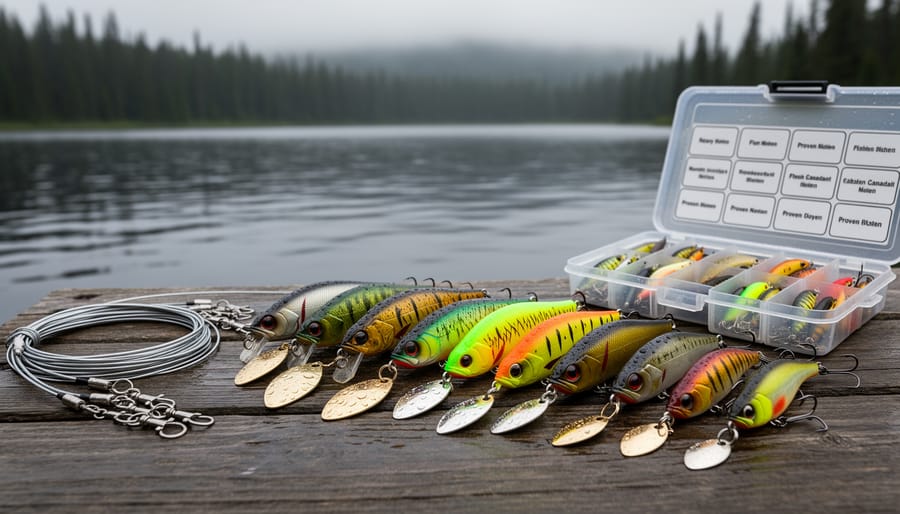
In spring and fall when water temperatures drop, I lean heavily on large spoons in the 4-6 inch range. Red and white patterns consistently produce in stained water, while silver or gold work wonders when visibility exceeds six feet. Those classic Len Thompson spoons aren’t popular by accident.
During summer, big pike want substantial meals. This is when I break out bucktails and crankbaits measuring 6-8 inches. In the murky waters common to many prairie lakes, I’ve had exceptional success with chartreuse and orange combinations. The flash and vibration cut through the stain beautifully.
For crystal-clear shield lakes, natural patterns shine. Perch or cisco imitators in silver, black, and olive trigger aggressive strikes from wary fish. I always carry a few topwater baits too. Nothing beats the explosion of a pike attacking a Zara Spook on a calm evening. Keep your retrieves erratic with plenty of pauses. Pike are ambush predators, and that hesitation often seals the deal.
Proven Presentation Techniques for Canadian Pike
The Slow-Roll Retrieve That Changed Everything
I learned this the hard way on a March morning in northern Ontario when water temperatures hovered just above freezing. My usual aggressive retrieve wasn’t producing, so I slowed everything down to a crawl, and that’s when a 38-inch beauty finally committed.
In cold water, pike metabolism drops significantly, meaning they won’t chase fast-moving baits. Your retrieve should be painfully slow, taking three to five seconds between each crank of your reel handle. I’m talking about speeds that feel unnatural at first. The key is maintaining just enough movement to keep your lure wobbling without racing through the strike zone.
Rod positioning makes a massive difference here. Keep your rod tip low, almost touching the water surface. This lets you feel every subtle tap and gives you a better hookset angle when pike hit softly in cold conditions. During the retrieve, add occasional pauses of five to ten seconds. Pike will often follow for considerable distances before striking during that pause.
Vary your cadence slightly, mixing in an occasional faster pull followed by a long pause. This mimics injured prey and often triggers strikes from otherwise reluctant fish. Trust the slow approach, especially when fishing Canadian waters in early spring or late fall.
Figure-Eight Boat-Side Tactics
I’ll never forget my first proper pike figure-eight. I had a massive northern following my spoon right to the boat on Lake of the Woods, and I just lifted the lure out like an amateur. My buddy Dave shook his head and said, “That fish was ready to eat.” He taught me the figure-eight that afternoon, and I’ve converted countless follows ever since.
Here’s the technique: when your lure gets within about four feet of the boat, don’t stop retrieving. Instead, plunge your rod tip about a foot underwater and start tracing a wide figure-eight pattern. Keep the movement smooth but deliberate, maintaining a steady pace throughout the entire motion. The key is speed variation – occasionally speed up or slow down mid-pattern to trigger that predatory response.
Pike often follow out of curiosity but need that extra stimulus to commit. The erratic direction changes of a proper figure-eight mimic injured prey trying to escape, which is irresistible to a following pike. I’ve found that making your figure-eights slightly larger in clear Canadian waters works better than tight, compact patterns.
Practice this motion before you even get a follow. Your arms will burn at first, but muscle memory pays off when a forty-incher materializes behind your lure and you need to execute perfectly under pressure.
Dead-Sticking for Pressured Fish
Sometimes the best presentation is barely a presentation at all. I learned this the hard way on Lake of the Woods after a weekend tournament had the pike completely shut down. Every boat was hammering the weed edges with spinnerbaits and crankbaits, and the fish just weren’t having it.
Dead-sticking involves casting out a large soft plastic or suspending jerkbait, then letting it sit motionless for extended periods. We’re talking 30 seconds to two full minutes between twitches. It sounds crazy, but pressured Canadian pike often need this kind of patience to trigger a strike.
The technique works best with suspending jerkbaits or weighted soft plastics that hover just above the weeds. Cast beyond visible structure, let it sink to your target depth, then commit to doing almost nothing. Give it the slightest twitch every minute or so, just enough to prove it’s alive.
On heavily fished waters like Rainy Lake or popular sections of the French River, this approach can salvage days when nothing else works. The key is fighting your instinct to keep the bait moving and trusting that a motionless meal looks like an easy target to a cautious pike.
Jerkbait Cadence for Clear Water
In those gin-clear northern Canadian lakes where you can see pike shadowing your jerkbait from twenty feet away, you need to rethink your cadence entirely. I learned this the hard way on Lake of the Woods, watching pike follow my lure right to the boat without committing.
The key is long pauses. I’m talking five to ten seconds of dead drift after each twitch sequence. In clear water, pike have all the time in the world to inspect your offering, and aggressive ripping just spooks them. My go-to pattern is two sharp jerks, followed by a pause long enough to make you uncomfortable. Count slowly to seven or eight before twitching again.
During those pauses, watch your line. Clear-water pike often hit on the pause, and you’ll see your line twitch or start moving sideways before you feel anything. Keep your rod tip down and be ready to set the hook at the slightest indication.
Water temperature matters too. In colder water below 50 degrees, extend those pauses even longer. I’ve had success with fifteen-second pauses in early spring when pike are lethargic but willing to ambush an easy meal drifting past their face.
Seasonal Patterns Across Canadian Regions
Spring: Post-Spawn Aggression Windows
Spring pike fishing is absolutely electric, and I’ve had some of my most memorable days chasing these toothy predators right after ice-out. The water’s still chilly, hovering around 40-50°F, but pike are on the move and hungry after spawning.
Focus your efforts in shallow bays with dark bottoms that warm faster than the main lake. I’m talking 2-8 feet of water where pike stack up to ambush baitfish. These staging areas near spawning grounds are absolute gold mines in late April through May.
My go-to setup during this window is a medium-heavy spinning rod with 30-pound braided line. Throw large profile baits like spinnerbaits in chartreuse or white, or try suspending jerkbaits with aggressive twitches. Work them slowly since pike are still sluggish in cold water.
Here’s a tip from years on Georgian Bay: dead weeds from last season hold warmth and attract minnows, which draws pike. Position your boat to cast parallel along weed edges rather than over them. The strikes during this post-spawn aggression period are vicious, so keep your drag properly set and hang on tight.
Summer: Adapting to Warmer Water
When those hot July and August days arrive, pike abandon their shallow haunts faster than ice melts in a boat cooler. I learned this the hard way during a sweltering week on Lake of the Woods, stubbornly working weedbeds that had been productive in June, only to catch bass and walleye. The pike had simply moved deeper.
Summer pike seek cooler water, typically dropping to depths of 15 to 30 feet near rocky points, offshore humps, and the edges of drop-offs. Your presentation needs to change accordingly. I’ve had excellent success slow-trolling deep-diving crankbaits along these structures, letting them tick bottom occasionally. Jigging with heavy spoons or soft plastics also works well when you locate suspended fish on your sonar.
Early morning and evening remain your best windows, as pike sometimes venture shallower during cooler periods. But don’t write off midday entirely. Position yourself over deeper structure, fish vertically, and keep your bait moving slowly. The key is finding that thermocline where temperature and oxygen levels keep pike comfortable and feeding.
Fall: The Trophy Season
Fall is when Canadian pike fishing gets serious. As water temperatures drop from September through November, pike enter a feeding frenzy that can only be described as spectacular. I’ve landed more 40-inch-plus fish during this season than all other times combined, and there’s solid science behind it.
Pike are fattening up for the lean winter months ahead, and they know it. They’ll aggressively chase bigger meals because one large walleye or whitefish provides more calories than a dozen perch. This is your window to target true trophy fish.
Focus on transition areas where deep water meets shallow bays. Pike stage here, ambushing baitfish moving toward winter holding spots. I’ve found success working large soft plastic swimbaits in 12 to 20 feet of water along rocky points and drop-offs. Retrieve slowly – the colder water means pike won’t chase fast-moving lures as readily.
Don’t put away those big spoons either. A silver or gold spoon mimicking cisco or whitefish is deadly when retrieved with an erratic flutter. On calm days, I’ll work shallow weed edges one last time before the weeds die off completely, using spinnerbaits that create maximum flash and vibration.
The bonus? Fall pike fight harder in cold water, giving you battles you’ll remember all winter.
After countless hours on Canadian waters from the shield lakes of Ontario to the frigid flows of the Northwest Territories, I’ve learned that pike fishing here isn’t just about applying generic techniques. It’s about respecting the unique character of our ecosystems and adapting your approach accordingly. The crystal-clear waters demand more finesse, the seasonal shifts require careful timing, and the sheer variety of habitats means what works on one lake might fall flat on another.
I’ll be honest with you—mastering pike fishing in Canada has been a journey filled with plenty of humbling moments. That first big northern that snapped my line because I underestimated the need for proper leaders taught me more than any guidebook could. Every outing adds another layer of understanding about these remarkable predators and the waters they inhabit.
The beauty of pike fishing is that there’s always something new to discover. Whether you’re just getting started or you’ve been chasing toothy critters for decades, Canadian waters offer endless opportunities to refine your skills and create unforgettable memories. So grab your gear, apply these techniques on your next adventure, and don’t be afraid to experiment until you find what clicks in your local waters.
Want more insights, seasonal tips, and proven strategies delivered straight to your inbox? Join our newsletter community and connect with fellow anglers who share your passion for Canadian pike fishing.