Bow River Fly Fishing: A Turning Point in My Canadian Angling Journey
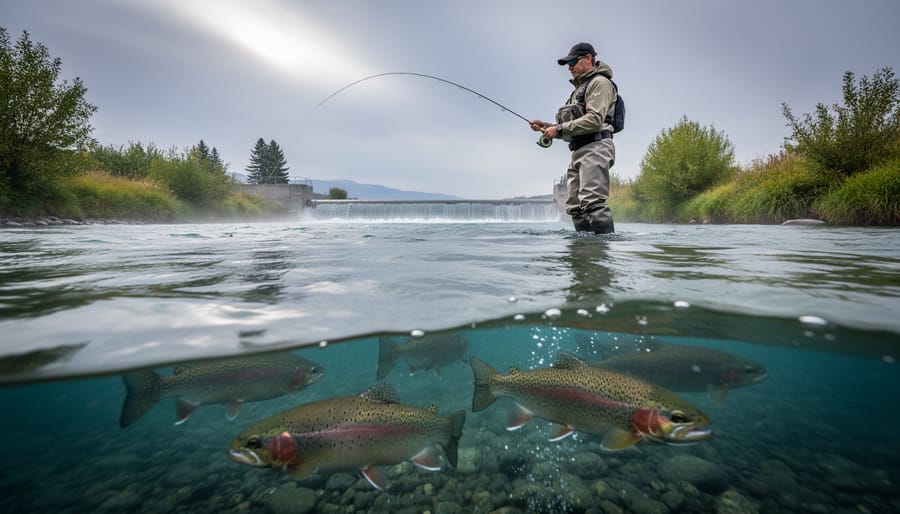
The Bow River transforms fly fishing into a high-stakes game of precision and patience, where massive rainbow and brown trout hold in crystal-clear currents just minutes from downtown Calgary. This tailwater fishery demands specific tactics: you’ll need 5X to 6X tippet, size 18-22 nymphs dead-drifted through complex seams, and the ability to read water like you’re scanning a topographic map. The payoff? Twenty-inch rainbows that fight harder than any pike you’ve chased through northern weed beds, though the approach couldn’t be more different from aggressive pike technique.
I learned this the hard way during my first spring trip in 2024, standing waist-deep below the Carseland Weir with a streamer rig better suited for bass. A local guide watched me thrash the water for twenty minutes before walking over and handing me a tiny midge pattern tied to tippet so fine I could barely see it. Three casts later, my rod bent double.
The Bow isn’t forgiving. Its trout see thousands of flies each season and feed selectively on mayflies, midges, and caddis that match the hatch down to the millimeter. Water temperatures shift with dam releases from the Bearspaw Reservoir, changing fish behavior hour by hour. Access points range from easy walk-ins near Policeman’s Flats to technical wades through the McKinnon Flats stretch, where one wrong step puts you in over your chest waders.
But here’s what keeps me driving back from Saskatchewan every season: few Canadian rivers offer this combination of accessibility, trophy-sized trout, and year-round fishing opportunity. You can chase rising fish during summer’s Trico hatches or swing streamers through December’s open water. The learning curve is steep, but the Bow rewards anglers who commit to understanding its rhythms.
Why the Bow River Captures Every Fly Fisher’s Imagination
I still remember the first time I crested the hill on Highway 1 and caught sight of the Bow River snaking through Calgary’s western edge. After years chasing pike in Ontario’s weedy bays, the notion of fishing for wild trout in the shadow of a major city seemed almost too good to be true. But the Bow delivers on every promise, and then some.
What sets this river apart from other Canadian fisheries is its rare combination of accessibility and world-class quality. Fishing open all year means you can work a nymph rig through January’s slush ice or cast dry flies during September’s golden afternoons. I’ve fished Ontario rivers that shut down by November and coastal streams that fish well only during brief salmon runs. The Bow’s extended season fundamentally changed how I approach trip planning.
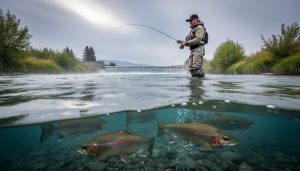
The trout density caught me off guard during my first full day on the water. Guides and local anglers talk about 2,000 to 3,000 trout per mile in certain stretches, and after landing a dozen browns and rainbows before lunch, those numbers felt conservative rather than inflated. These aren’t small creek fish either. My first Bow River brown ran hard into the current and stripped line like nothing I’d hooked in eastern waters, a muscular 20-inch fish that fought with the kind of strength that comes from feeding year-round in nutrient-rich tailwater.
The river’s character shifts dramatically as you move downstream from the city. Above Calgary, you’ll find faster pocket water and smaller fish. Through town, the river widens into long glides and deep runs holding trophy browns that see every fly pattern imaginable. Below the city limits, the character changes again, alternating riffles and pools, cutthroat trout mixed with the browns and rainbows, and fewer anglers crowding the banks.
What impressed me most was the technical challenge. These fish aren’t easy. They’ve seen countless drifts, refuse sloppy presentations, and demand precise mends even in seemingly simple water. My Ontario pike tactics, basically chuck and strip, had zero application here. The Bow forced me to slow down, study the currents, and think three moves ahead. That education proved invaluable when I later fished British Columbia’s interior rivers and Quebec’s remote brook trout streams.
Understanding Bow River Trout and Their Behaviour
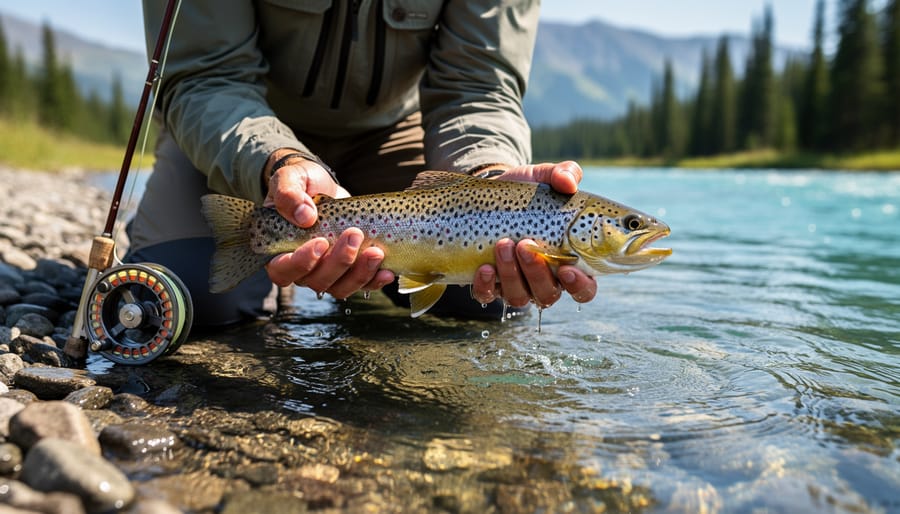
The first time I hooked into a Bow River brown trout, I understood why anglers obsess over this fishery. That fish tore downstream with authority, peeling line off my reel in a way my familiar Ontario smallmouth never had. Browns dominate the river from Calgary downstream, and they’ve earned their reputation as the scrappiest residents. These fish feed aggressively on stonefly nymphs and scuds year-round, but they shift to surface feeding during mayfly and caddis hatches. I’ve found browns holding tight to structure, behind boulders, along undercut banks, and in the slack water of deeper runs. They’re opportunistic hunters that respond well to nymphs drifted along the bottom, especially in the colder months.
Rainbow trout bring a different energy to the Bow. Faster, more acrobatic when hooked, rainbows prefer the riffles and faster water that browns often avoid. My most memorable rainbow came from a textbook run just below Policeman’s Flats, where the current broke over gravel and created perfect oxygen-rich water. Rainbows school more than browns, so finding one often means finding several. They’re particularly active during spring and fall, feeding heavily as water temperatures hit that sweet spot between 10 and 15 degrees Celsius.
Cutthroat trout are the bonus fish of the Bow, less common but stunning when they show up. My single cutthroat encounter happened in slower water near the confluence of a tributary, where the fish was staging in surprisingly shallow water. These fish tend toward the upper reaches and side channels rather than the main stem, making them a treat for anglers willing to explore beyond the obvious runs.
Seasonal patterns dictate everything on the Bow. Winter fishing focuses on deeper pools and slower water where trout conserve energy, with nymphs and midges the primary food sources. Spring brings increased activity as aquatic insects hatch and trout move into feeding lanes. Summer pushes fish into faster, oxygenated water during the heat, with early morning and evening offering the best dry fly action. Fall triggers aggressive feeding as trout prepare for winter, making it my favourite time to fish the river.
The urban sections near Calgary hold surprising numbers of large fish, while downstream areas toward Carseland offer more solitude and technical water. Each stretch has taught me something different about how these trout adapt and thrive.
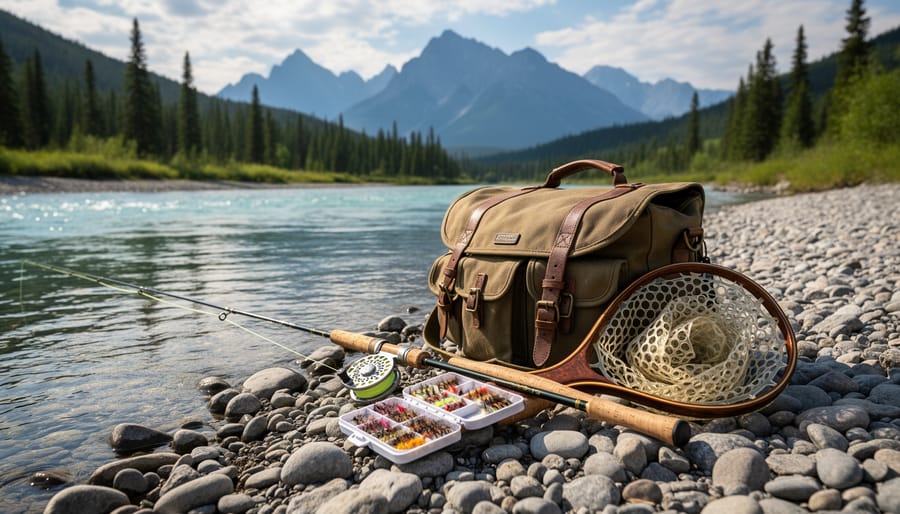
Essential Fly Fishing Gear for the Bow River
Fly Selection Through the Seasons
Spring on the Bow brings the renaissance of aquatic insect life, and my go-to pattern remains the San Juan Worm in red or brown. It’s unglamorous but devastatingly effective during runoff when natural worms wash into the current. Pair it with a small Pheasant Tail nymph as a dropper. As water warms through May, blue-winged olive hatches become reliable, and a size 18 Parachute Adams has saved countless slow afternoons for me.
Summer transforms the river into dry fly paradise. The local shop folks steered me toward Hoppers and Stimulators once terrestrial season hits, and I’ve watched brown trout smash foam beetles in the August heat with reckless abandon. For subsurface work, Rainbow Warriors and Copper Johns in sizes 16-18 consistently produce when fish turn selective.
Fall fishing demands adjustment. As spawning browns push into shallower water, I’ve found success swinging small Woolly Buggers and Zonkers in olive and black. The aggressive takes during autumn remind me why this season rivals spring for trophy potential. Throughout the year, carrying Zebra Midges in multiple colours proves essential, these tiny patterns catch more trout on the Bow than any other single fly in my box.
Winter requires downsizing and slowing your presentation. Bloodworm patterns and micro nymphs fished deep through slower runs produce when nothing else will.
Learning to Read Bow River Water
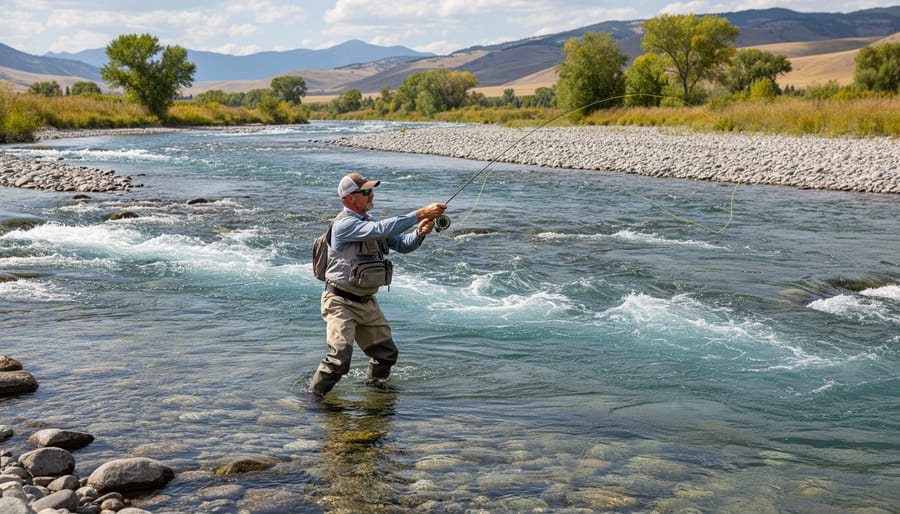
I’ll never forget standing on the bank near Policeman’s Flats during my third trip to the Bow, watching a guide work through a stretch I’d fished unsuccessfully two hours earlier. He’d landed three rainbows in twenty minutes from water I’d walked right past. That frustrating morning taught me the Bow demands different eyes than the Ontario rivers I’d grown up on.
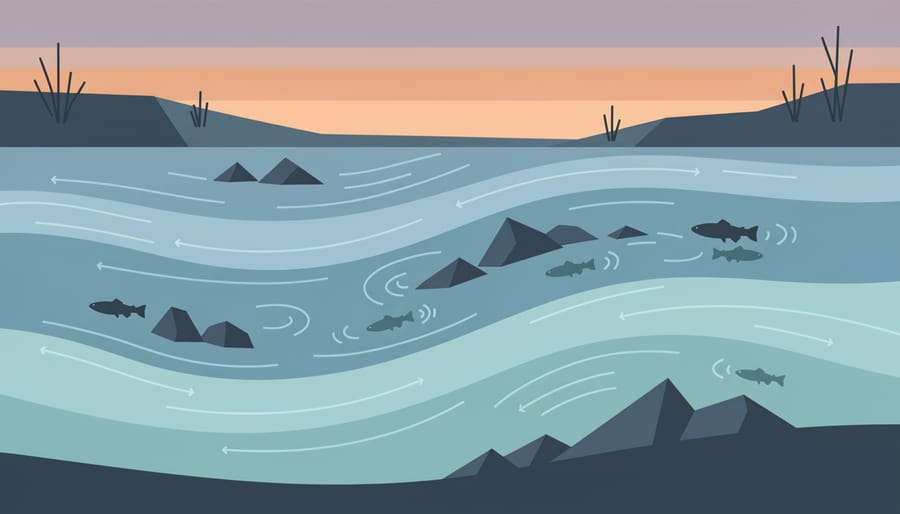
Back home, reading pike water meant looking for weed edges and depth transitions. The Bow operates on subtler geometry. The key lies in recognizing slight current seams, foam lines that mark feeding lanes, and the depressions you can barely see from shore. I started noticing that what looked like uniform shallow riffle often held a two-foot-deep trough running down one side, exactly where browns would stage to intercept drifting nymphs. Once I learned to spot those subtle depth changes, my hook-up rate tripled.
The Bow’s tailwater nature creates holding lies that shift with dam releases and seasonal flows. During spring runoff, trout tuck tight to the bank in surprisingly shallow water, using boulders and undercut ledges to escape the main current. I’ve pulled 20-inch browns from knee-deep runs against the shore while other anglers stood waist-deep in the heavy middle current, fighting to maintain footing. Come late summer when flows drop, those same fish move into deeper pools and the cushions behind mid-river rocks.
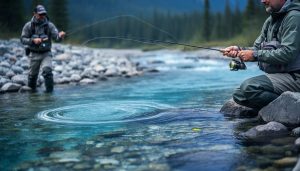
Approaching different water types requires patience I didn’t possess on those early trips. Shallow riffles need a stealthy low profile and long casts with the best fishing line you can manage, spook one trout and the whole run goes quiet. Deep runs let you get closer but demand precise depth control with your nymphs. I started carrying two rods rigged differently: one for high-stick nymphing the fast pockets, another for indicator rigs in the slower tailouts.
The real breakthrough came when I stopped fishing and just watched for thirty minutes. You see rise forms, nervous water over submerged structure, and where debris collects, all clues the Bow offers if you’re willing to read instead of cast.
My Favourite Bow River Access Points and Sections
Over countless trips to the Bow, I’ve developed a mental map of stretches that feel like old friends, each with distinct character and fishing challenges that taught me something new.
My introduction to the river happened at Policeman’s Flats, about twenty minutes east of Calgary. This stretch remains my go-to recommendation for anglers making their first trip. The walk-and-wade access is straightforward, the wading manageable even during higher flows, and the trout density consistently impressive. I’ve landed browns pushing twenty inches here during mayfly emergencies in late June, watching them rise aggressively in the soft water behind mid-river boulders. The parking area fills quickly on summer weekends, but a fifteen-minute walk upstream usually puts you into quieter water with fewer anglers.
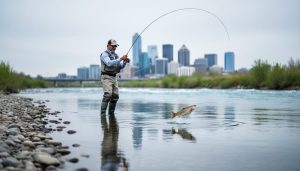
Within Calgary itself, I’ve spent dozens of mornings at Graves Landing and McKinnon Flats. These urban sections surprised me initially, I hadn’t expected trophy-caliber fishing within sight of downtown towers. McKinnon offers easier wading and clearer casting lanes, making it ideal when I’m testing new fly patterns or breaking in visiting friends who haven’t fished moving water before. The browns here feed confidently despite pedestrian traffic on nearby pathways. Graves Landing demands more technical presentations in tighter quarters, but rewards patience with selective risers that’ll refuse ten bad drifts before finally committing.
Downstream from the city, Carseland provides a different experience entirely. The river widens, flows slow, and the fish grow warier. I struggled here initially, throwing the same rigs that worked upstream. Success came only after scaling down tippet sizes and extending my drifts through deceptively slow seams. This section humbles confident anglers but teaches subtlety that improves your fishing everywhere else.
For solitude, I’ve found quiet mornings at the lower stretches near Bow City, where fewer guides run trips and the landscape opens into classic prairie vistas. The drive takes longer, but walking a gravel bar at sunrise without seeing another soul feels increasingly rare on heavily-fished Alberta rivers.
Each section rewards different approaches. Policeman’s Flats forgives aggressive nymphing. The urban stretches demand precision. Carseland teaches patience. Exploring them in sequence transformed my understanding of how a single river can fish like five different streams depending on where you drop your line.
Common Questions from Fellow Anglers Planning Their First Trip
When I started sharing my Bow River experiences with fellow anglers back in Ontario, the same questions kept surfacing. These weren’t theoretical concerns, they were the exact worries I’d had before my first trip west, and they deserve straight answers from someone who’s navigated them.
The licensing question always comes first, and rightly so. You need an Alberta fishing license to fish the Bow River, which non-residents can purchase online or at local tackle shops before heading out. I picked mine up at a Calgary shop along with updated regulation information, since rules can shift year to year regarding closures and catch limits on specific sections.
Timing your trip matters more than most people realize. While the Bow fishes year-round, a remarkable advantage, my most productive visits have been during spring and fall. April through June offers excellent hatches and aggressive feeding behaviour as water temperatures rise. September through November brings beautiful fall colours and trophy browns starting their pre-spawn feeding binges. Summer fishing remains solid, though you’ll share popular stretches with more anglers and need to fish mornings and evenings to avoid midday heat.
Should I hire a guide for my first Bow River trip?
A guide accelerates your learning curve dramatically, especially if you have limited time. They know current conditions, productive flies, and which access points fish best on any given day, knowledge that took me multiple trips to acquire on my own.
What lodging options work best for visiting anglers?
Calgary hotels offer affordable options with easy highway access to downstream sections, while Canmore or Cochrane provide closer proximity to upper river stretches with a mountain town atmosphere. I’ve stayed in both depending on which sections I planned to fish most.
Can beginners successfully fish the Bow River?
Absolutely, though I recommend starting with easier access points like Policeman’s Flats where wading is manageable and fish are forgiving. The learning curve isn’t as steep as some western freestone rivers, making it an excellent destination to learn fly fishing techniques that translate across Canada.
What should first-timers expect regarding crowd levels?
Popular city sections see steady pressure, particularly weekends from May through October. Driving thirty minutes downstream opens quieter water, and weekday fishing even near Calgary remains surprisingly peaceful.
The biggest lesson I share is managing expectations around trophy fish. Yes, the Bow holds genuinely massive trout, but most days involve catching healthy fourteen-to-eighteen-inch fish with occasional larger surprises. That’s still exceptional fishing by Canadian standards, and those average fish fight with surprising strength in the Bow’s currents. If you arrive focused on numbers and technique rather than fixated solely on landing a twenty-four-inch brown, you’ll leave satisfied and probably learn more in the process.
Looking back on that first season wading the Bow, I realize those Alberta trout taught me more than just new techniques. They rewired how I approach any Canadian water. The precision required here, the perfect drift, the subtle mends, reading those complex currents, sharpened instincts I’d let grow lazy on my home lakes. Every frustrating day when the trout not biting forced me to think harder, observe closer, adapt faster.
The Bow became my benchmark. It’s why I keep returning between trips to Maritime salmon rivers, northern pike waters, and British Columbia steelhead streams. Each fishery now gets compared against those crystalline Alberta runs, not because the Bow is superior, but because it demands excellence and rewards growth.
If you’re stuck fishing the same waters year after year, I can’t recommend enough the jolt that comes from challenging yourself somewhere completely different. Book that trip. Wade into unfamiliar currents. The technical skills transfer, but more importantly, you’ll return to your home waters seeing them with fresh perspective.
I share new Canadian fishing destinations and hard-won insights in my newsletter, the kind of tactical details and honest assessments that come from actually wading these places, not just reading about them. Sign up to join the journey.