Why Fly Fishing Chest Pack Backpacks Are Changing the Game on Canadian Rivers
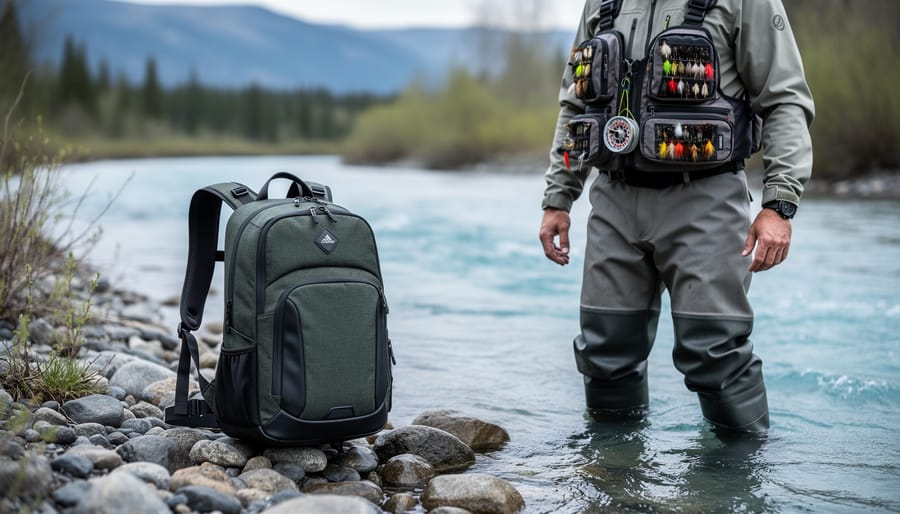
Last spring on the Bow River, I watched my buddy struggle between his chest pack and day pack, switching between them every hour as the hatch changed and his gear needs shifted. That frustration led me down a rabbit hole exploring hybrid systems that combine the quick-access benefits of chest packs with genuine backpack storage capacity.
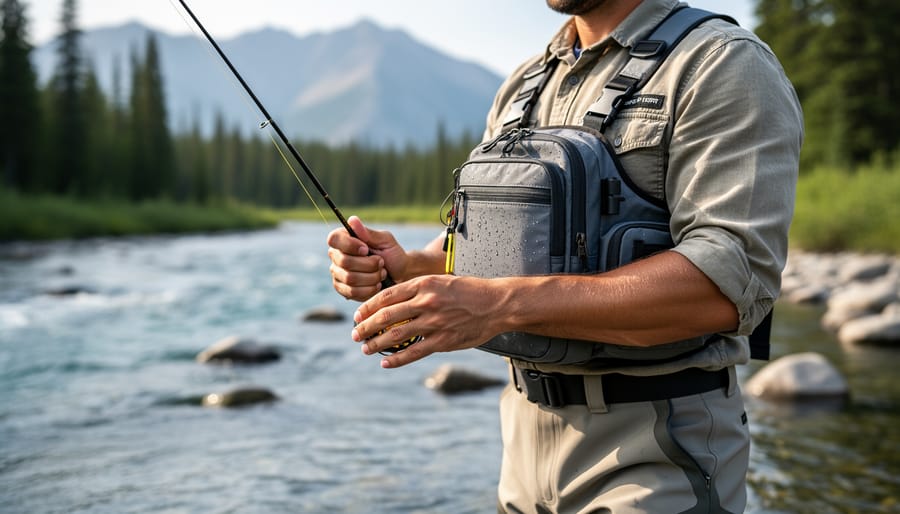
These hybrid rigs solve a real problem Canadian anglers face on extended wade trips. You get essential tools at chest level where you can reach them without breaking your rhythm, while heavier items like rain gear, lunch, and extra fly boxes ride comfortably on your back. The design keeps your centre of gravity stable when you’re navigating fast water, something I appreciated immediately during a long session on the Crowsnest.
The market has evolved significantly in 2026. We’re seeing true integration rather than simple chest pack add-ons to existing backpacks. Modern systems feature dedicated compartments that actually work together, with thoughtful weight distribution that doesn’t leave you hunched forward or pulling backward. Key capacity ranges from 15 to 25 litres in the backpack portion, while chest sections typically offer 3 to 5 litres for flies, tippet, nippers, and forceps.
Price points span from around 180 dollars for entry-level options to over 400 dollars for premium setups with waterproof zippers and modular attachment systems. The sweet spot sits between 250 and 320 dollars, where you’ll find durable construction, proper ventilation, and enough organizational pockets to keep small items from becoming a jumbled mess.
Choosing the right hybrid setup depends on your typical fishing day length, how much gear you actually carry, and whether you prioritize rod-holder integration or hydration bladder compatibility. I’ll walk you through real-world testing results and break down which features matter most.
What Makes a Fly Fishing Chest Pack Backpack Different
The chest pack backpack represents a fundamental shift in how we carry gear on the water. Traditional fishing vests loaded everything onto your shoulders and torso, creating a bulky profile that caught wind and brush on tight trails. Hip packs kept weight low but forced you to dig around blindly for gear while waist-deep in current. The chest pack backpack solves both problems by splitting your load into two zones: frequently-used items stay in accessible chest pockets right where you can see and reach them, while bulkier supplies ride comfortably on your back.
This hybrid approach evolved from a simple observation. Anglers heading into remote Canadian backcountry needed backpack capacity for water, lunch, and extra layers, but they also needed quick access to fly boxes and tippet without shrugging off a pack every twenty minutes. The chest component puts your essential tackle at eye level and within easy reach, even when you’re braced against current or standing deep in a run. The backpack portion carries everything else without interfering with your casting motion or balance.
The advantages become obvious once you’re actually fishing:
- Front pockets keep fly boxes, nippers, and floatant instantly accessible without removing any gear
- Weight distribution splits between chest and back, reducing shoulder and lower back strain on long hikes
- Streamlined profile compared to vests means less snagging on willow branches and alders
- Backpack section holds rain gear, food, and extra water without cluttering your chest workspace
- Better balance when wading through heavy current or crossing slippery rock
The setup shines particularly bright on Canadian waters where access often means hiking. A two-kilometer walk into a northern Ontario brook trout stream becomes manageable when your lunch and rain jacket ride on your back instead of bouncing around your waist. Once you reach the water, everything you need for the next hour stays right on your chest while the pack simply disappears behind you.
Anglers are switching because the design matches how we actually fish. You’re not constantly stopping to reorganize or fighting with a vest that hangs awkwardly over waders. The chest section works like a tactical command center, the backpack handles logistics, and you spend more time with your line in the water instead of fumbling through pockets.
Real-World Performance: What I’ve Learned on the Water
I’ll never forget the moment I realized how much my old fishing vest was holding me back. It happened on a northern Ontario stream last September, fighting through dense alder thickets to reach a pocket of water I’d heard about from locals. My vest snagged on branches, fly boxes dug into my ribs, and by the time I reached the spot, I was sweating and frustrated. That’s when I switched to a chest pack backpack setup, and everything changed.
The difference hit me immediately on that first outing. With the chest portion holding my essential flies, tippet, and nippers right at hand, I could switch patterns without shrugging off a pack or digging through vest pockets. The backpack component carried my rain jacket, lunch, and extra gear without adding bulk around my shoulders. When I hooked into a solid brook trout, nothing restricted my casting motion or got in the way during the fight.
Fast-forward to a week-long trip into Saskatchewan’s backcountry this spring, and the setup proved itself again. One of the Saskatchewan trophy trips I’d booked required a four-kilometre hike to reach prime pike waters, and I needed to carry enough gear for a full day. The chest pack kept frequently-used items accessible while the backpack portion distributed the weight of my water bottle, camera, and backup tackle across my shoulders and hips instead of hanging from my neck like a traditional vest would.
What surprised me most was how the organization actually improved my fishing. During a marathon session on the Bow River with one of the experienced Alberta fly fishing guides we moved between riffles chasing rising trout for eight hours straight. The chest pack’s front pockets let me grab the right dry fly pattern in seconds, while the backpack held my waders repair kit and emergency supplies I didn’t need constantly but wanted close. No more stopping to root through a sling pack on my back or fumbling with a vest that rode up when I bent over.
The comfort factor became obvious around hour five of that Bow River day. Traditional vests always left my neck and lower back aching. This hybrid setup spread the load better, and the chest component sat high enough that it never interfered with my wading belt or got soaked when I stepped into deeper runs.
Breaking Down Your Options for 2026
Budget-Friendly Starting Point: The Aventik Option
The Aventik Fly Fishing Chest Bag sits at $25.99, making it the entry point for anglers testing the chest pack concept without a major investment. You get a lightweight design with multiple pockets spread across the front panel, plus vest-style straps that distribute weight across your shoulders.
I’d recommend this pack for day trips on familiar waters where you’re not hauling camping gear or extensive tackle. The pocket layout handles your essential fly boxes, tippet, and tools well enough for a four-hour session on local streams. Where it falls short is durability and water resistance. The fabric isn’t going to shrug off a surprise downpour like heavier options, and the zippers feel a bit flimsy after repeated use in gritty conditions.
This works best for beginners figuring out what they actually need in a chest pack, or as a backup option for quick evening hatches. Just don’t expect it to replace a full backpack setup for overnight trips or remote backcountry fishing where gear failure becomes a real problem.
Mid-Range Versatility: VOTAGOO GEAR Pack
The VOTAGOO GEAR pack sits at $46.99, which puts it right between the ultra-budget Aventik and the premium Orvis option. I picked one up last spring before a week-long trip to Lac Seul, and the price felt fair given what you get.
The pack offers more refined construction than budget models without the luxury price tag. The storage layout works well for a full day on the water, I can fit four fly boxes, a couple of tippet spools, nippers, forceps, and strike indicators with room to spare. The chest compartment sits higher than cheaper packs, which means less interference when you’re wading deep or bending to net a fish.
What sold me was the balance between durability and weight. After dozens of sessions through alder thickets and scrambles over granite shorelines, the fabric shows minimal wear. The zippers still glide smoothly, which can’t be said for every budget option I’ve tested.
For anglers who fish regularly but don’t want to drop $150 on a chest pack, this hits a sweet spot. You get reliable performance without paying for features you might not need.
Premium Choice: The Orvis Chest Pack
At $149, the Orvis Chest Pack represents a significant investment, nearly six times the Aventik option. But after seasons of abuse on Alberta rivers, I’ve come to appreciate what that price buys you.
The standout feature is the unzipping work surface. Mid-stream, when you need to change flies or rebuild a rig, you unzip the front panel flat against your chest, creating a stable workspace that won’t dump your tippet spools into the current. It’s a design detail I didn’t know I needed until I used it during a caddis hatch on the Bow River, fumbling with tiny #18 flies in fading light.
The 4L capacity hits a sweet spot for full-day outings. I can pack fly boxes, leaders, a rain shell, and lunch without the bulk of a full backpack. The 100% recycled ECO CORDURA construction feels bomber, I’ve scraped it against rocks, snagged it on willow branches, and soaked it through countless wading sessions without any wear showing.
Worth noting: it ships July 10, 2026, so you’ll need to plan ahead if you’re targeting early summer fishing.
Is it necessary? No. But if you fish hard, fish often, and want gear that disappears into your routine rather than fighting you all day, the Orvis justifies its premium. It’s the difference between adequate gear and equipment you trust completely when you’re waist-deep and focused on the rise in front of you.
What to Look for When Choosing Your Pack
Start by taking out your fishing gear checklist and writing down your typical fishing day. How long are you on the water? Are you hiking into remote spots or fishing roadside streams? These questions drive every feature decision.
Capacity hinges on whether you fish two hours or ten. I’ve found 4L works perfectly for half-day trips with enough room for fly boxes, leaders, and a rain shell. Anything beyond six hours, especially when you’re packing lunch and layers for Alberta’s unpredictable weather, and you’ll want something closer to 8L or a hybrid system. Don’t fall into the trap of buying oversized, excess space tempts you to overpack, and the extra weight drags on your shoulders after three kilometres.
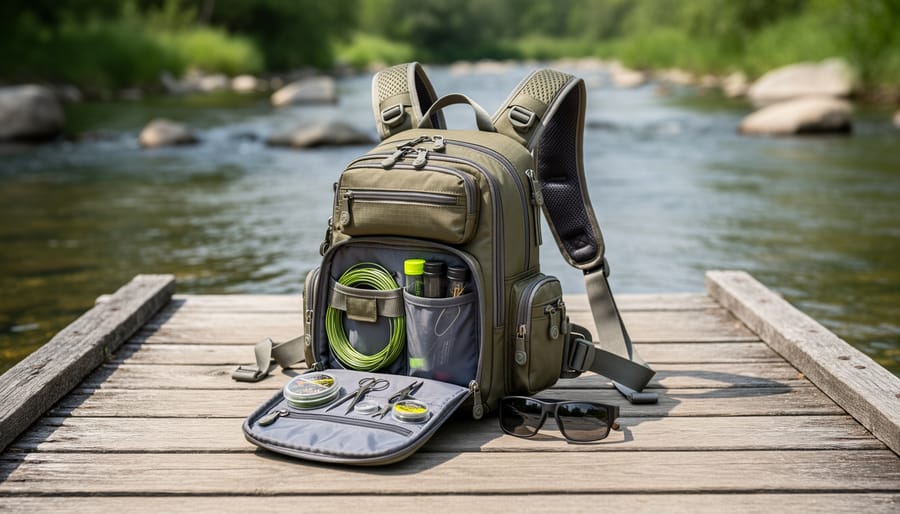
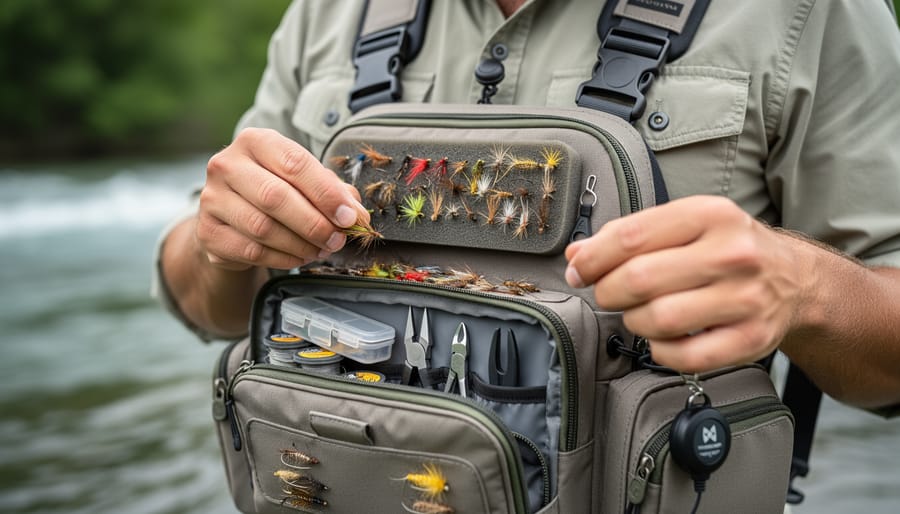
Pocket layout matters more than total capacity. You’ll reach for tippet and nippers a hundred times during a session. I need those items within arm’s reach while wading chest-deep in Saskatchewan rivers. Look for dedicated tool holders and at least two quick-access front pockets. Internal dividers keep fly boxes from sliding around. Some packs unzip to create a work surface, which sounds gimmicky until you’re rigging up in driving rain and actually need a stable platform.
Water resistance separates gear that lasts from trash you’ll replace next season. Canadian conditions demand at least a water-repellent coating. Full waterproof construction costs more but pays off during spring runoff season when you’re crossing tributaries and mist hangs heavy all morning. Check seam construction, taped or welded seams keep moisture out better than basic stitching.
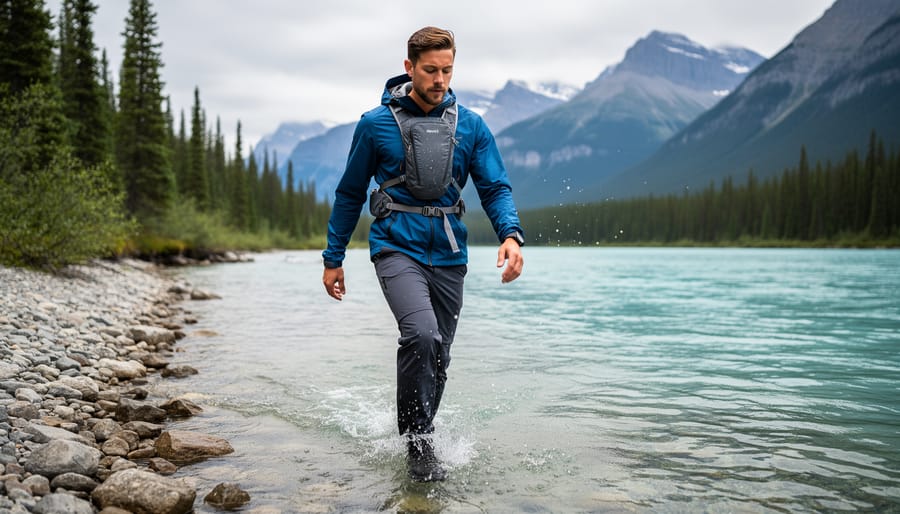
Comfort over eight-hour sessions comes down to strap design and weight distribution. Padded shoulder straps are non-negotiable. Sternum straps prevent the chest pack from bouncing when you’re scrambling over rocks. If you’re pairing it with a backpack component, test how the two systems interact. The chest section shouldn’t ride too high or dig into your collarbone, and backpack straps need enough adjustment range to layer over waders and jackets without binding.
Compatibility with wading gear deserves a fitting test before you buy. Your chest pack sits exactly where wader straps and jacket zippers live. Some combinations work together; others create pressure points or block access to pockets you actually need.
Making It Work With Your Existing Gear
The best chest pack backpack won’t do much good if it clashes with the rest of your setup. I learned this the hard way during an early-season trip when my new pack kept riding up over my waders’ chest pocket, making both pieces of gear nearly useless. Here’s how to make everything work together without fighting your equipment all day.
Start by checking how your pack sits with your waders. Most chest packs work fine with stockingfoot waders, but if you’re wearing chest-high waders with built-in pockets, you’ll need to position the pack slightly higher or lower to avoid overlap. I adjust mine so it sits just above the wader pocket, giving me access to both without constantly readjusting straps.
Rain jackets present another common issue. A bulky jacket can push your chest pack away from your body, throwing off the whole balance. I’ve found that wearing the pack over a fitted rain layer works better than trying to layer the jacket on top. For colder days when you need serious insulation, consider downsizing what you carry in the chest portion and shifting extra gear to the backpack component.
When organizing tackle for different trout techniques group items by frequency of use rather than category. Your go-to nymphs and indicators should live in the easiest-access pocket, while backup leaders and less-used dry flies can go deeper in the pack. This saves you from unpacking half your rainbow trout gear every time you need to switch patterns.
Net attachment deserves special attention. If your pack has D-rings or attachment points, use them for your net rather than clipping it to your waders. This keeps the net accessible without interfering with the pack’s fit, and you won’t accidentally dump your chest pack contents when you lean forward to land a fish.
After testing chest pack backpacks across Alberta, Saskatchewan, and Ontario waters, I’m convinced they’re the smartest storage upgrade you can make for Canadian fly fishing. The combination of quick-access organization and enough capacity for all-day adventures solves problems I’d been juggling with traditional vests and hip packs for years.
Your ideal setup depends entirely on how you fish. Weekend warriors hitting accessible rivers might find the Aventik option at $25.99 covers their needs perfectly, while guides and serious backcountry anglers will appreciate what the Orvis pack (shipping July 10, 2026) delivers for $149. The VOTAGOO at $46.99 sits right in that sweet spot if you’re still figuring out your style.
Think about your typical fishing day, the gear you actually carry, and the terrain you cover. That’ll point you toward the right pack faster than any feature list.
Want more honest gear breakdowns and location reports from Canada’s best fishing spots? Sign up for my newsletter and I’ll share what’s working on the water right now.